The Athletics Had More Hits and Less Room
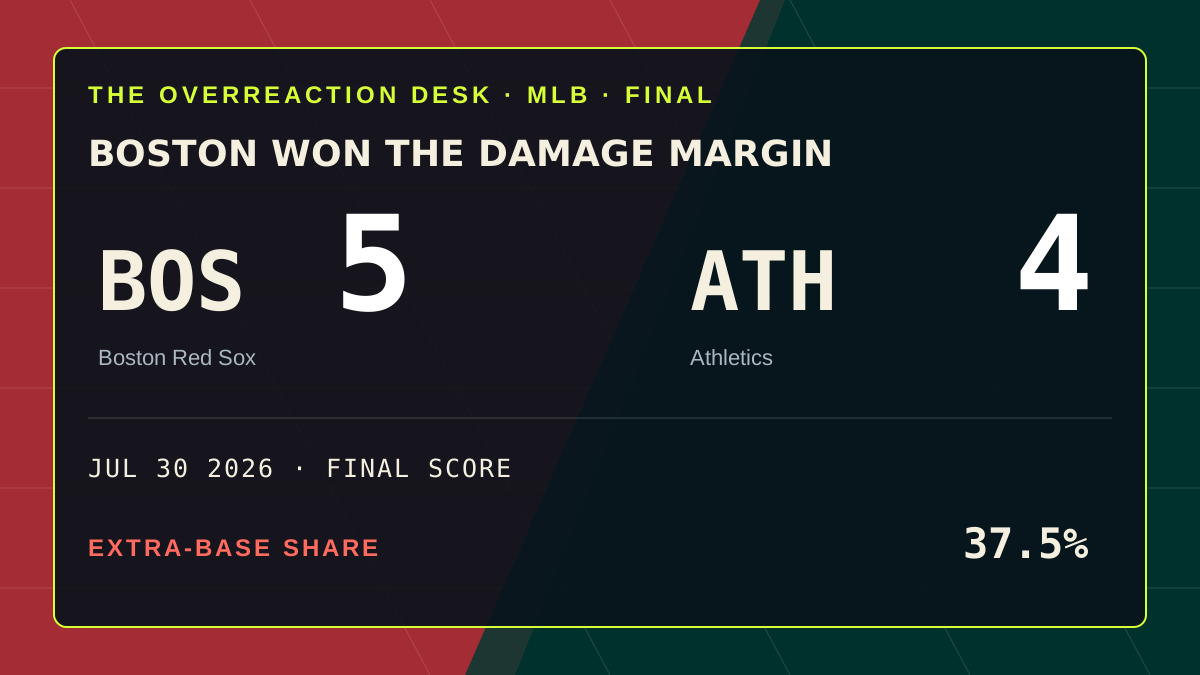
Boston beat the Athletics 5-4 even though Oakland collected nine hits to the Red Sox’s eight. The Athletics also hit five doubles. That is a lot of extra-base traffic for the losing side, which is why this game felt less like a Boston march and more like a Red Sox escape with a spreadsheet attached.
The difference was not how often the teams reached the outfield gaps. It was how the hits converted into runs. Boston’s eight hits included a double and two home runs. Oakland’s nine included five doubles but no home runs.
The Athletics kept building good-looking innings. Boston kept finding the better punctuation.
Boston’s Power Arrived on Schedule
Willson Contreras homered and drove in a run. Wilyer Abreu also homered and drove in a run. Ceddanne Rafaela went 2-for-4 with a double and two RBIs, giving Boston a third extra-base hit and the most important connective piece of the night.
Andruw Monasterio added an RBI, while Masataka Yoshida and Anthony Seigler kept the line moving. Boston did not need a giant hit total because its damage was distributed across the hits that mattered most.
Sonny Gray worked seven innings, allowing four runs on seven hits with five strikeouts. The Red Sox needed the length because Oakland kept answering with another double, another runner, and another reminder that a one-run lead is not a personality.
The Extra-Base Margin
The Desk’s extra-base hit share was 37.5 percent, calculated from Boston’s three extra-base hits across eight hits. It is a measure of how frequently Boston’s contact moved beyond the single and kept the inning pointed toward home.
Oakland’s five doubles were more numerous, but they did not create the same concentrated damage. Jacob Wilson and Jonah Heim each doubled, and Lawrence Butler doubled twice. The Athletics made the Red Sox defend a long series of threats. Boston made three of its own hits do more work.
That is the irritating lesson of a one-run game: the larger pile of quality contact is not always the more valuable pile. Sometimes the opponent simply has two balls that leave the yard.
A Win That Refused to Look Comfortable
The Athletics kept the game alive with doubles from Wilson, Heim, Butler, and Alika Williams, plus an RBI from Donovan Walton. They did not lose because the lineup was asleep. They lost because Boston’s power gave the Red Sox a margin that Oakland’s contact could only chase.
Aroldis Chapman closed the game with a scoreless ninth and two strikeouts. That final inning did not erase the tension created by Oakland’s nine hits. It preserved the result Boston had built with a more damaging eight.
The Red Sox should not confuse this with a blueprint for effortless control. They won because their extra-base hits were fewer but louder, then their pitching held the line. The Athletics supplied the pressure. Boston supplied the last answer.
The Desk Has Ruled
Boston won the extra-base margin that mattered, not the one that simply looked bigger in the box score. The 37.5 percent extra-base hit share is the ruling: three of eight Red Sox hits carried past first base and helped turn a thin offensive edge into five runs.
Oakland had the doubles. Boston had the damage.