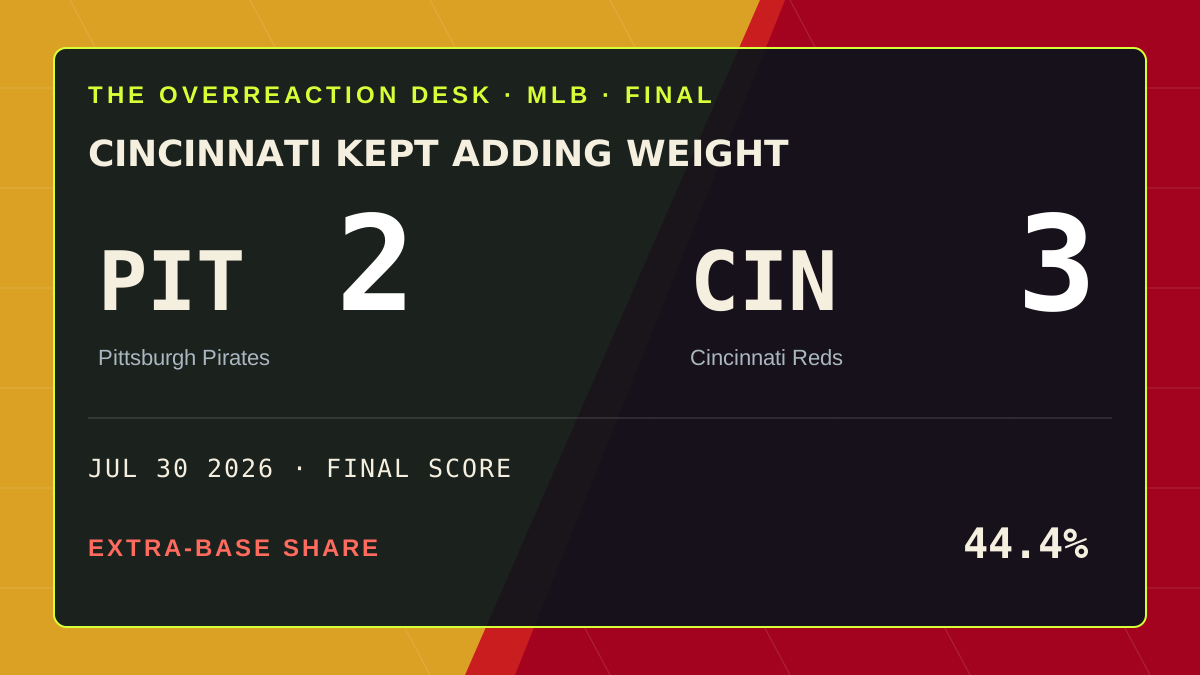
Cincinnati Kept Adding Weight
Cincinnati beat Pittsburgh 3-2 in a game that never became a blowout because neither lineup had enough room to relax. The Reds collected nine hits. The Pirates collected seven. The difference was not a giant contact gap; it was what Cincinnati’s contact did after it arrived.
Four of the Reds’ hits were doubles. That meant a single base hit could become a runner in scoring position without needing a second perfect swing. Pittsburgh had to defend every inning as if the next ball might skip past the outfielders and make the previous pitch matter more.
That is a tiring way to play a close game. Cincinnati made it the personality of the night.
De La Cruz Turned the Gaps Into a Personal Argument
Elly De La Cruz went 3-for-4 with three doubles and one RBI. The line is so committed to doubles that it reads like a dare to the outfield wall.
Nathaniel Lowe added a double and an RBI. Sal Stewart also drove in a run, and the Reds kept their three-run total distributed across the contact that created it. Rhett Lowder allowed two runs over six innings with five strikeouts, giving Cincinnati enough runway for the bullpen to defend the narrow lead.
Pittsburgh did not go quietly. Brandon Lowe homered and drove in a run, while Nick Gonzales went 2-for-4 with a double. The Pirates had legitimate answers. They simply had fewer ways to turn a good plate appearance into immediate trouble.
The Double Was the Warning Light
The Desk’s extra-base hit share was 44.4 percent, calculated from Cincinnati’s four doubles across nine hits. It is a pressure measure, not a claim that every double was equally valuable. It shows how often the Reds’ contact skipped the ordinary single and asked Pittsburgh to solve a runner already in motion.
The metric also explains why the score stayed close without feeling random. Cincinnati had the more threatening shape of contact, but only three runs came home. The Reds created pressure; they did not always cash it in. That left the Pirates close enough to make the final innings uncomfortable.
The Reds won anyway because four doubles give a lineup more than one route to a run. A home run is a full stop. A double is a comma that keeps the inning alive.
Pittsburgh Had Power, Cincinnati Had the Next Base
Brandon Lowe’s home run was the Pirates’ cleanest answer. It gave Pittsburgh a one-run piece of damage that did not require a string of hits. Cincinnati answered with accumulation instead of imitation. De La Cruz kept reaching the gaps, Lowe added another, and the Reds kept forcing the Pirates to defend the next 90 feet.
The result was a game decided by one run but shaped by a repeatable difference. Pittsburgh’s best contact could change the score in one swing. Cincinnati’s best contact kept moving the entire inning forward.
In a game this tight, that distinction is the kind of thing that survives the final out. The Reds did not overwhelm Pittsburgh. They made every clean hit feel like the beginning of another problem.
The Desk Has Ruled
Cincinnati won because its extra-base traffic kept turning ordinary opportunities into scoring chances. The 44.4 percent extra-base hit share is the ruling: four doubles made nine Reds hits play bigger than the raw total.
De La Cruz brought the warning. The Pirates got the message too late.