The Game Stayed Small
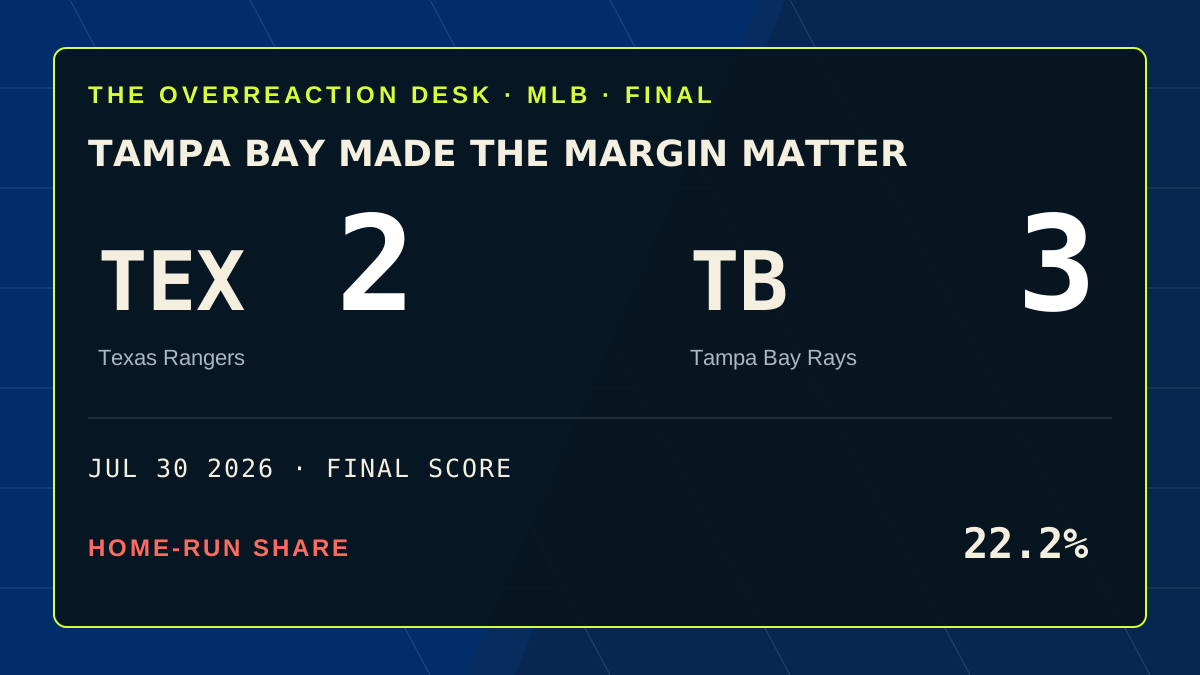
Tampa Bay beat Texas 3-2 in the kind of game that makes every routine fly ball feel like a referendum. The Rays collected nine hits. The Rangers collected two. That sounds like a comfortable contact advantage until the score reminds everyone that baseball is perfectly capable of turning a nine-hit night into a one-run decision.
The Rangers did not have many chances, but Wyatt Langford made one of them matter with a double and an RBI. Alejandro Osuna added Texas’ other hit. The visitors kept the game within one swing because the Rays never found the clean, boring separation that makes a lead feel owned.
Tampa Bay had to win the narrow version of the night. It did that by making two of its hits travel much farther than the rest.
Two Swings, One Breath of Room
Jonny DeLuca homered and drove in a run. Cedric Mullins also went deep and added another RBI. Yandy Díaz had two hits and one RBI, giving Tampa Bay the steady contact underneath the headline swings.
The Rays scored in the third, sixth, and eighth innings. Texas answered in the fourth and fifth, but the Rangers never found the third run that would have converted a close game into a different argument. Tampa Bay kept rebuilding the smallest possible cushion, then asking its pitching staff to defend it.
That is not a glamorous way to win. It is, however, a very Tampa Bay way to win: create just enough leverage, then make the opponent prove it can take the whole thing back.
The Power Was the Difference, Not the Whole Story
The Desk’s home-run share of hits was 22.2 percent, calculated from Tampa Bay’s two home runs across nine hits. The number is not pretending that a homer is worth exactly one ordinary hit. It identifies how often the Rays’ contact arrived with immediate scoreboard consequences.
Texas had no comparable margin for error. With only two hits, the Rangers needed nearly every baserunner to become a run. Langford helped, but one double could not create a second wave by itself. Tampa Bay’s two homers gave the Rays the only kind of breathing room available in a game this tight.
The Rangers Were Close Because Close Was All They Had
There is a difference between losing a close game and controlling a close game. Texas stayed within one, but its offense never applied enough pressure to make Tampa Bay uncomfortable for more than a batter or two at a time.
The Rays did not dominate the night. They took the better contact profile and added the two loudest pieces. DeLuca and Mullins supplied the moments; Díaz supplied the connective tissue. That combination turned a fragile lead into a defended lead.
Texas can call this a one-run loss, and technically it is. The more useful reading is that the Rangers gave themselves almost no margin to lose because the lineup never produced a sustained answer. Tampa Bay did not need a barrage. It only needed two balls to leave the yard and the rest of the night to stay organized.
The Desk Has Ruled
Tampa Bay won because it converted a thin hit advantage into two power swings before Texas could build a second scoring wave. The Rays’ 22.2 percent home-run share of hits tells the story cleanly enough: most of the contact was ordinary, but the important contact was not.
The Rangers kept the score close. Tampa Bay kept the result.