The Mets Did Not Need a Parade
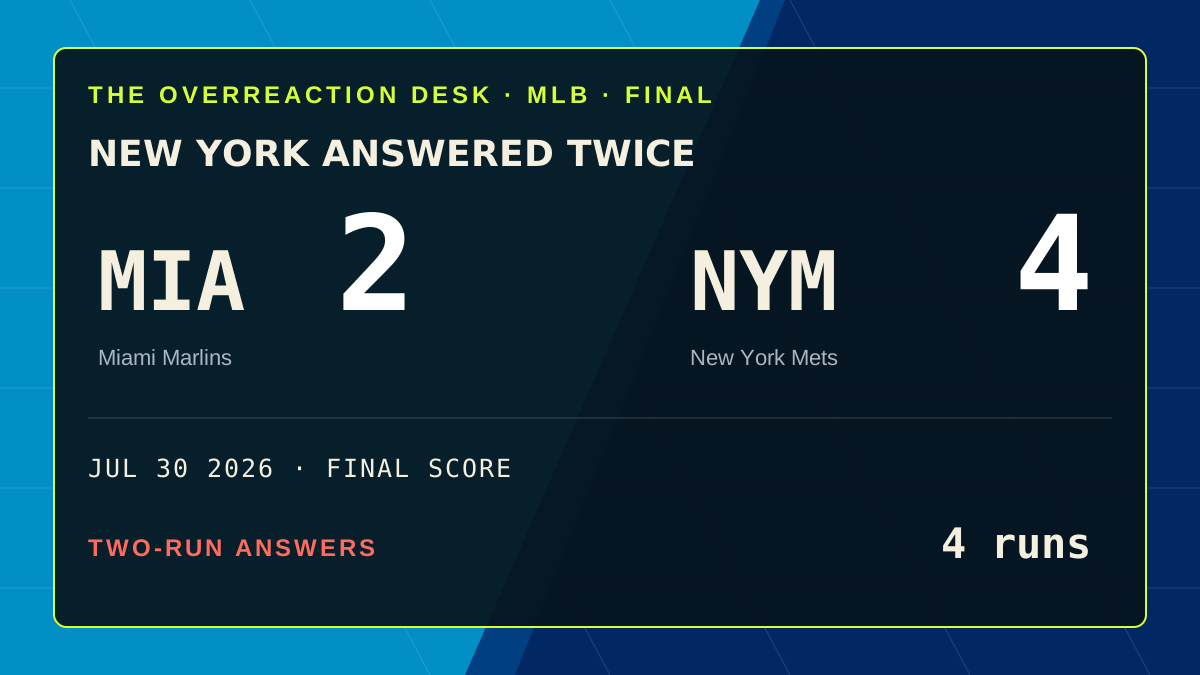
New York beat Miami 4-2 without pretending this was an offensive festival. The Mets collected six hits. The Marlins collected seven. Miami hit two home runs and still lost because New York kept finding the next useful inning before the game could become a slugfest.
Bo Bichette went 2-for-4 with a double, giving the Mets the cleanest extra-base hit of the night. Luis Robert Jr. drove in two runs. Francisco Lindor added an RBI, and the Mets turned a few well-timed pieces into the full scoring ledger.
This was not volume. It was timing with a Mets logo attached.
The Sixth Inning Changed the Temperature
The game was tied at one after Miami’s fourth-inning run, then New York scored twice in the sixth. That was the first real separation, but not enough to make the Marlins disappear. Kyle Stowers and Jakob Marsee each homered for Miami, and every Mets fan in the building understood that a two-run lead could evaporate quickly.
New York did not respond by chasing a bigger swing. It kept the game in manageable pieces. The Mets’ pitching gave them a chance to do that, and the lineup took the chance when the eighth inning arrived.
A Second Two-Run Answer
New York scored twice again in the eighth. Those four total runs, divided into identical two-run answers, formed the Desk’s two-run answers metric.
It is a simple measure, but it fits the game. The Mets did not string together a relentless attack. They answered the possibility of a comeback twice, first by creating room and then by widening it again. Each burst forced Miami to score more than once to change the shape of the night.
The Marlins never got that second run in one inning. They got two home runs and two runs total. That is the difference between danger and damage.
Miami Had the Loudest Individual Swings
Stowers homered and drove in a run. Marsee also homered and drove in a run. Eury Pérez worked six innings with six strikeouts, allowing three hits and two runs, one earned. Miami’s best individual moments were real, and the Marlins did enough to make New York earn the result.
The Mets’ answer was distribution. Bichette kept the line moving, Robert supplied the two-run punctuation, and Lindor added the kind of supporting hit that keeps a late inning from becoming a one-man rescue mission. Nolan McLean allowed two runs in 6 1/3 innings and struck out six, while the New York bullpen protected the final margin.
New York won a game that asked for patience. Miami kept offering reminders that patience without a response is just polite losing. The Mets responded in the sixth and eighth, and that was the whole argument.
The Desk Has Ruled
New York won because it made two-run bursts carry the full weight of a low-volume offense. The four-run two-run answers metric is the verdict: two separate innings created the Mets’ entire margin and kept Miami from getting a clean comeback window.
The Marlins hit the louder souvenirs. The Mets owned the better answers.