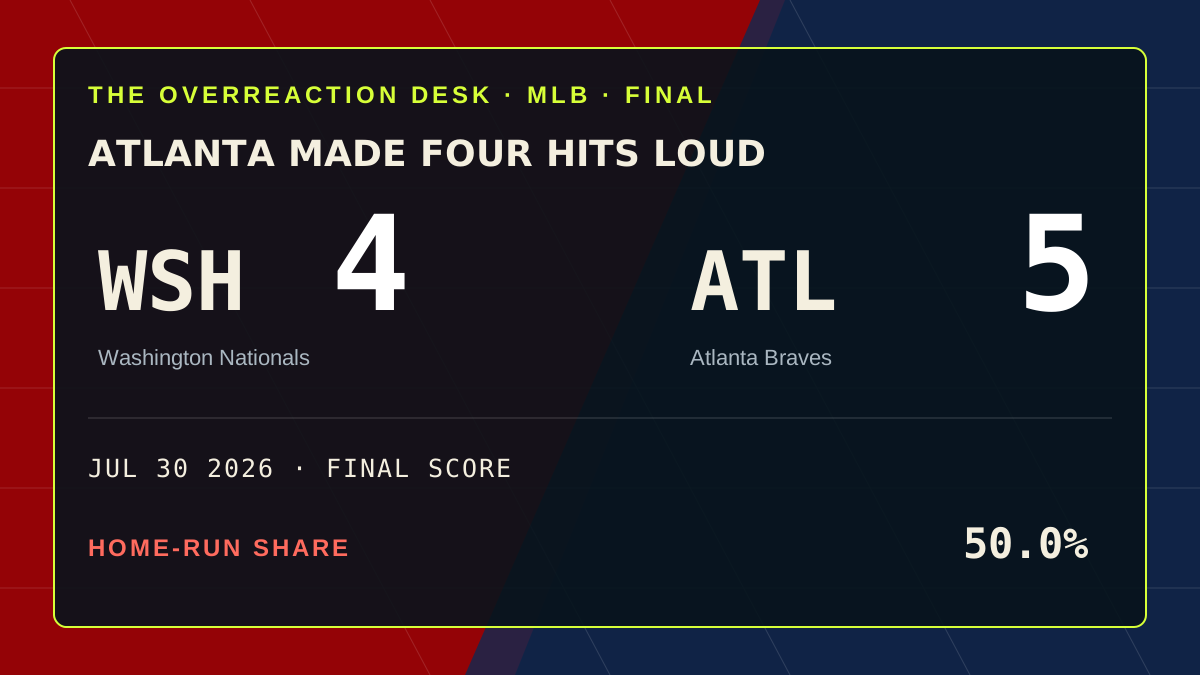
Four Hits, Five Runs
Atlanta beat Washington 5-4 with four hits. The Nationals had seven. That is the sort of box-score mismatch that usually sends a team home muttering about sequencing, and the Braves did indeed need every bit of sequence they could find.
Ronald Acuña Jr. homered and drove in a run. Mike Yastrzemski also homered and drove in two. Ozzie Albies added two RBIs, and Atlanta made four hits produce five runs while Washington kept finding more ordinary contact.
The Braves did not win the hit column. They won the consequence column.
Washington Kept Finding Contact
Luis García Jr. went 3-for-5 with a double, a home run, and two RBIs. Daylen Lile went deep twice and drove in two more. Washington’s offense had more bodies involved and more hits to show for it.
That did not make the Nationals’ attack empty. It made the game a contest between contact and damage. Washington built enough offense to keep the Braves from coasting, but the Nationals never created a lead large enough to make Atlanta’s power less relevant.
Every time Washington improved the texture of the inning, Atlanta answered with a swing that changed the math.
Half the Hits Left the Park
The Desk’s home-run share of hits was 50.0 percent, calculated from Atlanta’s two home runs across four hits. It is a deliberately blunt metric for a blunt night. Half of Atlanta’s hits were homers, and those two balls accounted for three of the Braves’ five runs.
The number does not suggest that Atlanta’s offense is supposed to live on four hits forever. It explains why four hits were enough on this particular night. When the contact is that concentrated, a team can lose the volume battle and still win the scoreboard.
Washington had the more convincing inning-to-inning contact. Atlanta had the cleaner damage. Close games are often decided by which one the final line remembers.
The Braves Needed Every Loud Detail
Atlanta’s four hits left no room for a quiet mistake. A fifth hit might have created a cushion. Instead, the Braves had to protect a one-run margin built almost entirely from home-run leverage and timely RBI contact.
The Nationals made that protection uncomfortable. García’s power and Lile’s two homers kept Washington in the game, while Jake Irvin’s five earned runs over five innings forced the Nationals to spend pitching resources before the night was ready to end. Atlanta’s bullpen absorbed the stress and held the final lead.
This was not a case of the Braves secretly dominating. It was a case of four hits becoming five runs while seven hits became four. The Nationals can point to the larger number. Atlanta can point to the only number that did not need interpretation.
The Desk Has Ruled
Atlanta won because its four hits carried more consequence than Washington’s seven. The 50.0 percent home-run share is the ruling: two of the Braves’ four hits were home runs, and the power concentration survived every Nationals response.
Washington brought more contact. Atlanta brought the louder receipts.