Let’s Review the Evidence
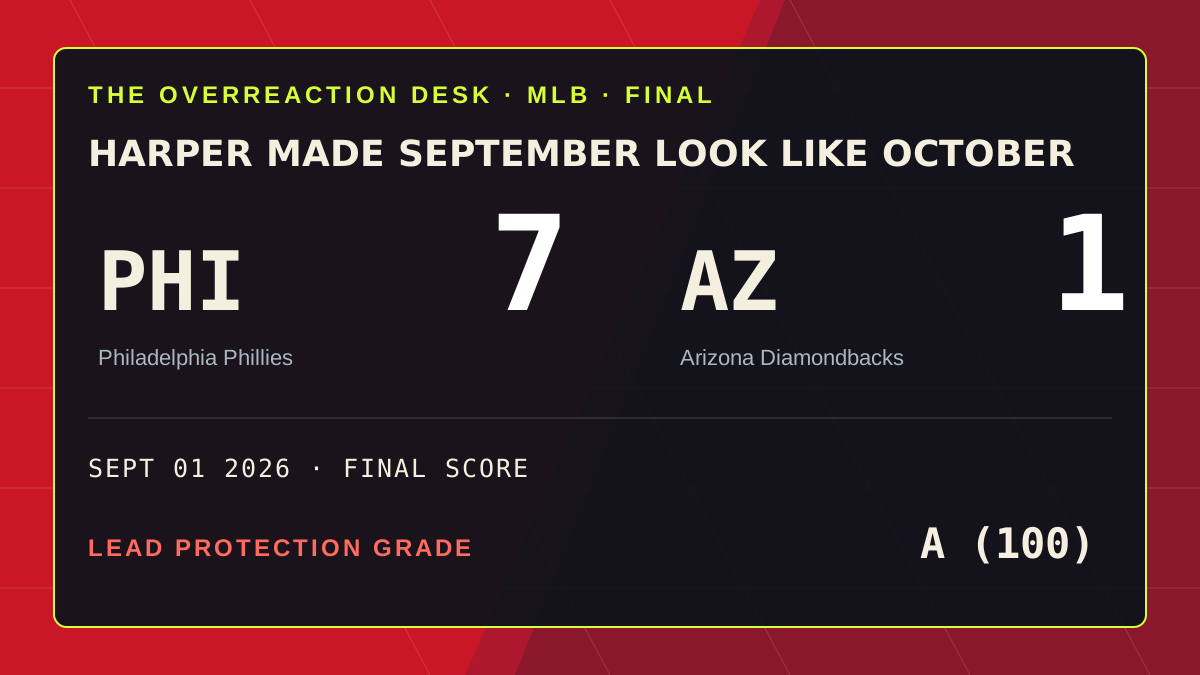
The Philadelphia Phillies defeated the Arizona Diamondbacks 7-1 for their sixth straight win, and the victory had the unmistakable look of a contender refusing to make September harder than necessary. Philadelphia scored twice in the first, added one in the fifth, and used a three-run eighth to turn a good road game into a finished one.
The Phillies did not need one heroic escape. They made the night cooperate from the opening pitch, which is a useful habit for a club that considers October the actual assignment.
When This Stopped Being Competitive
Trea Turner doubled home the first run, Luis Arraez brought home the second, and Philadelphia immediately made Arizona chase the shape of the game. The Diamondbacks got a solo homer from Jordan Lawlar in the fifth, but that answer did not become a rally.
The Phillies added three runs in the eighth. Justin Crawford singled home one, Kyle Schwarber lifted a sacrifice fly, and Bryce Harper added an RBI single. Bryson Stott’s sacrifice fly in the ninth made the score seven, but by then the point was already established: Arizona kept finding one run; Philadelphia kept building the next layer.
People Who Understood the Assignment
Harper reached base five times and finished with four hits, a performance that made every at-bat feel like a scheduling conflict for the Diamondbacks. He scored once and drove in another run, doing exactly the sort of veteran September work that turns a lineup from talented into exhausting.
Luzardo allowed one run over 6 2/3 innings and struck out six. He did not need a perfect night. He needed to keep Arizona from attaching its one run to a second one, and he did that until the Phillies’ lead had become structural.
Who Needs to Explain Themselves
Arizona finished with six hits and one error. That is not an empty effort, but it is a poor negotiation against a Phillies lineup that collected 13 hits and never gave the Diamondbacks a quiet inning to exploit.
The Diamondbacks are allowed to lose to a team playing this cleanly. They are not allowed to pretend the loss was mysterious. Philadelphia kept putting runners on, kept making outs useful, and kept the game away from the late-rally territory Arizona prefers.
The Desk Metric: A Lead That Behaved
The Desk’s Lead Protection Grade was A (100). Philadelphia’s largest lead was six runs, its final margin was six, and the closing inning did not subtract from the advantage. The grade is less about drama than durability: the Phillies built a cushion and made Arizona live inside it.
The Completely Unbiased Verdict
Philadelphia is now on a six-game winning streak because the whole roster is doing the boring, powerful things well. Harper kept reaching. Luzardo kept the damage small. The lineup kept adding.
That is how September confidence becomes something sturdier than a mood. It becomes a problem the rest of the National League has to schedule.