New York Had the Opening Word
Keaton Parks put New York City FC ahead in the 37th minute, and the home side carried a 1-0 lead into halftime. That was a useful start, especially because the first half had not been a one-way exercise in NYCFC control.
The lead still required protection. Necaxa had already shown enough threat to keep the match from becoming a ceremonial home victory, and a one-goal advantage is a fragile piece of architecture when the second half is still waiting.
Necaxa Turned One Goal into Two
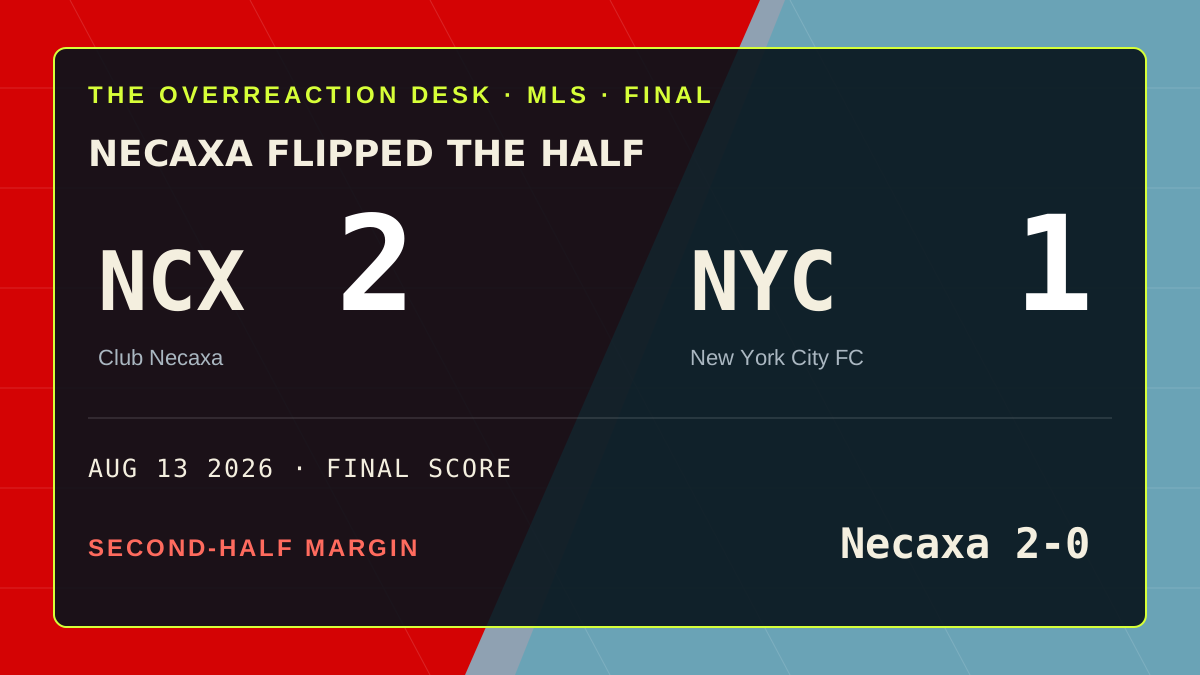
Juan Valencia equalized in the 58th minute. Juan Torres completed the reversal in the 79th, giving Necaxa a 2-1 win after a second half that it won 2-0.
That is not a comeback built on one strange bounce. It is a half built on repeated answers. NYCFC had the opening goal, but Necaxa had the section of the match in which the opening goal needed to matter most.
The Shot Count Chose a Side
Necaxa finished with a narrow 10-9 edge in shot attempts, but the more revealing gap was 5-2 in shots on target. New York City FC had the early lead; Necaxa made the goalkeeper work more often when the match tightened.
The result therefore does not require a grand theory about bad luck. NYCFC lost the second half, lost the shot-on-target battle, and lost a match it had led. The scoreboard is being dramatic, but it is not being mysterious.
The Desk Metric: Second-Half Margin
The Desk’s Second-Half Margin is Club Necaxa 2-0. It is the cleanest summary of the reversal: New York City FC’s advantage existed at halftime, and Necaxa’s answer occupied every goal in the second half.
For NYCFC, the lesson is unglamorous and therefore useful. A lead is not control until the team can keep producing the better chances after the opponent adjusts.
The Desk Has Ruled
New York City FC won the first half and lost the match because Club Necaxa won the half that came after the warning. Parks opened the door, Valencia and Torres walked through it, and Necaxa left with the entire second-half argument.