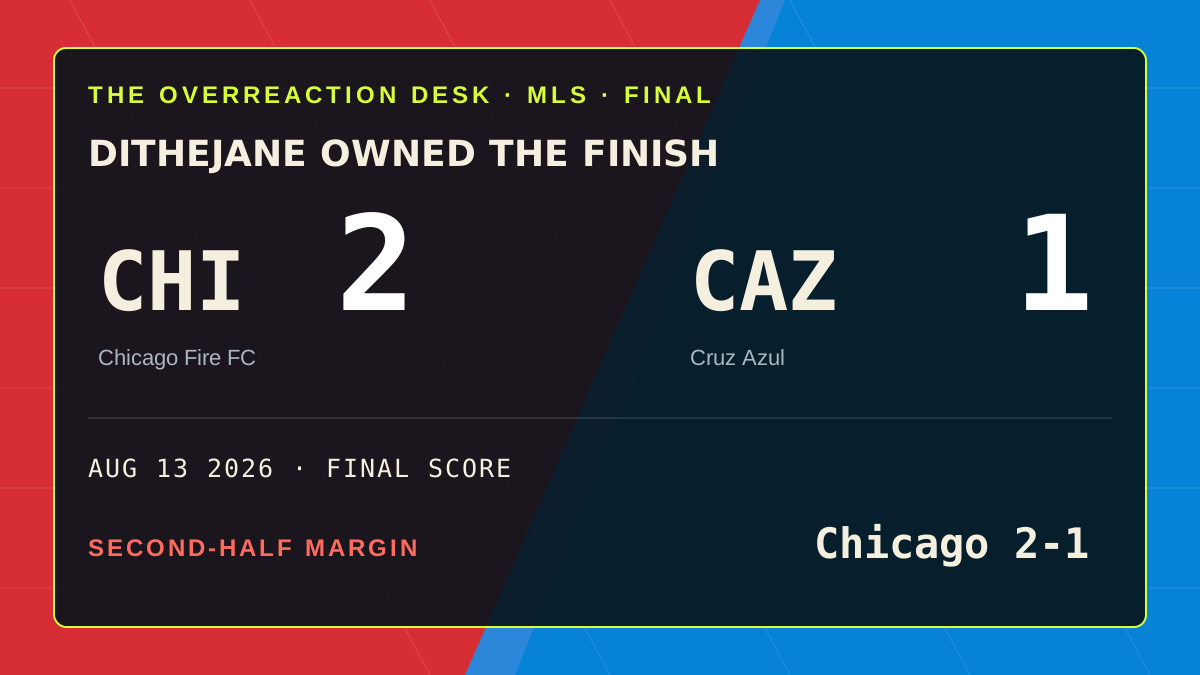
Chicago Let the Match Become a Dare
The first half ended 0-0, but the match was not empty. Cruz Azul produced 17 shot attempts to Chicago’s 11, while Chicago led 6-5 in shots on target. The Fire had fewer swings and the better fraction of them.
That is a dangerous shape for a favorite. Cruz Azul had the volume to claim the match. Chicago had the accuracy to keep the claim from becoming a verdict.
Dithejane Owned Both Turning Points
Puso Dithejane put Chicago ahead in the 67th minute. Nicolás Ibáñez answered for Cruz Azul in the 81st, creating the kind of late equality that usually rewards the team with the deeper reserve of pressure.
Dithejane was not finished. He scored again in the 90th minute plus three, turning a 1-1 match into a 2-1 Fire win just as the clock was preparing to file the game under unresolved.
The Fire Won the Useful Stat
Cruz Azul can point to the 17-11 shot edge. Chicago can point to the 6-5 edge in shots on target and, more importantly, the one shot that arrived after the match had reached its last breath.
The Fire did not need to out-volume Cruz Azul. It needed to make the dangerous chances heavier than the decorative ones. Dithejane’s brace made that argument impossible to ignore.
The Desk Metric: Second-Half Margin
The Desk’s Second-Half Margin is Chicago Fire FC 2-1. That number captures the whole match’s useful transformation: a scoreless first half became a three-goal second half, and Chicago won the exchange that actually decided the night.
The late winner matters more than the shot-count deficit because it arrived after Cruz Azul had already answered once. Chicago had to create a response to the response. Dithejane supplied it.
The Fire’s margin for error was thin, but the finish was not accidental. Chicago kept the final chance alive long enough for Dithejane to turn it into the only chance anyone needed to remember.
The Desk Has Ruled
Chicago did not win the volume contest against Cruz Azul. It won the timing contest, the accuracy contest, and the final contest. Dithejane turned a one-goal deficit into a stoppage-time celebration, which is an efficient way to make a tournament night feel much longer than 90 minutes.