Kansas City Made Los Angeles Work
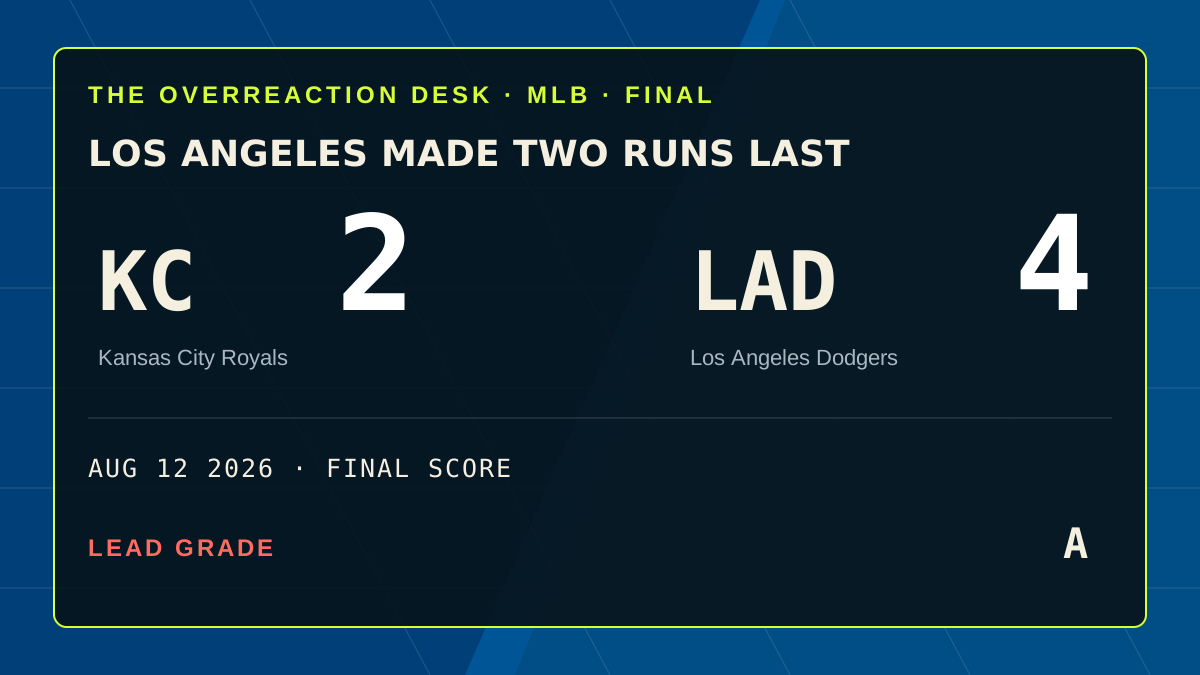
The Royals did not arrive at Dodger Stadium to serve as decorative opposition. They scored in the second and third innings, tied the game at 2-2, and forced Los Angeles to win the ordinary parts of the night before the famous names could make the recap sparkle. Kansas City finished with six hits and kept the contest inside one swing until the Dodgers’ pitching separated it.
The Dodgers answered with the kind of power that makes a narrow margin feel intentional. Shohei Ohtani drove in two with a home run, Mookie Betts added a solo shot, and Hunter Feduccia supplied the third homer. There was no one giant inning to hide behind. Los Angeles built four runs from three clean bursts and then protected them.
Lauer Owned the Quiet Space
Eric Lauer’s outing was the part of the game most likely to be skipped by anyone who only watched the home-run clips. He allowed one earned run over 6 1/3 innings, struck out six, and gave the Dodgers a long runway after Kansas City had matched the first scoring exchange. That length changed the entire mood of the game.
The Royals had chances to turn the two-run margin into an argument, but Lauer kept those chances from becoming a line of traffic. Landon Knack finished the final 2 2/3 innings without allowing a run. The Dodgers’ eight hits were not overwhelming; their control of the next at-bat was.
The Desk Has Ruled
The ruling is simple: the Dodgers won a small game with big names, but the stars were only useful because the pitching made their lead durable. Kansas City got enough contact to stay involved. Los Angeles got the two things contenders want when the margin is thin: a timely swing and a starter who refuses to leave early.
The Desk’s Lead Protection Grade is an A (100). Los Angeles’ largest lead was two, exactly the final margin, and the closing inning did not produce a new emergency. That is not a blowout grade. It is a precision grade. The Dodgers did not ask the Royals to admire the brand. They asked them to beat three home runs and 6 1/3 innings of Lauer, which is a much less friendly assignment.