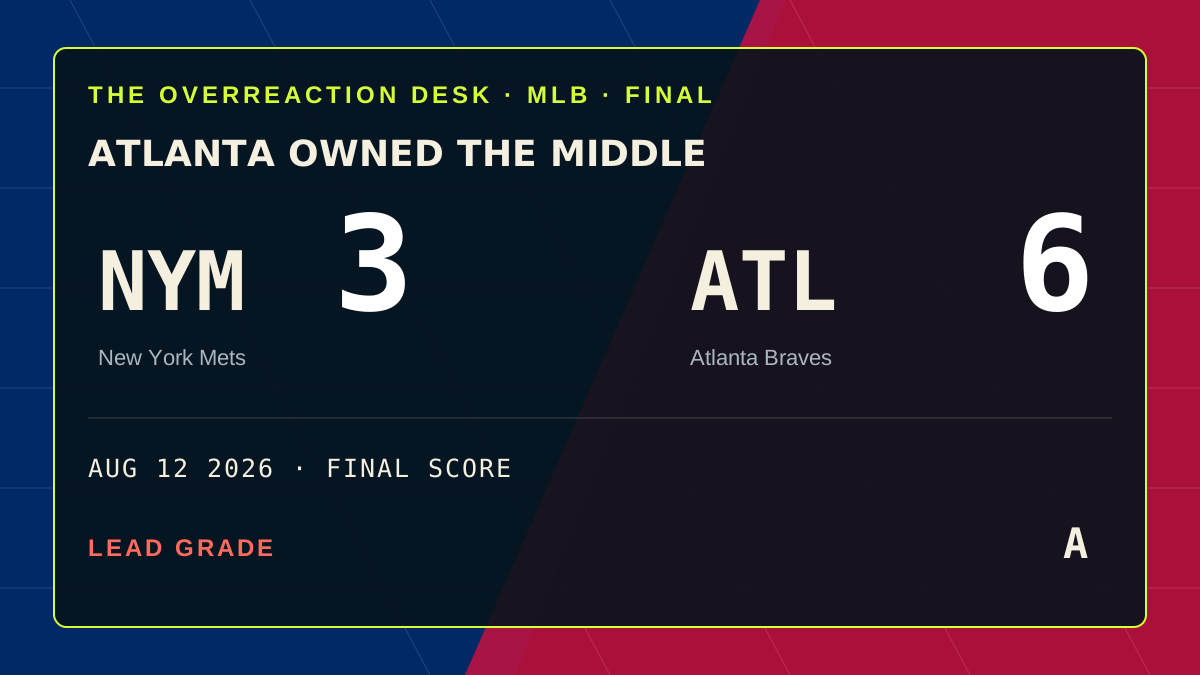
New York Had Enough Contact
The Mets did not lose because they forgot how to hit. New York collected seven hits and put three solo home runs on the board, with Luis Robert Jr., Bo Bichette and Luis Torrens each supplying one. That is enough noise to make a visiting lineup feel dangerous, especially in a rivalry game where every empty inning is treated as evidence.
The problem was that Atlanta’s lineup kept answering the question before it could become a crisis. The Braves finished with 12 hits, and the extra five hits mattered because they kept innings alive after New York’s power had produced its damage. Atlanta did not need one dramatic burst. It needed to stop the Mets from owning the spaces between the homers.
Mahle Made the Middle Hold
Tyler Mahle delivered six innings with seven strikeouts and only one earned run. That was the structural win. New York’s best chance was to turn its home-run contact into a larger inning, but Mahle kept the bases from filling around it. The Mets could score. They could not build a chain.
Austin Riley led the Atlanta attack with a 3-for-4 night and a home run. Mike Yastrzemski went 2-for-2 with a homer, and Ronald Acuna Jr. went 2-for-3 while scoring twice. The Braves’ advantage came from spreading the work around, which is a polite way of saying they made the Mets cover every square foot of the field.
The Desk Has Ruled
Atlanta’s final margin was three, but the game was not as comfortable as the score looks until the Braves had already made their lead durable. New York’s late run trimmed the margin, yet Atlanta’s bullpen finished the job and did not allow the Mets to turn the ninth into a new story.
The Desk’s Lead Protection Grade is an A (93). The Braves’ largest lead was four, the final margin was three, and New York won the closing inning by one. That grade gives the Mets credit for making the finish interesting while ruling that Atlanta controlled the broader argument. The Braves won the middle innings, and the middle innings owned the game.