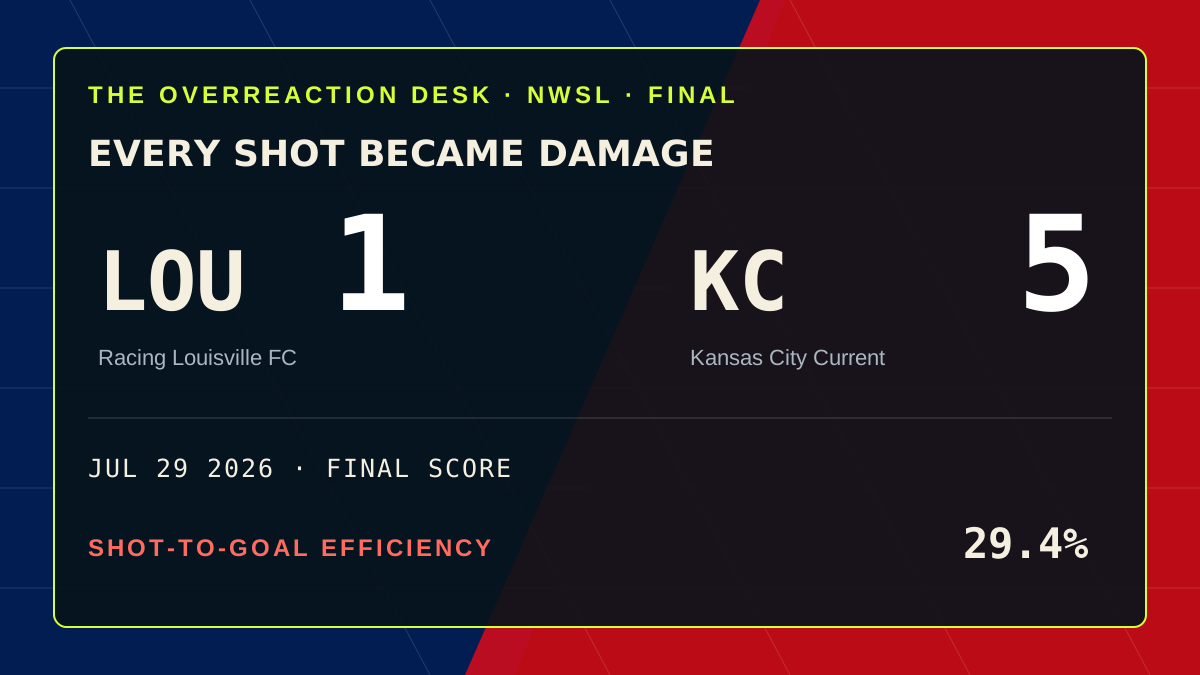
Kansas City Started the Argument Immediately
Haley Hopkins scored in the fifth minute, and Kansas City spent the rest of the match explaining that the opening goal had not been a lucky introduction. Debinha followed in the 15th, Amelia White made it three in the 20th, and the Current had turned an early advantage into a 3-0 operating principle before Louisville could settle.
Racing did produce 14 shots and five on target. This was not a match in which Louisville failed to cross midfield or forgot the point of the exercise. It was a match in which every promising response arrived with Kansas City already holding the better answer.
The Current Turned Volume into Damage
Kansas City finished with 17 shots and ten on target. Those numbers alone describe pressure. The five goals explain the more important part: the pressure kept becoming something the scoreboard had to acknowledge.
The Desk’s shot-to-goal efficiency was 29.4 percent, calculated from five goals on 17 shots. That is a blunt metric, but it captures the difference between a team that attacks and a team that makes the attack feel expensive. Kansas City did not need a hundred hopeful attempts. It kept finding the finish inside a manageable number of chances.
Hopkins scored again in the 48th minute, and Debinha added her second in the 52nd. By then the match had moved from competitive response to damage control. Taylor Flint’s penalty for Racing in the 81st minute supplied a result they could point to, but it could not change the shape of the night.
Racing’s Pressure Never Became Leverage
Louisville’s five shots on target were enough to make the goalkeeper work. They were not enough to force Kansas City into a different plan. The Current kept the ball moving through another wave, another runner, another chance, and another reason for Racing’s back line to stop admiring the previous problem.
That is the difference between pressure and leverage. Louisville had pressure in stretches. Kansas City had the leverage to turn its pressure into goals, then use the lead to make the remaining match increasingly about time.
For the Current, the performance was both entertaining and instructive. Five goals can create the illusion that everything was effortless. The shot total says otherwise. Kansas City kept producing the work; it simply finished enough of it to make the work look inevitable.
The Desk Has Ruled
Kansas City did not win because Racing had no ideas. It won because the Current kept converting its ideas before Louisville could turn its own pressure into a counterargument.
Hopkins and Debinha supplied the headline, White supplied the middle blow, and the shot quality held up across the evening. Racing can take the five-goal scoreline personally if it wants. Kansas City took it professionally, which is much more alarming for everyone else in the standings.