Chicago Made Contact a Problem
The Cubs collected 11 hits and five doubles. St. Louis collected ten hits and one home run. That is not a huge gap in contact; it is a difference in how much of the contact kept sending runners into better scoring position.
Nico Hoerner went 3-for-5. Michael Busch, Alex Bregman, and Pete Crow-Armstrong each added two hits. Alex Bregman’s two doubles and Ian Happ’s double supplied the kind of extra-base traffic that makes a pitcher feel as if the next single is already dangerous.
The Cardinals had answers of their own. Bryan Torres went 2-for-4 with an RBI, and JJ Wetherholt went 2-for-5 with a home run. St. Louis did not spend the night waiting for baseball to happen. It simply kept finding that Chicago’s contact was arriving with more room attached.
The Double Was the Mood
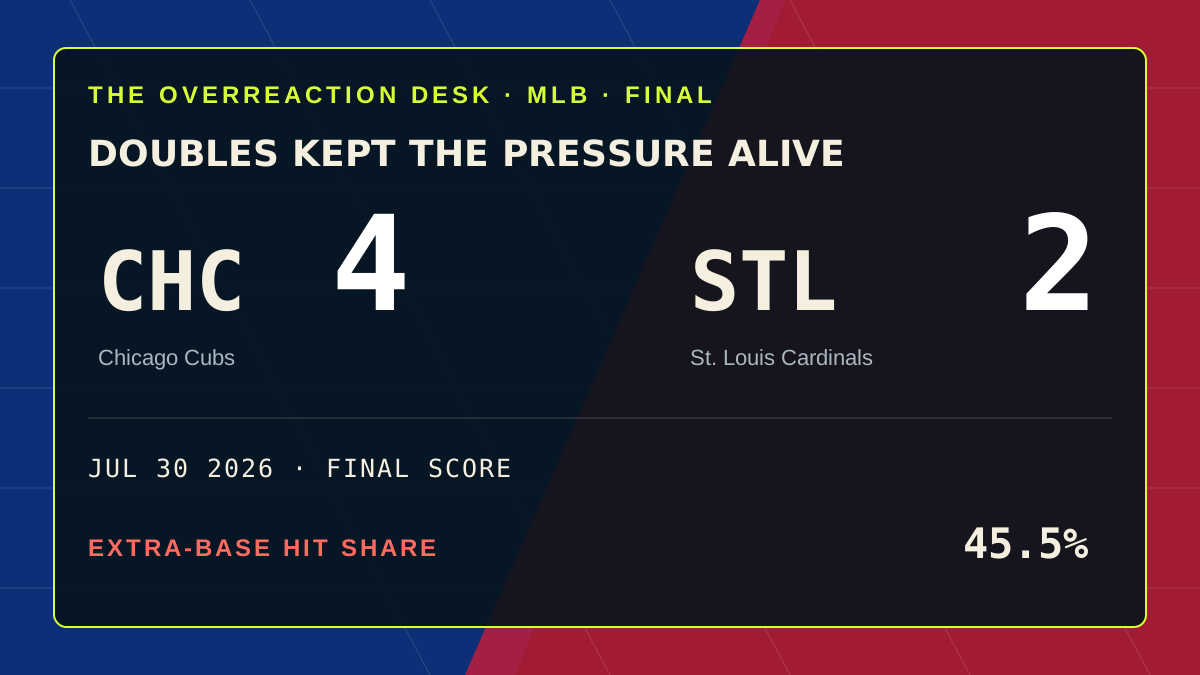
The Desk’s extra-base hit share was 45.5 percent, calculated from Chicago’s five doubles across 11 hits. It is not a claim that every double was equally valuable. It is a measure of how often the Cubs’ contact moved beyond the ordinary single and kept the inning’s pressure moving forward.
That pressure helped Chicago build a 3-2 lead before the Cardinals could reset. When St. Louis tied the game through Wetherholt’s homer, the Cubs still had the more repeatable way to create trouble: keep putting the ball where a single would not be enough to erase the previous problem.
St. Louis Had the Power, Chicago Had the Next Answer
Wetherholt’s home run gave the Cardinals the cleanest single swing of the night. Chicago answered with the less cinematic method. It kept reaching, moving runners, and letting the extra-base hits make the next plate appearance harder for St. Louis to navigate.
The game went to the tenth tied at two. Chicago then scored twice in the inning, with Bregman’s double helping bring Seiya Suzuki home and Happ’s double bringing Bregman across. The Cubs did not need a new offensive identity in extra innings. They repeated the one that had kept the game leaning toward them all night.
St. Louis finished with 23 runners left on base and one fielding error. Those numbers do not mean the Cardinals were empty-handed; they mean too many promising innings ended without a clean final exchange. Chicago’s 11 hits were not all loud. They were persistent, and persistence wins a lot of rivalry games that refuse to become elegant.
The Desk Has Ruled
Chicago won by making contact accumulate. Hoerner kept the line moving, the doubles kept turning singles into threats, and the tenth inning rewarded the team that had spent the night building pressure instead of waiting for one perfect swing.
St. Louis had the prettier home-run answer. Chicago had five doubles, 11 hits, and one more wave when the game entered its extra frame. In a rivalry, that is the kind of victory that leaves the other side checking whether the bruises are technically on the box score.