Here’s What Just Happened
Jeremy Peña opened the scoring with a first-inning homer, and Lucas Spence doubled home Houston’s second run in the second. Miami finally cut the margin to 2-1 on Kyle Stowers’ RBI double in the fifth.
That was the moment when a young Marlins club could reasonably imagine pulling the game into its preferred uncomfortable territory. Isaac Paredes removed the possibility with one swing.
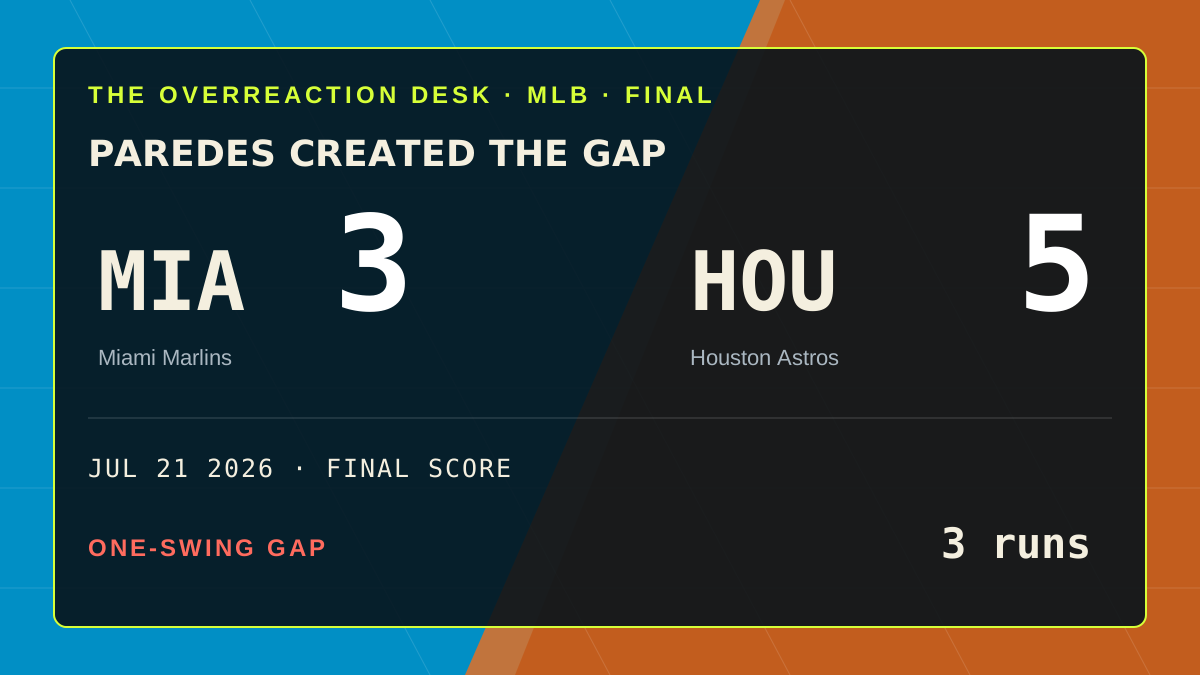
His three-run homer in the bottom of the fifth pushed Houston ahead 5-1. Miami later scored twice, but the Astros had already purchased all the separation they needed.
The Moment Everyone Knew
Peña and Yordan Alvarez reached ahead of Paredes in the fifth. Tyler Phillips departed after retiring one batter, and Tyler Zuber inherited a one-run game with the middle of Houston’s order waiting.
Paredes drove the ball over the left-field wall. Three pitches of scoreboard pressure became a four-run lead, and Miami’s route changed from one timely hit to a sustained comeback against a rested late-inning group.
Houston has applied October standards to ordinary nights for years. This was the familiar version: protect a narrow advantage until one experienced hitter finds the swing that changes the bullpen map.
The Adults in the Room
Tatsuya Imai allowed one run on four hits in six innings. He walked three, struck out eight and kept Miami from stacking its eight total hits into a larger rally.
Paredes went 2-for-4 with three RBIs. Alvarez had two hits, and Peña scored twice. Bennett Sousa worked a scoreless eighth before Josh Hader handled the ninth for his 11th save.
Joe Mack gave Miami a real response with a two-run homer in the seventh. That swing cut the deficit to 5-3, but the Marlins did not put another runner in position to change the result.
Who Needs to Explain Themselves
Miami had enough contact to make the game competitive. Stowers, Heriberto Hernández and Javier Sanoja each had two hits, and the Marlins matched Houston with eight hits overall.
The problem was distribution. Houston attached three runners to its biggest swing. Miami’s best damage arrived after the four-run margin already existed.
The Marlins also committed the game’s only error, though Houston did not need it to manufacture the decisive inning. The central difference remained cleaner timing, not a dramatic gap in total contact.
For a developing roster, staying near an experienced club is useful evidence. Losing the decisive sequencing battle is also the kind of lesson that arrives with no participation certificate. The Marlins found eight hits and still spent the late innings chasing one Paredes pitch.
The Desk Has Ruled
The verified One-Swing Separation was three runs.
Desk ruling: Imai kept Houston in control until Paredes made the control visible on the scoreboard. Miami produced enough offense to demand attention, but the Astros concentrated their best contact in the exact inning that settled the game.