Let’s Review the Evidence
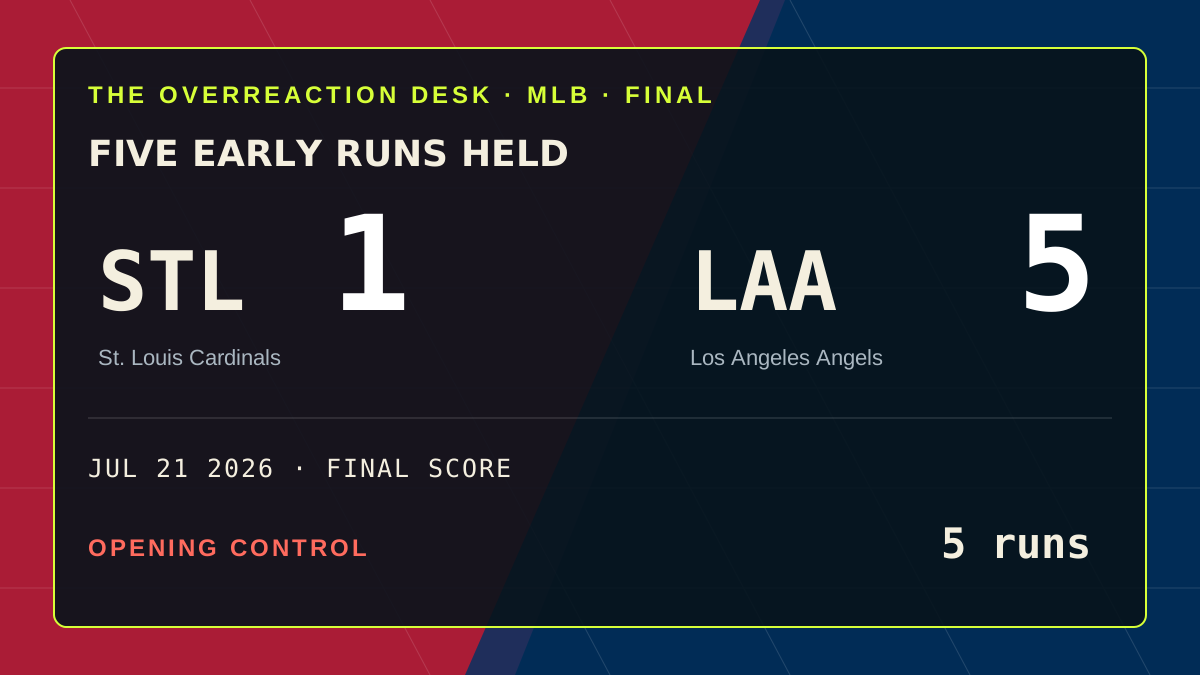
The Angels scored five runs in the first inning and none in the next eight. It did not matter.
Jorge Soler doubled home Mike Trout and Nolan Schanuel. Vaughn Grissom singled home Soler, and Jo Adell followed with a two-run homer. Matthew Liberatore had faced the dangerous part of the order once and already needed five runs of support that never arrived.
Los Angeles won 5-1 because Walbert Ureña and three relievers turned the remaining innings into an exercise in protecting what the lineup had already built.
The Moment the Game Broke
Adell’s homer completed the opening burst. St. Louis had two outs and a chance to escape the inning down three when Grissom reached. Adell then drove the next mistake over the wall in left-center.
A difficult first inning became a five-run assignment. The Cardinals would need sustained contact rather than one swing, and the Angels never allowed the required sequence to form.
For a club whose close leads often arrive with bullpen alarms attached, this was a refreshing administrative change: make the lead large immediately, then decline to make the rest of the night dramatic.
People Who Understood the Assignment
Ureña allowed six hits and one run across six innings. He walked one and struck out five, keeping St. Louis from turning seven total hits into anything beyond a fifth-inning run.
Mitch Farris, Chase Silseth and Ryan Zeferjahn combined for three scoreless innings. Zeferjahn struck out all three batters he faced in the ninth.
Adell went 2-for-4 with the homer and two RBIs. Zach Neto also had two hits, while Soler and Grissom supplied the other three first-inning runs driven in.
The Blame Queue
Liberatore recovered enough to work 5 1/3 innings and struck out seven, but the first inning had already set the terms. He allowed nine hits and all five Los Angeles runs.
Alec Burleson had three hits for St. Louis. The rest of the lineup never built around him. The Cardinals’ only run scored on JJ Wetherholt’s fifth-inning forceout.
St. Louis put at least one runner aboard in five innings after the first. None of those innings produced the extra-base hit or consecutive clean at-bats required to make Los Angeles reconsider the shape of the game.
Baseball-town confidence can survive a bad inning. It is harder to explain eight quiet innings after the bad inning created an obvious target. St. Louis had the entire night to make five runs feel temporary and never got closer than four.
The Desk Has Ruled
The verified Opening-Inning Control was five runs.
Desk ruling: the Angels placed every run they needed in the first inning, then trusted Ureña and the bullpen to carry the number. Los Angeles did not add insurance because the Cardinals never produced enough pressure to require it.