One Swing, Then a Long Night
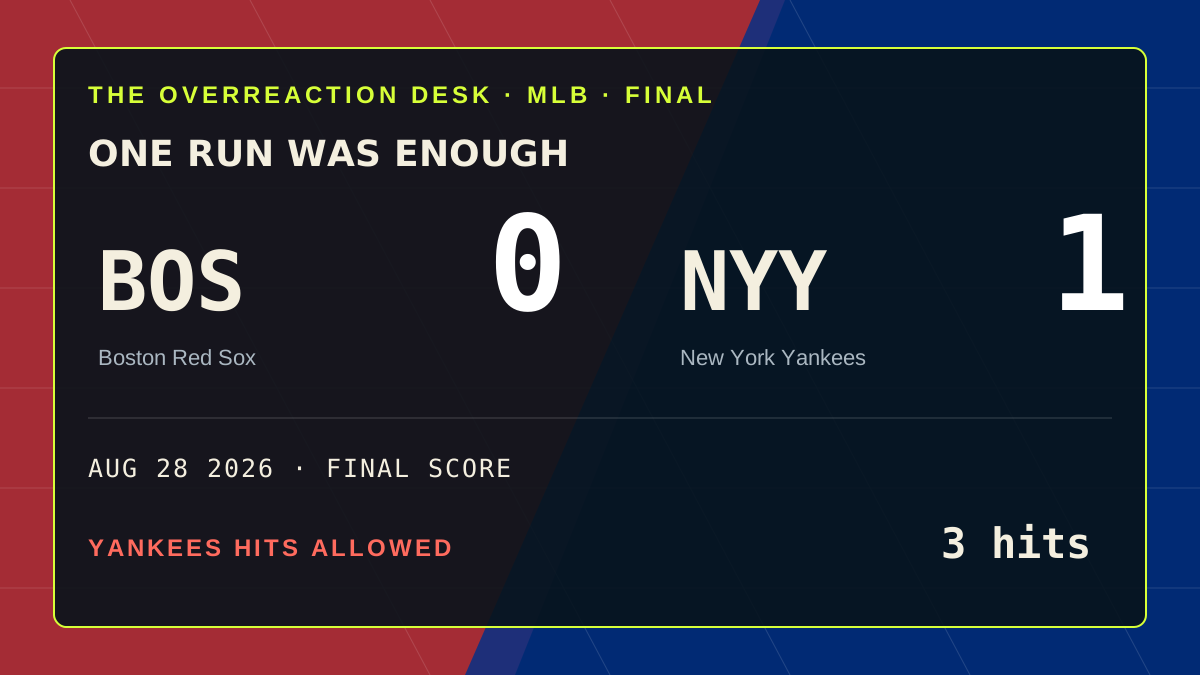
The Yankees and Red Sox played the sort of rivalry game that refuses to provide a comfortable paragraph. Boston drew six walks. New York got three hits. Paul Goldschmidt hit one ball over the fence, and that was the entire scoring ledger.
New York won 1-0 because its pitching staff treated every baserunner as a problem to solve instead of a future run. The Red Sox kept creating traffic, but the Yankees kept declining the invitation to make the game dramatic.
Goldschmidt Supplied the Only Receipt
Goldschmidt’s solo home run in the third inning gave New York the lead and then became the kind of tiny advantage that grows larger every time the other team leaves a runner stranded. The Yankees did not add insurance. They did not need to.
Boston collected five hits in the official feed and reached base with walks, but the Red Sox went 0-for-4 with runners in scoring position. That combination creates the cruelest kind of frustration: enough activity to make the box score look alive, not enough execution to make the scoreboard move.
New York’s staff allowed five hits and kept the one-run lead intact. The game was not a pitching masterpiece because nobody got to relax. It was a pitching argument won one uncomfortable plate appearance at a time.
The Desk’s Traffic Report
The Desk’s Yankees Hits metric was three. Boston did not lose because it failed to reach base. It lost because New York kept turning those opportunities into waiting rooms.
That is what made the result more instructive than a routine shutout. The Yankees did not overwhelm the Red Sox with volume. They forced Boston to manufacture the entire night, then refused to let any individual piece become a run.
For a rivalry that usually arrives with fireworks, New York chose the one-run version of arrogance: score once, defend the evidence, and make Boston explain the empty spaces.
The Desk Has Ruled
The Yankees won the loud rivalry with a quiet plan. Goldschmidt supplied one swing, the staff supplied scoreless resistance, and New York’s three-hit offense made sure Boston supplied six walks that never became a celebration.
One run is not supposed to be enough in a game with this much history. On Friday, it was enough because New York made the Red Sox carry every unfinished opportunity all the way to the final out.