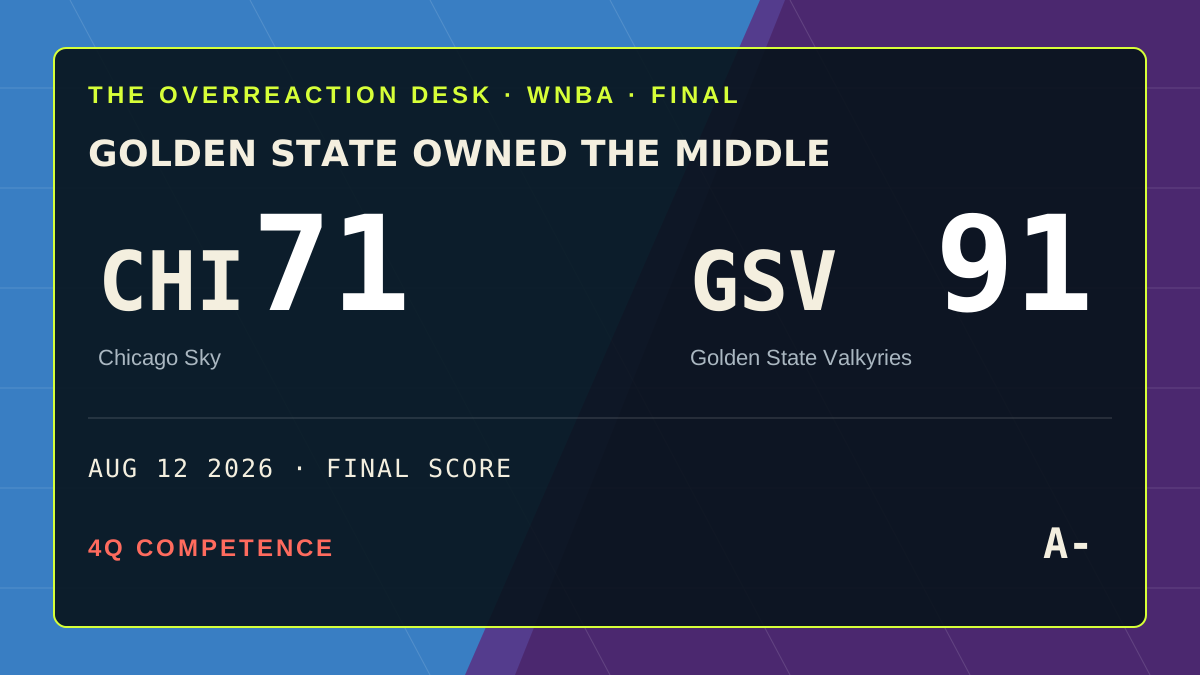
Chicago Started With the Answer
The Sky won the first quarter 24-16, which is usually how a team tries to establish control before the game gets weird. Golden State did not panic. It simply stopped treating the opening eight minutes like a prophecy.
The Valkyries answered with a 27-16 second quarter, then widened the gap with a 29-18 third. By the time the game reached the fourth, the first-quarter scoreboard had become historical trivia.
The turnaround was built on ordinary winning habits. Golden State moved the ball, got better looks, and made Chicago defend multiple actions instead of waiting for one difficult shot. The Sky were not erased by a single superstar run; they were asked to survive connected possessions and kept losing the next one. That is how a manageable deficit becomes a full evening of chasing.
Hayes Made the Recovery Look Organized
Tiffany Hayes led Golden State with 22 points, six rebounds and five assists. Kaila Charles added 15, Veronica Burton had 13 points and six rebounds, and the Valkyries moved the ball well enough to turn 32 made field goals into a comfortable night.
Chicago got 20 points from Kamilla Cardoso and 11 from Rachel Banham, but the Sky shot 27-for-63 and committed 17 turnovers. The Valkyries did not need a single heroic run; they needed the accumulation of clean possessions, and they got it.
That balance mattered more than the margin. Golden State did not spend the closing minutes forcing the ball to one scorer or turning the game into a three-point lottery. The Valkyries made the night look organized, which is a particularly rude way to answer a team that began by making them look late.
The Desk Has Ruled
Golden State’s fourth quarter was not the story because the game had already been decided in the middle. The Valkyries won the final period 19-13, a useful close after the stronger work had already been done.
The Desk’s Fourth-Quarter Competence grade is an A-, based on a plus-six closing-period differential. The overreaction is that Golden State can erase every slow start by halftime. The real ruling is sharper: this team can make a bad opening feel temporary because it owns the parts of the game that come next.