Chicago Opened the Door
The Cubs scored first Friday night. Pete Crow-Armstrong walked, stole second and came home on Michael Busch’s single. Wrigley Field had an early lead and a perfectly reasonable expectation that the home team might keep it.
Minnesota answered with four runs in the third. Luke Keaschall and Tristan Gray reached, Trevor Larnach tied the game with a single, and Ryan Jeffers sent a three-run homer over the wall in left-center. The Twins did not gradually steal the momentum. They picked it up in one inning and left the Cubs a forwarding address.
Jeffers’ homer was his eighth of the season and his first since May 17. Timing covered for frequency.
Ober Protected the Shape of the Game
Bailey Ober allowed two runs on five hits in 5 1/3 innings, walked two and struck out seven. Chicago’s second run arrived in the sixth after Seiya Suzuki doubled and scored on a wild pitch, but the Cubs never brought the tying run to the plate with the same authority Minnesota had shown in the third.
The Twins restored the three-run margin in the seventh. Austin Martin and Keaschall walked before Ryan Kreidler drove in Martin with a single. Yoendrys Gomez then worked a scoreless ninth for his 12th save.
Chicago had the tying run on deck when Carson Kelly drove the final ball to the warning track. It looked dramatic long enough to qualify as an ending, not long enough to become a comeback.
Minnesota’s Run Is Becoming a Pattern
The win was Minnesota’s third straight and its 10th in 14 games. It also brought the Twins back to .500 for the first time since April 22.
That context makes the result more useful than an isolated road win. Minnesota did not need a perfect offensive night. Seven hits, one forceful inning and steady pitching were enough to continue a stretch in which the Twins are repeatedly doing the important work before the late innings can become chaotic.
The Cubs collected six hits but produced only one run-scoring hit. Their offense created a first-inning lead and then spent the rest of the night trying to recreate the conditions.
The Desk Metric: 60% Jeffers
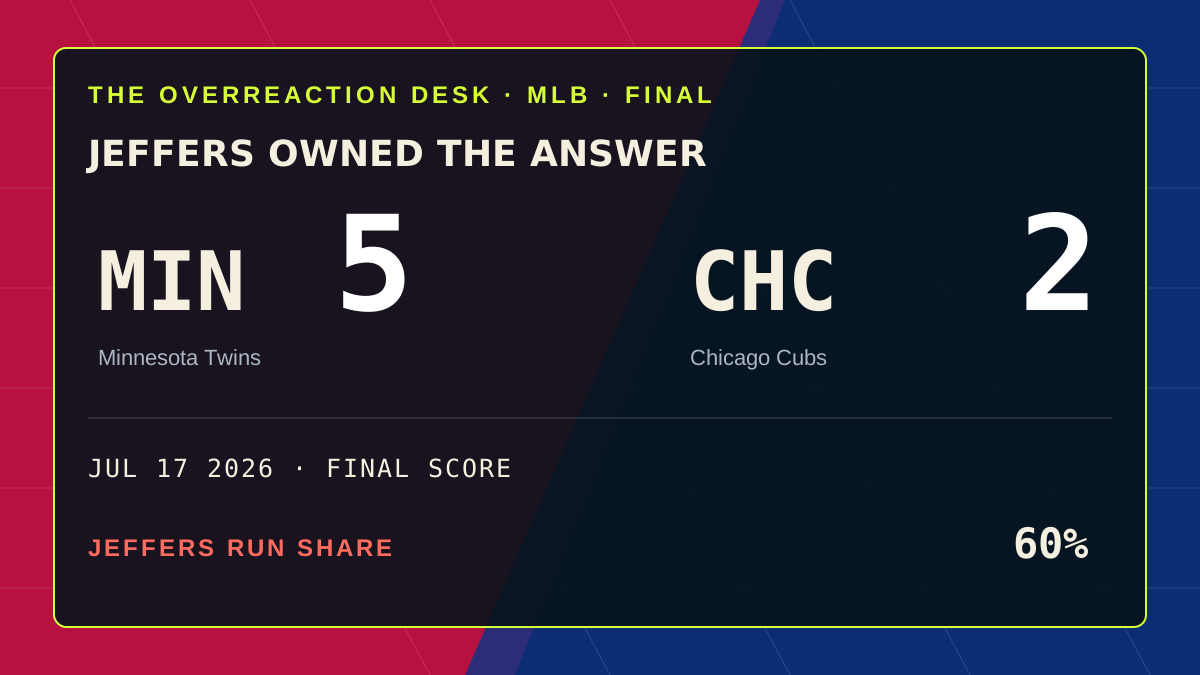
Jeffers drove in three of Minnesota’s five runs, a 60% share. All three came on the swing that changed a 1-1 tie into a 4-1 Twins lead.
That concentration explains the game. Minnesota did not win through constant pressure; it won because Jeffers converted one inning’s traffic before Chicago could escape it.
The Desk Has Ruled
Desk ruling: The Cubs offered Minnesota a narrow early problem, and Jeffers returned a three-run answer. Ober and the bullpen made that answer hold up, which is how one swing became the whole argument and Minnesota’s winning streak reached three.