Tennessee never let the game go quiet
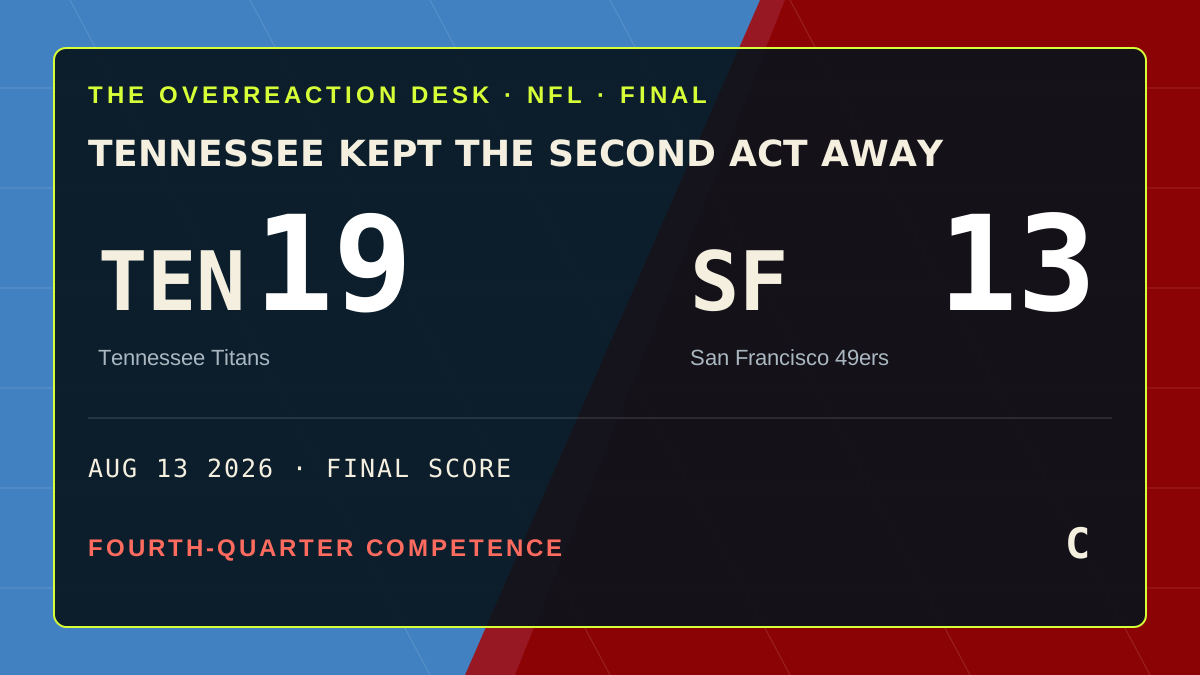
Tennessee beat San Francisco 19-13 in a game that rewarded steady pressure over one spectacular quarter. The Titans scored seven points in the first, six in the second, three in the third, and three in the fourth. San Francisco answered with seven points in the second, three in the third, and three in the fourth, but the 49ers never found enough offense to turn the game into a second act.
The score was not a demolition. It was a six-point Titans win built on the less glamorous habit of putting something on the board every quarter. Tennessee did not need one giant swing because it kept the scoreboard from becoming a blank page.
The 49ers answered once and then stayed in the same argument
San Francisco trailed 7-0 after the first quarter, responded with seven points in the second, and reached halftime down 13-7. That response mattered. It showed the 49ers could close the initial gap and keep the opener from becoming an early exit.
The problem was the lack of a follow-up. San Francisco scored three points in each of the final two quarters, the exact kind of output that keeps a team visible without giving it enough force to change the result. Tennessee did not dominate the second half. It simply refused to let the 49ers find a fresh burst.
Tennessee’s win was about continuity, not fireworks
The Titans should not mistake a preseason win for a solved roster, but they can value the structure of this one. Every quarter produced points. The team kept its lead through the game’s middle and final transitions. That is a better August signal than a sudden 30-point spike followed by a long period of nothing.
San Francisco’s correction is similarly specific. The 49ers did not need a miracle comeback; they needed one quarter in which three points became seven or zero became a defensive swing. The game stayed available, but Tennessee kept charging admission.
The Desk Has Ruled
Tennessee won because San Francisco’s only real response was a single second-quarter burst. The Titans scored in every period, maintained a lead after halftime, and never handed the 49ers a quarter that could become a takeover. The 49ers stayed close. Tennessee stayed in control.
The Desk’s fourth-quarter competence grade is C. The closing differential was even, with both teams scoring three points. That is not a complaint about the win; it is the accurate label for a finish that protected Tennessee’s advantage without expanding it. The Titans earned the result by making every quarter matter.