The Scoreboard Testimony
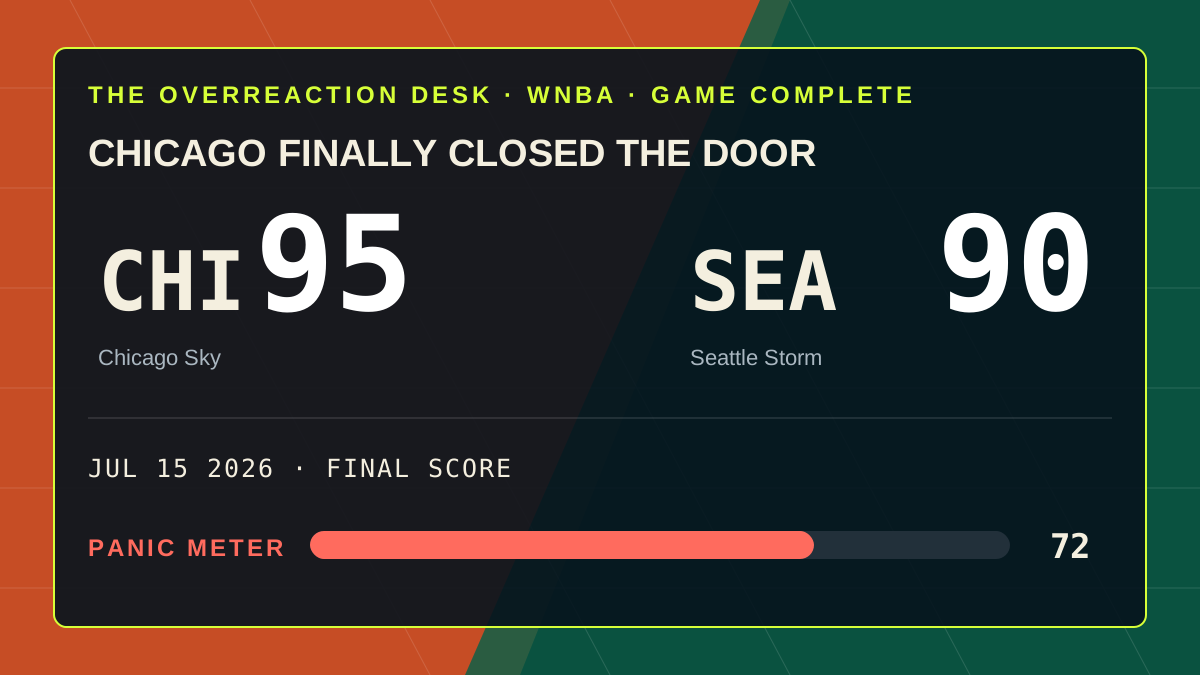
Chicago beat Seattle 95-90 on Wednesday at Wintrust Arena, which sounds routine until the fourth quarter is entered into evidence. The Sky led 56-44 at halftime and 77-69 after three quarters. Then Seattle did what Seattle has become far too practiced at doing: turn a difficult afternoon into a late, urgent negotiation.
Flau’jae Johnson hit a 3-pointer with 4:30 left to cut Chicago’s lead to 86-84. A game the Sky had controlled was suddenly balanced on one possession and several thousand elevated heart rates.
The Possession That Settled It
Chicago answered with grown-up basketball. Courtney Vandersloot hit a jumper. Natasha Cloud buried a 3-pointer with 1:36 left to restore a six-point lead. After Seattle pulled within 91-88, Azura Stevens slipped inside for a layup off Vandersloot’s pass with 27.3 seconds remaining.
Seattle got one more Malonga layup, but Cloud made two free throws and ended the discussion. Chicago did not make the finish comfortable. It did make the finish count, and that distinction mattered Wednesday.
The People Who Kept the Lights On
Stevens led the Sky with 20 points, eight rebounds, and four assists. Sydney Taylor added 17 points, while Cloud supplied 13 points, six assists, and four steals. Her late 3-pointer and closing free throws were the difference between a controlled win and a deeply awkward explanation.
Johnson was Seattle’s best answer with 25 points, six rebounds, four assists, and three steals. Dominique Malonga added 16 points and 12 rebounds. The Storm had enough individual production to threaten the comeback. They did not have enough shooting to complete it.
Please Address the Perimeter
Seattle made 4 of 25 attempts from 3-point range. Four. Chicago made 11 of 32. That seven-shot gap from behind the arc is 21 points of arithmetic, which is inconvenient when the final margin is five.
The Storm deserve credit for cutting a 12-point halftime deficit to two. They also deserve the question attached to every heroic rally: why was the rescue operation necessary? A comeback is admirable. Requiring one every time is just poor scheduling for the nervous system.
What the Records Say Now
Chicago improved to 8-16. Seattle fell to 6-20. Neither record permits a victory parade, but the Sky can take something useful from the final minutes. When the lead tightened, Vandersloot, Cloud, and Stevens created clean answers instead of waiting for panic to become the offense.
Seattle can point to Johnson and Malonga as reasons for belief. The larger issue remains the same: competitive stretches cannot keep arriving after the opponent has already built the emergency.
The Desk Has Ruled
Chicago opened the door, heard the Storm coming, and finally remembered how locks work. Seattle’s rally made the ending dramatic. The Sky’s late execution made the drama survivable.
Desk ruling: Chicago earned the win, Seattle earned the comeback applause, and 4-for-25 from deep belongs in a locked drawer until further notice.