The Damage Report
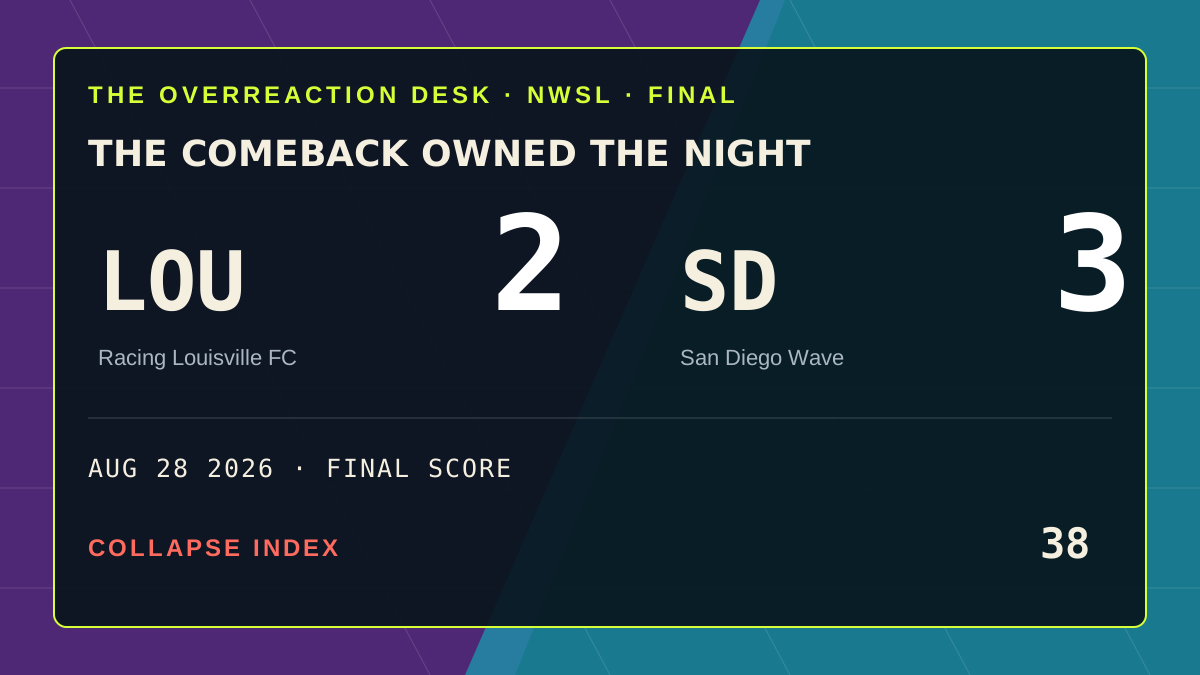
Racing Louisville led San Diego 2-0 after 23 minutes and still left Snapdragon Stadium with nothing but a very accurate explanation of how a match can escape.
San Diego won 3-2 after Trinity Byars scored twice and substitute Kenza Dali completed the comeback in the 80th minute. The Wave finished with 32 shots, a club season high, and turned a bad first half into the kind of home victory that makes the standings feel personally vindicated.
The Moment the Game Broke
Louisville’s opening was excellent. Lauren Milliet finished in the 12th minute after Kayla Fischer created the chance, and Taylor Flint doubled the lead in the 23rd minute from a set piece. Racing had the match’s first script, and it was a good one.
San Diego rewrote it immediately after halftime. Byars scored in the 47th minute, then added her second in the 76th after reacting first to a blocked set-piece effort. Two minutes later, Dali — back from injury and on as a 63rd-minute substitute — finished from outside the box.
That is a three-goal swing in 33 minutes, which is an aggressive way to turn a home crowd from concerned to unbearable.
Who Actually Showed Up
Byars now has four goals in her last two matches and became the second Wave player in club history to reach double-digit goals in a season. Dali’s winner was her first goal of the year, and it arrived after San Diego kept Louisville pinned back with wave after wave of pressure.
Louisville’s attack deserves its own credit. Racing scored multiple goals for the sixth straight match and produced a two-goal lead on the road. The problem was not the plan. It was the inability to keep the plan alive once San Diego made the field smaller and faster.
The Desk’s Match Thermometer
The Desk’s Collapse Index is 38. The calculation uses Racing’s two-goal largest lead, a final margin of minus one, a minus-three second-half differential, and the loss penalty.
The score is not a moral judgment. It is a measurement of opportunity surrendered. Racing had the lead, had the road advantage on the scoreboard, and had a chance to leave with at least a point. San Diego’s 32 shots explain why the comeback happened; Racing’s empty result explains why it hurts.
The Official Overreaction
San Diego did not merely survive a bad start. It proved the attack could keep asking the same question until the defense ran out of answers. Racing proved it can score and still needs to learn how to make a lead feel boring.
Desk ruling: the Wave found three answers. Louisville found another way to let a good night become a lesson.