Kansas City Chose the Long Route
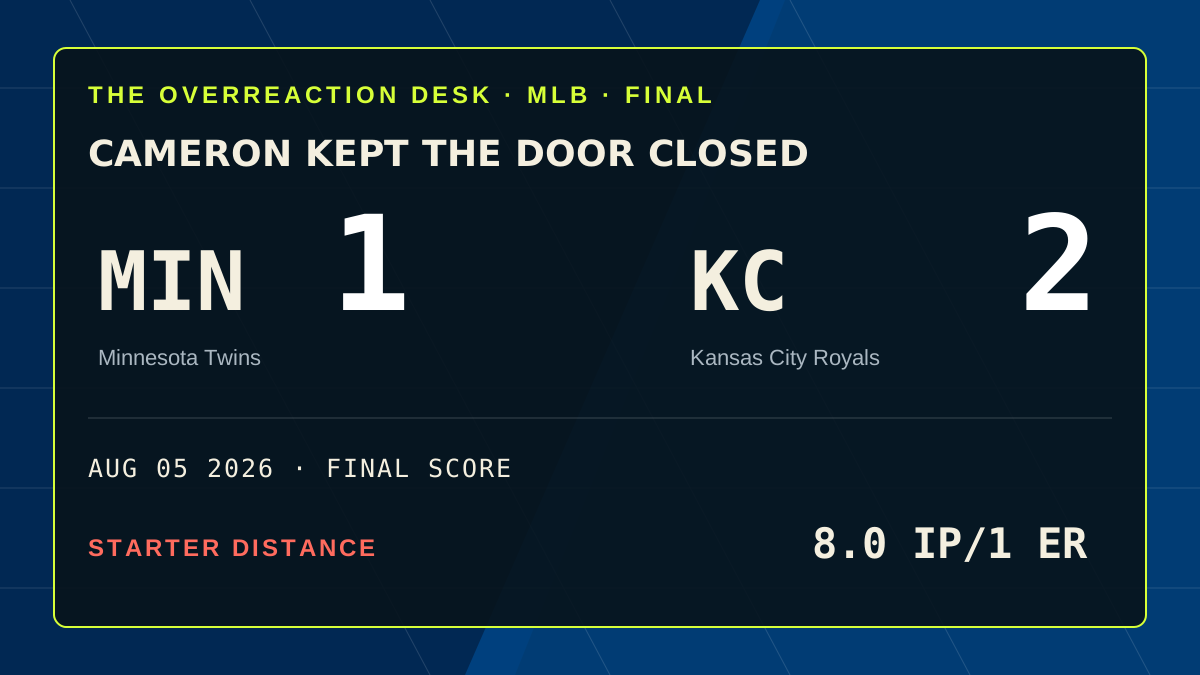
Kansas City beat Minnesota 2-1, which sounds like the kind of game that should leave everyone checking the bullpen phone. Instead, Noah Cameron carried the Royals through eight innings and made the close finish feel planned.
The Royals did not win by creating a huge cushion. They won by refusing to let a small cushion become a shared emergency.
Eight Innings Changed the Math
The Desk’s Starter Distance finished at eight innings and one earned run. Cameron struck out nine and handed Kansas City a game that still had a margin when the final outs arrived.
Michael Massey supplied both the noise and the arithmetic: two hits, a home run, two runs, and one RBI. Kansas City scored once in the fifth and once in the seventh. That is not an offensive avalanche. It is enough when the starter keeps the other side from finding a second answer.
Minnesota Got One Opening
The Twins scored in the fourth, but Cameron kept the rest of the night from becoming a negotiation. One run was allowed to matter; it was not allowed to multiply. That distinction is the whole difference between a close win and a game that slips away in the late innings.
Kansas City made the game small, then kept it small. The Royals will not win every night with two runs, but they can win more nights when the pitching plan lasts long enough to make two runs meaningful.
There is no guarantee the formula will always be this tidy. Two runs can disappear quickly, and a starter cannot be asked to carry every close night forever. But this was exactly the kind of game Kansas City needs to recognize: protect the lead, extend the starter, and let the final margin stay smaller than the panic.
The Royals will take the ordinary version of this win. It asks less of the lineup, less of the bullpen, and less of the manager’s late-game imagination. Cameron’s length turned one run of separation into a comfortable responsibility.
The Desk Has Ruled
Cameron kept the door closed. Eight innings made the Royals’ two runs feel like a plan instead of a plea, and Minnesota never found the late opening it needed.