What the New Reporting Shows
ESPN published an investigation Wednesday based on interviews with more than 20 NFL coaches, executives, and agents. The recurring concern was not that the Rooney Rule creates too many interviews. It was that some required interviews feel disconnected from the actual hiring decision.
That distinction matters. The rule requires teams to interview at least two external minority candidates for head coach, general manager, and coordinator openings, plus at least one minority candidate for a quarterbacks coach opening. The requirement can create access. It cannot, by itself, prove that a candidate received genuine consideration.
ESPN reported that coaches and agents sometimes use “the Rooney” as shorthand for a token interview. That phrase is revealing because it turns a policy designed to expand opportunity into a label candidates may fear carrying. An interview should add credibility and exposure. If candidates believe a predetermined search can instead make them look repeatedly rejected, the process is working backward.
Compliance Is Not the Same as Competition
The NFL’s defense of the rule is understandable. League senior vice president Jonathan Beane told ESPN that the NFL does not intend to change it now and would rather keep a policy that expands the talent pool than allow teams to hire entirely from familiar circles. Commissioner Roger Goodell said in March that he had no plans to scrap the rule.
Keeping the door open is better than pretending every ownership group will widen its network voluntarily. But the league cannot grade itself only on invitations sent. The useful question is whether teams began searches with multiple plausible choices, gave candidates comparable access to decision-makers, and remained open to changing their minds.
The 2026 hiring cycle makes that question unavoidable. Only one of 10 head coaching vacancies went to a minority candidate, and none went to a Black candidate. That outcome does not prove that any particular team ran a sham search. It does show that procedural compliance and broad opportunity are not producing the same result.
The Pipeline Has a Scoreboard
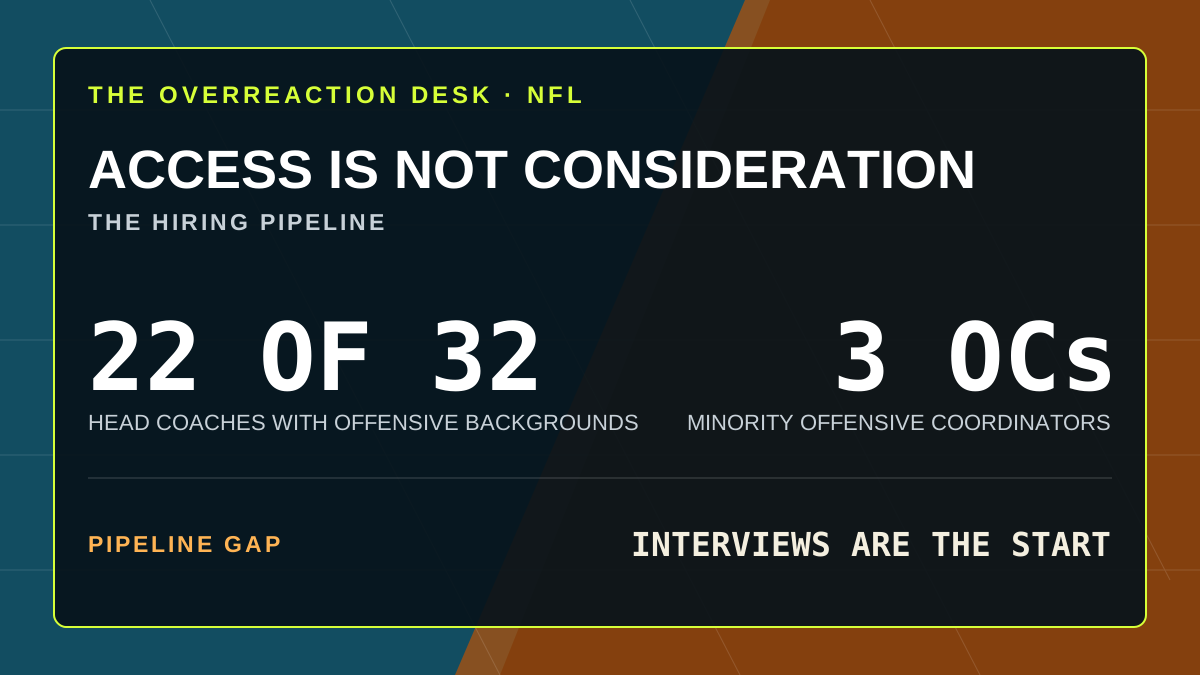
The Desk metric is the offensive pipeline gap: 22 head coaches to three minority offensive coordinators. ESPN counted 22 of the NFL’s 32 current head coaches with offensive backgrounds, while only three minority offensive coordinators enter the 2026 season. Of those three, ESPN identified one as the play-caller.
This is where the hiring debate becomes structural rather than rhetorical. If offense is the league’s preferred route to the top job, access to quarterback rooms, play-calling duties, coordinator titles, and influential coaching networks matters long before an owner schedules a head coach interview.
The rule operates at several levels, including coordinator and quarterbacks coach openings, but an interview requirement near the end of the process cannot repair every shortage created earlier in the pipeline. Teams build future candidate pools through assignments, promotions, mentorship, and who gets trusted with the work owners later treat as head coach preparation.
What Real Accountability Would Measure
The NFL does not need to order teams to hire a particular candidate. It does need a stronger way to distinguish a competitive search from a completed decision wearing an interview schedule.
That could mean auditing the timing of interviews, the people present, the criteria supplied to candidates, and whether finalists received comparable opportunities to present staff and roster plans. It should also mean publishing league-wide pipeline data that shows who receives quarterback and play-calling responsibility, who advances to coordinator jobs, and how often candidates return as serious finalists.
None of those measures guarantees a hire. They would make compliance more meaningful than checking whether the calendar contains the required number of meetings.
The strongest defense of the Rooney Rule is that access can create opportunities that closed networks would otherwise deny. The strongest criticism is that access without honest consideration can impose a cost on the very candidates the policy is supposed to support. Both can be true, which is exactly why standing still is not a solution.
The Desk Has Ruled
Desk ruling: keep the requirement, but stop treating the interview count as the final score. The NFL’s real test is whether qualified candidates enter searches with a genuine chance to win them and whether the coaching pipeline gives more people access to the roles owners keep rewarding.
The Rooney Rule opened a door the league needed opened. ESPN’s reporting shows why the NFL now has to prove there is a real room on the other side.