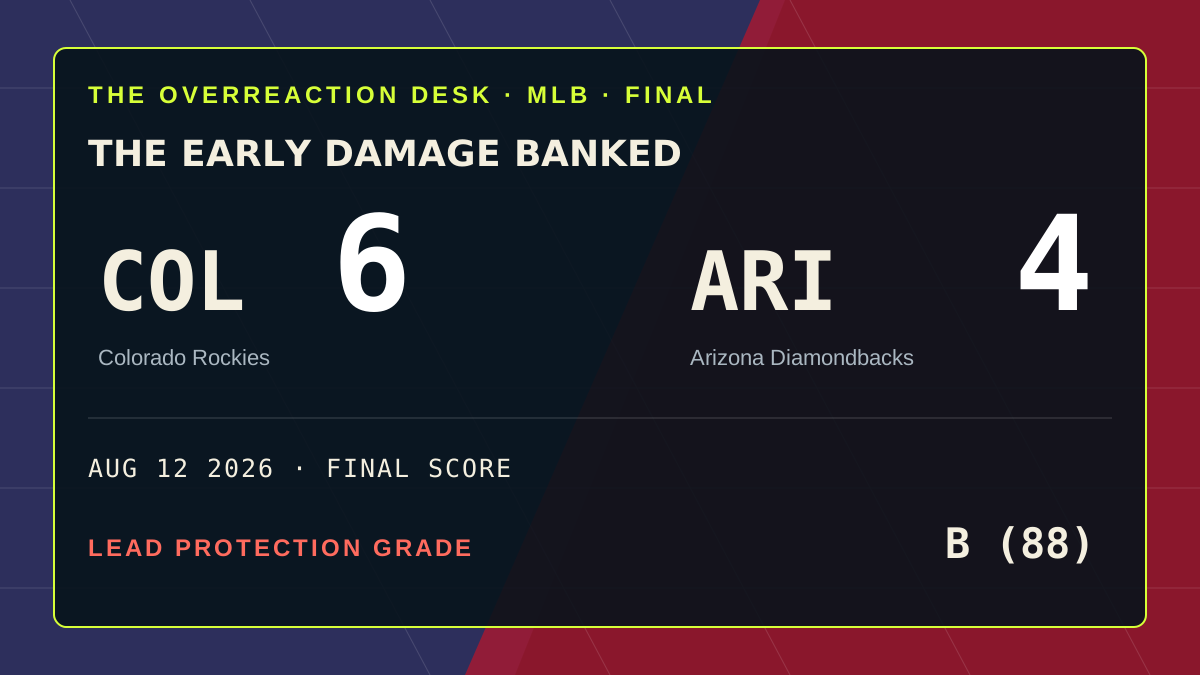
Arizona Had the First Run
The Diamondbacks scored in the first inning, which is usually a reasonable way to begin a home game. Colorado treated it as a scheduling note. The Rockies answered with four runs in the second and two more in the fourth, turning a 1-0 deficit into a 6-1 lead before the night had found its final shape.
The early burst was not a single lucky bounce. Brett Sullivan homered and drove in three runs, while Zac Veen added a home run and two RBI. Colorado got the big swings, but it also got them early enough to force Arizona to spend the rest of the game trying to make the box score less honest.
Eleven Hits Still Needed a Door
Arizona kept making contact. The Diamondbacks finished with 11 hits and scored once in the fifth, seventh and eighth innings. That is enough activity to keep a visiting bullpen from enjoying the scenery, but it never became the rally that could erase the five-run hole.
Ryan Feltner gave Colorado five innings and allowed two earned runs. The Rockies then let Arizona chip away without allowing the chipping to become a collapse. The lead fell from five to two, but it never became a one-run game.
That distinction kept the 11-hit total from becoming the whole story. Arizona had more hits than Colorado, but the Rockies had the better map of when those hits mattered. Colorado left the field with the narrower margin and the larger control of leverage.
The Desk Has Ruled
This was a win built on timing. Colorado did not out-hit Arizona; it landed its most expensive contact before the Diamondbacks had a chance to turn the night into a long exchange. Arizona had the later traffic. The Rockies had the earlier leverage.
The Desk’s Lead Protection Grade is a B (88). Colorado’s largest lead was five, the final margin was two, and the closing inning was even. The grade is not a complaint about surviving. It is a reminder that once the early damage stopped arriving, the Rockies had to spend six innings defending the receipt.