Cincinnati Made Five Hits Feel Like a Full Lineup
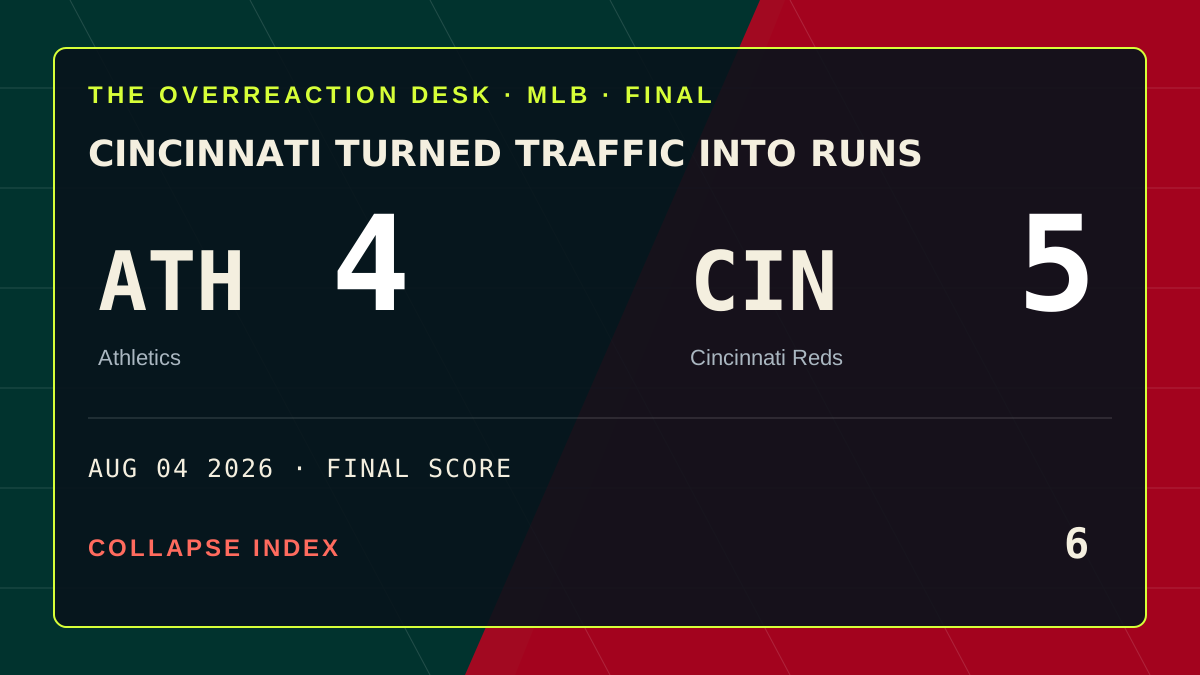
The Reds finished with five hits and five runs. That is not a typo or a typo-shaped miracle; it is the game’s entire personality.
Cincinnati scored three times in the fifth and twice in the eighth. The damage arrived in concentrated bursts, which meant the Reds did not need to win the hit column to make the scoreboard obey.
De La Cruz Supplied the Necessary Weight
Elly De La Cruz drove in two runs, and Sal Stewart added another RBI. Cincinnati’s offense did not fill every lane. It found the lanes that were open and did not apologize for leaving the rest empty.
The Athletics had eight hits, but the Reds’ five hits carried the better timing. That is how a low-volume attack wins a close game: not by creating more traffic, but by refusing to waste the traffic it creates.
Oakland Kept Arriving Without Bringing the Inning
The Athletics left 15 runners on base. They scored in the fourth, fifth, and seventh, which kept the game alive, but each answer stopped short of turning the lead into a full crisis.
Cincinnati’s bullpen gave Oakland chances without giving Oakland a clean finish. Emilio Pagan closed the game, and the Reds made the final out arrive before another baserunner could turn into a new argument.
The One-Run Lead Had Actual Structure
The Desk’s Collapse Index was 6, calculated from Cincinnati’s two-run largest lead, one-run final margin, and zero-run closing-period differential. It was a close game, but not a shapeless one. The Reds kept putting their runs in the innings where they could change the scoreboard’s posture.
Oakland’s traffic was real. Cincinnati’s conversion rate was realer.
The Difference Was Timing, Not Volume
The Athletics’ 15 stranded runners show how many chances the lineup had to make the game look different. Cincinnati had fewer chances and better conversion. The Reds did not need to win every matchup; they needed the next productive at-bat to arrive before the next stranded runner.
The Desk Has Ruled
The Athletics owned the extra baserunners. The Reds owned the innings that turned baserunners into a lead.
Cincinnati did not win the volume contest. It won the only contest the scoreboard keeps.