The Short, Painful Version
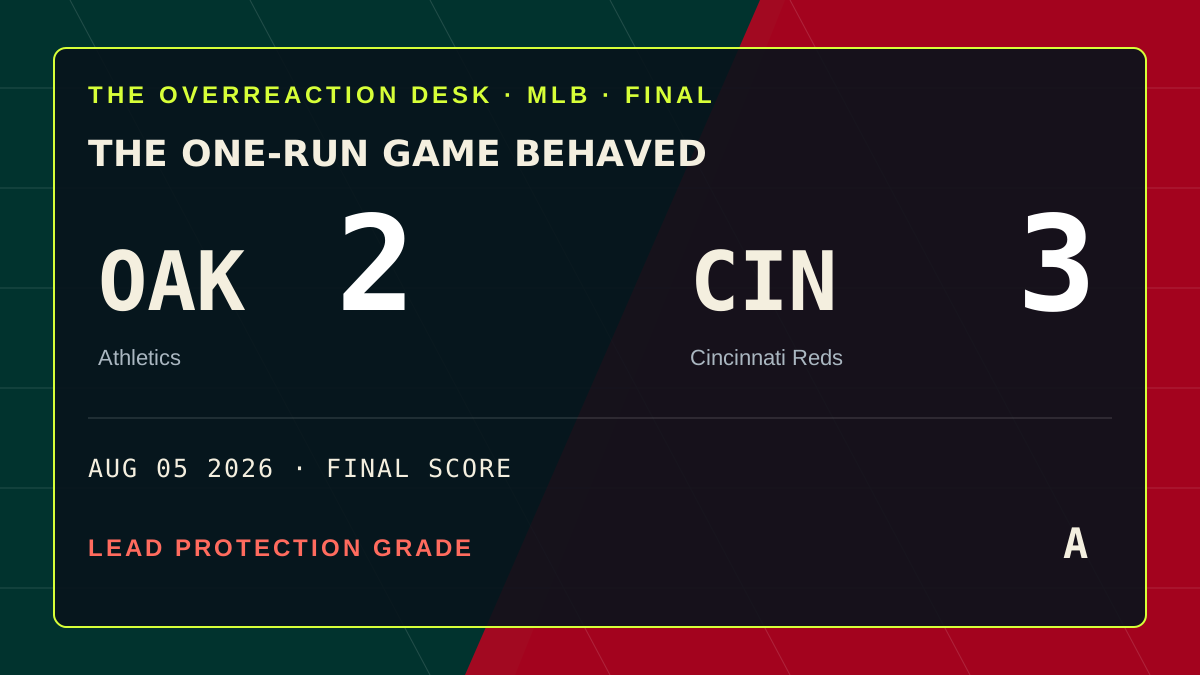
Cincinnati beat the Athletics 3-2 by declining to let one early homer decide the evening. Oakland struck first, the Reds answered in three different innings, and the bullpen made a one-run lead survive without making it look generous.
Rhett Lowder allowed two runs over six innings, Matt McLain homered and drove in another run, and Emilio Pagan handled the last inning. The Reds did not win with a tidal wave. They won by making the game keep moving in their direction.
Butler Got The First Word
Lawrence Butler homered in the first inning and drove in both Oakland runs. That is exactly the kind of opening that can turn a close game into a team-wide attempt to press the panic button.
Cincinnati did not press it. The Reds scored once in the second, once in the fifth, and once in the sixth. The response was not one dramatic counterpunch; it was three separate reminders that Oakland still had eight innings to defend.
Lowder Kept The Damage Contained
Lowder gave up four hits, walked two, and struck out three over six innings. He surrendered both Athletics runs, but he did not surrender the next one. That distinction kept Cincinnati’s small lead available for the bullpen.
McLain’s home run gave the Reds one of their three runs, while Jose Trevino supplied another RBI. Sal Stewart scored once, and Cincinnati’s six hits were distributed across enough at-bats to keep Oakland from concentrating on a single threat.
The Ninth Was A Test Of Manners
The Reds carried a one-run lead into the ninth. Oakland could not turn it into a second act. Pagan recorded the final out, and Cincinnati finished a game in which the margin stayed narrow without becoming unstable.
That is a meaningful kind of win for a team that wants to matter in September. The Reds did not need to create distance. They needed to stop Oakland from creating a better question.
The Desk’s Accounting Department
The Desk’s Lead Protection Grade is A. Cincinnati’s largest lead was one, its final margin was one, and the Athletics were scoreless in the ninth. Protecting a one-run lead is not automatically impressive; doing it after the opponent scored first is at least worth putting on the refrigerator.
The overreaction should be measured. This was not a complete offensive eruption or a flawless pitching clinic. It was a sturdy, multi-inning answer in a game that gave Oakland the opening line and Cincinnati the closing argument.
The Desk Has Ruled
The Reds did not blow the Athletics away. They made the one-run game behave, which is a very Cincinnati way to be dangerous.