The Short, Painful Version
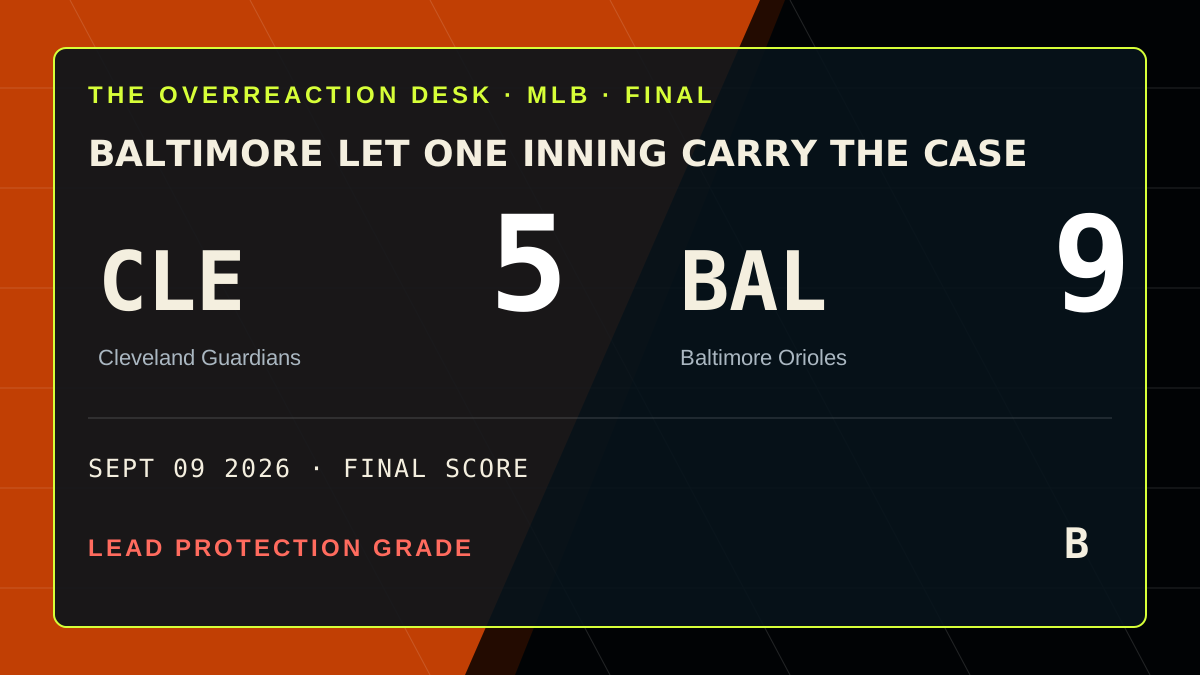
Baltimore beat Cleveland 9-5 by turning a 2-0 deficit into an eight-run third inning and then refusing to reopen the case. The Guardians had the cleaner start. The Orioles had the one inning that made the start irrelevant.
That distinction matters for a Cleveland team built around disciplined baseball and narrow margins. Baltimore did not win a series of tiny arguments. It delivered one large answer and made the rest of the night defend it.
The Moment the Game Broke
Cleveland scored twice in the first and briefly had the game arranged exactly the way its detail-first identity prefers. Baltimore then sent eight runs across in the third, producing the decisive swing before the middle innings could become a pitching duel.
Dylan Beavers drove in three runs, and the Orioles finished the night with 10 hits. The inning combined traffic, timely contact and enough pressure to turn the visiting dugout from confident to urgently mathematical.
Cleveland answered with three runs in the sixth, but Baltimore added one in the same inning and kept the Guardians from turning the response into a second act. The Orioles’ bullpen completed the job without another scoring eruption.
The Competent Parties
Beavers provided the biggest Baltimore line, while Leody Taveras drove in a run and Jackson Holliday added another. The Orioles did not need one superstar performance to explain nine runs. They needed enough players to make Cleveland pay for every extra out, and the lineup supplied them.
The Guardians did have individual production. Chase DeLauter and Nathaniel Lowe each homered and drove in two. Patrick Bailey added an RBI. But Cleveland’s power arrived as a response, not a takeover, and Baltimore never surrendered the lead.
What We Are Pretending This Means
Baltimore’s Lead Protection Grade is a B with a score of 92. The Orioles’ largest lead was six, the final margin was four, and the closing three innings were scoreless on both sides. That is a sturdy finish, even if the third inning did most of the work.
Cleveland’s problem was not that it started slowly. It started well. The problem was that one bad inning became too large to negotiate around.
The Desk Has Ruled
Baltimore won by making one inning carry the entire argument. Cleveland brought a careful opening plan; the Orioles brought an eight-run interruption and a bullpen willing to protect it.
The third inning did not merely change the game. It filed the final score.