Baltimore Kept Moving the Target
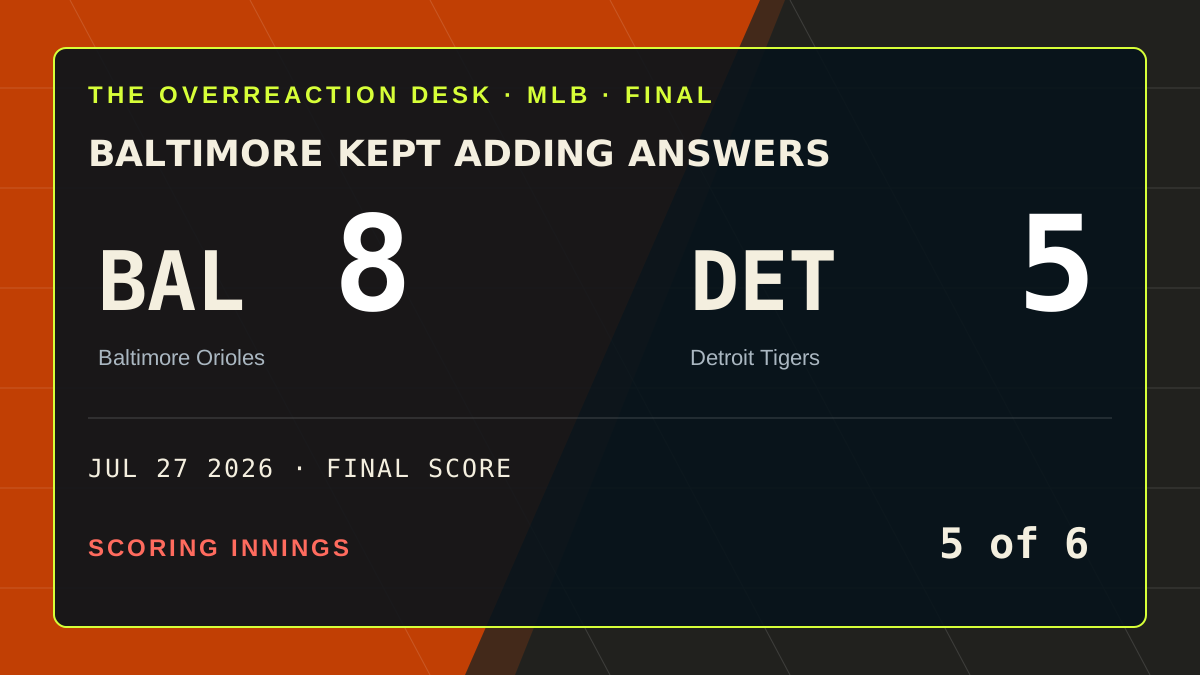
The Orioles scored in the first, added two in the second and another in the third. Detroit answered often enough to keep the game loud, but never long enough to bring it level.
Taylor Ward opened the scoring with an RBI single. Jeremiah Jackson and Dylan Beavers extended the lead in the second, and Coby Mayo made it 4-1 in the third. Detroit pulled within 4-3 after four innings, finally giving the home crowd a reason to believe the chase was nearly over.
Baltimore’s lineup treated that as a request for a larger number.
Three Homers Rebuilt the Margin
Leody Taveras led off the fifth with a homer. Mayo followed later in the inning with a two-run shot, pushing the lead to 7-3. Detroit scored twice in the bottom half, but Tyler O’Neill answered with a pinch-hit solo homer in the sixth.
Every Tigers response came with an Orioles counter attached. Detroit collected 11 hits and put 10 of them against Kyle Bradish, but Baltimore’s bullpen allowed one hit across the final 4 1/3 innings.
Once O’Neill made it 8-5, the game stopped moving. Grant Wolfram, Yennier Cano, Andrew Kittredge and Rico Garcia combined to close the door.
The Orioles did not need Bradish to dominate. They needed the bullpen to preserve the final cushion after the lineup had rebuilt it for the fifth time.
Five of Six Kept Detroit Chasing
The Desk’s Scoring-Inning Pressure was five of six: Baltimore scored in five of the first six innings.
That repeated pressure mattered more than one explosive frame. Jackson Holliday went 4-for-5 and scored twice, constantly handing the middle of the order another opportunity. Mayo finished with two hits, three RBIs and two runs. The Orioles collected 12 hits and received home runs from three different spots in the lineup.
Detroit kept producing partial answers. Hao-Yu Lee drove in two runs, and Zach McKinstry had two hits and an RBI. The Tigers simply never found the scoreless Baltimore inning they needed while the margin was still reachable.
The Official Overreaction
Baltimore did not ask one swing to carry the offense. It turned six innings into a repeating subscription: reach base, apply pressure, restore the cushion, repeat until Detroit’s bullpen stopped taking calls.
The Tigers’ 11 hits made this a competitive game. The Orioles’ timing made it a controlled one. Holliday kept setting the table, Mayo supplied the largest plate, and three home-run hitters prevented Detroit from concentrating the damage in one matchup.
Desk ruling: a lineup that scores in five of six innings does not need serenity from its starting pitcher. It needs enough outs for the repeated pressure to become permanent, and Baltimore’s bullpen supplied exactly that.