For Anyone Who Looked Away
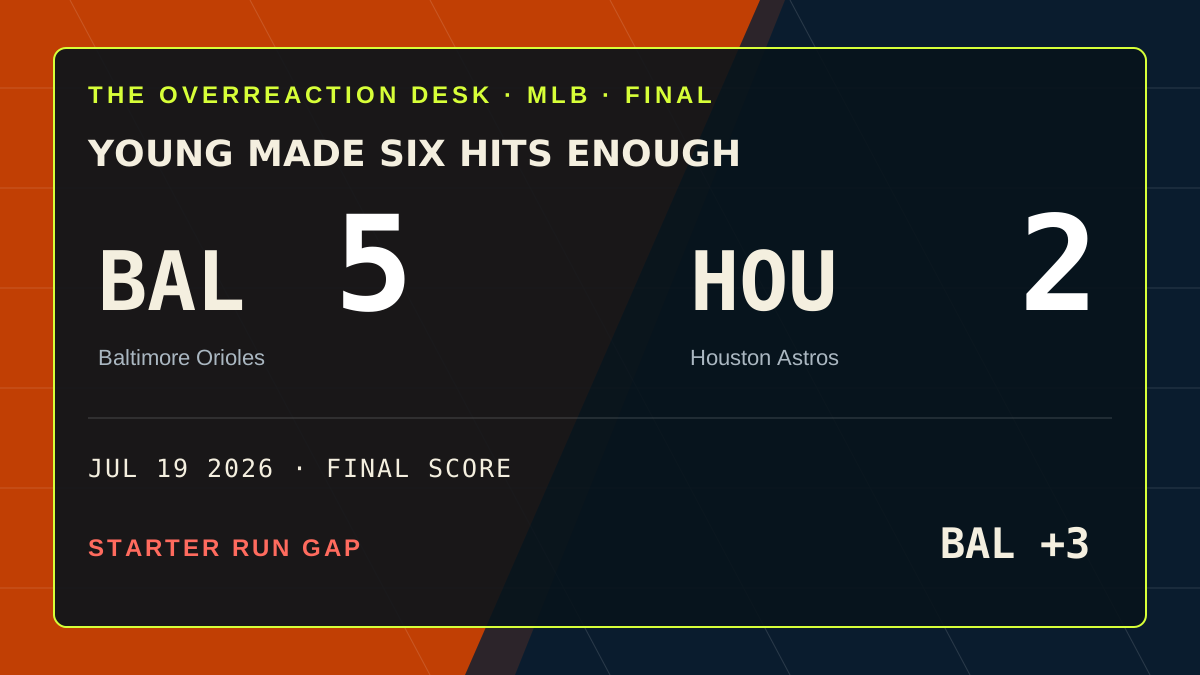
Baltimore beat Houston 5-2 with six hits, which is not usually the profile of a comfortable offensive evening. The Orioles made it work because their best contact arrived with runners ready to matter and Brandon Young kept the other side of the scoreboard almost empty.
Gunnar Henderson opened the scoring with an RBI single in the third. Houston answered when Yordan Alvarez doubled home Jose Altuve, but the Astros never turned their seven hits into a sustained inning against Young.
That was the central difference. Baltimore’s limited traffic became runs. Houston’s traffic became a collection of missed invitations.
The Moment Everyone Knew
The Orioles created separation in the fifth. Leody Taveras singled home Taylor Ward and Pete Alonso, stretching a 2-1 lead to 4-1. Coby Mayo then homered in the sixth for the fifth run.
Houston starter Hunter Brown allowed four runs on three hits in 4 2/3 innings. The six walks were the expensive part. Baltimore did not need to stack line drives when Brown kept supplying baserunners and the Orioles eventually found the hit that cleared two of them.
Altuve homered in the eighth, but it reduced the margin from four to three. Grant Wolfram recorded the final out for the save, and Houston’s late response never became a real threat to the result.
The Competent Parties
Young allowed five hits and one walk, struck out seven and completed seven innings. He did not need perfect command of the game; he needed to stop Houston from connecting one useful plate appearance to the next.
The Astros had two hits from Altuve and two from Isaac Paredes. They still scored only twice. Young’s outing made that imbalance possible and spared Baltimore’s bullpen from carrying a narrow lead across half the afternoon.
Taveras supplied the decisive two-run single. Mayo had two of Baltimore’s six hits and added the home run that changed Houston’s comeback requirement from difficult to deeply inconvenient.
Mute the Group Chat
Houston’s problem was not a total absence of offense. Seven hits should create more than two runs often enough to keep a home game alive. Instead, the Astros scored once in the third, once in the eighth and spent everything between those moments failing to make Young uncomfortable.
Baltimore also committed two errors. Houston could not turn either extra opening into the inning that changed the game. October standards applied to an ordinary July afternoon produce a simple verdict: opportunities do not earn partial credit.
The Desk Has Ruled
The verified Starter Run Gap was Baltimore plus three. Young allowed one run in seven innings; Brown allowed four in 4 2/3.
Desk ruling: Baltimore’s six-hit win was not an offensive illusion. Young made a small amount of run support feel substantial, and the Orioles punished Houston’s walks at exactly the right time. The Astros had more hits and fewer answers, a combination that looks particularly unfriendly when written on the same line.