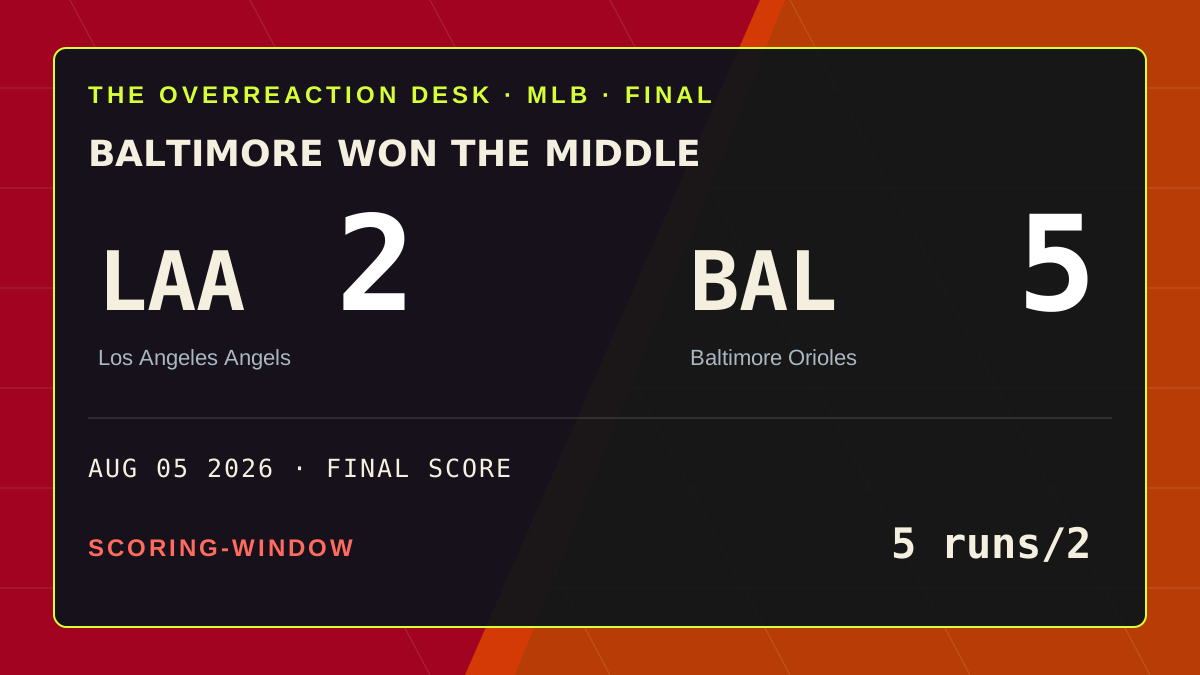
Baltimore Won the Middle
Baltimore beat Los Angeles 5-2, and the Orioles did it by making two innings matter more than the rest. Three runs in the fourth created the working lead. Two more in the eighth made the Angels’ late hope feel theoretical.
That is not a blowout. It is a team deciding exactly when the game is allowed to become expensive.
Two Windows, Five Runs
The Desk’s Scoring-Window Conversion finished at five runs across two innings. Baltimore did not need constant traffic. It needed the traffic to arrive when the game could still be bent.
Trevor Rogers provided the other half of the structure, throwing six innings with two earned runs and nine strikeouts. Los Angeles scored in the sixth and seventh, but the Angels never found the extra inning that could turn a two-run deficit into a real problem.
The Angels Had Activity Without Leverage
Los Angeles was not silent. It simply could not make its chances compound. Baltimore’s scoring windows created the lead, and the pitching kept each Angels response from becoming the next crisis.
This is how a team wins a game that looks closer in the middle than it does at the end. The Orioles did not chase drama. They kept the important innings on their side of the ledger.
Baltimore’s win was not built on constant pressure, which is why it matters. The Orioles selected the innings that could change the game, then asked the pitching staff to prevent the Angels from creating a matching window. That is a more durable shape than hoping every inning becomes productive.
The Orioles will not get credit for drama from this one, and that is fine. Their best innings were productive without being reckless, and their best pitching innings kept the Angels from building the kind of momentum that makes a narrow lead fragile.
The Desk Has Ruled
Baltimore won the middle and protected the edges. Five runs in two scoring windows gave the Orioles the 5-2 result, while Los Angeles spent the rest of the night looking for a bigger opening than it ever found.