Houston Owned the Early Score
The Astros scored in the first when Jeremy Pena walked and Yordan Alvarez doubled him home. Baltimore tied it in the third on Pete Alonso’s bases-loaded walk, but Houston answered with Isaac Paredes’ sacrifice fly.
That 2-1 lead survived through the seventh. Astros starter Peter Lambert struck out 10 in six innings and held Baltimore to one run on three hits. The Orioles’ offense was not applying pressure so much as filing occasional reminders that the game remained open.
Houston had the cleaner night, the lead and the next real scoring opportunity. Then Baltimore changed the order of events.
Sanders Saved the Argument
The Astros loaded the bases with one out in the seventh. Cam Sanders entered and escaped without allowing a run, turning what could have been Houston’s separation inning into the most important zero on the board.
Sanders was making his Orioles debut after being acquired Monday. He recorded two outs, earned the win and supplied the bridge between a threatened deficit and Baltimore’s decisive swing.
That escape matters because a 3-1 or 4-1 game asks a different question of an offense that had produced only three hits through seven innings. At 2-1, one extra-base hit and one swing could still rearrange everything.
Ward Rearranged Everything
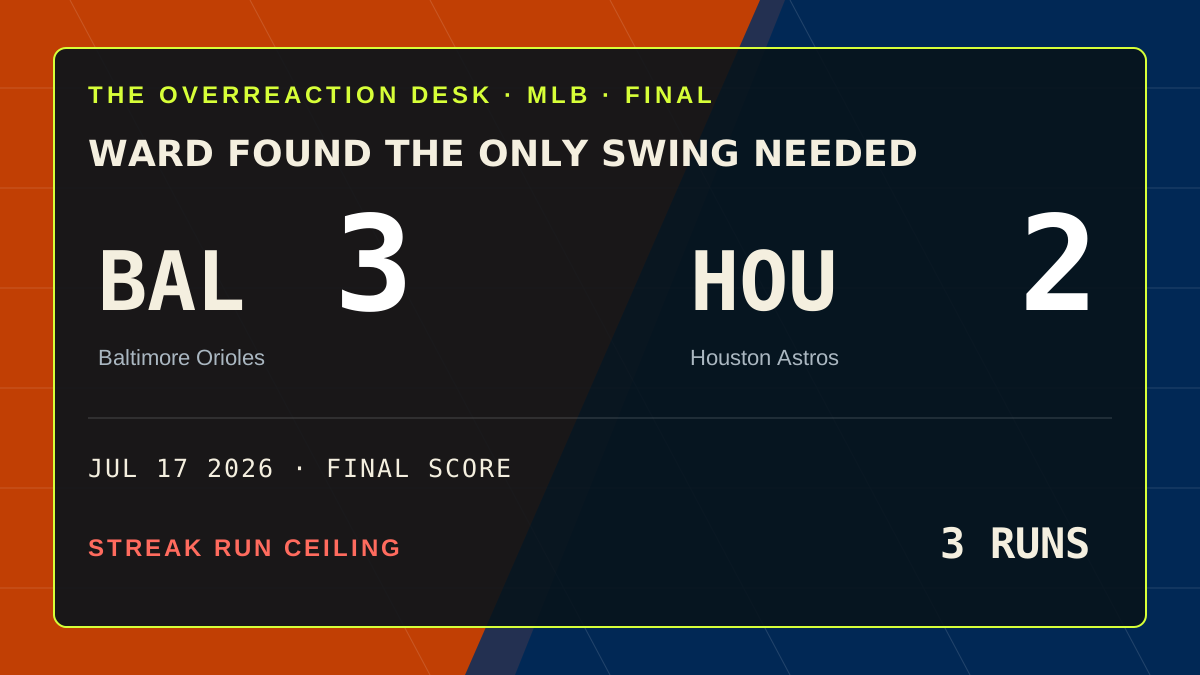
Adley Rutschman doubled to begin the eighth. Taylor Ward followed with a two-run homer to left-center, his seventh of the season, and Baltimore moved ahead 3-2.
Andrew Kittredge handled the eighth. Tyler Wells worked around a single and a walk in the ninth for his third save. Houston put traffic on the bases but never moved the score again.
The Orioles finished with five hits and struck out 13 times. It was not a smooth offensive performance. It was a precise late theft: survive the Astros’ loaded bases, put one runner aboard, and let Ward convert the entire opening before Houston could close it.
The Desk Metric: Three-Run Ceiling
Baltimore has won five straight games, and no opponent has scored more than three runs in any of them. Houston became the latest team held below that ceiling with two.
The metric explains how the Orioles can survive a five-hit night. When the pitching staff keeps every game inside one productive swing, the offense does not need to look complete. It needs to be timely once.
The Desk Has Ruled
Desk ruling: Sanders kept Houston from stretching the lead, Ward erased it one inning later, and the bullpen made the new score permanent. Baltimore’s offense spent most of the night quiet, but a team allowing three runs or fewer can afford to wait for one sentence worth printing.