Let’s Review the Evidence
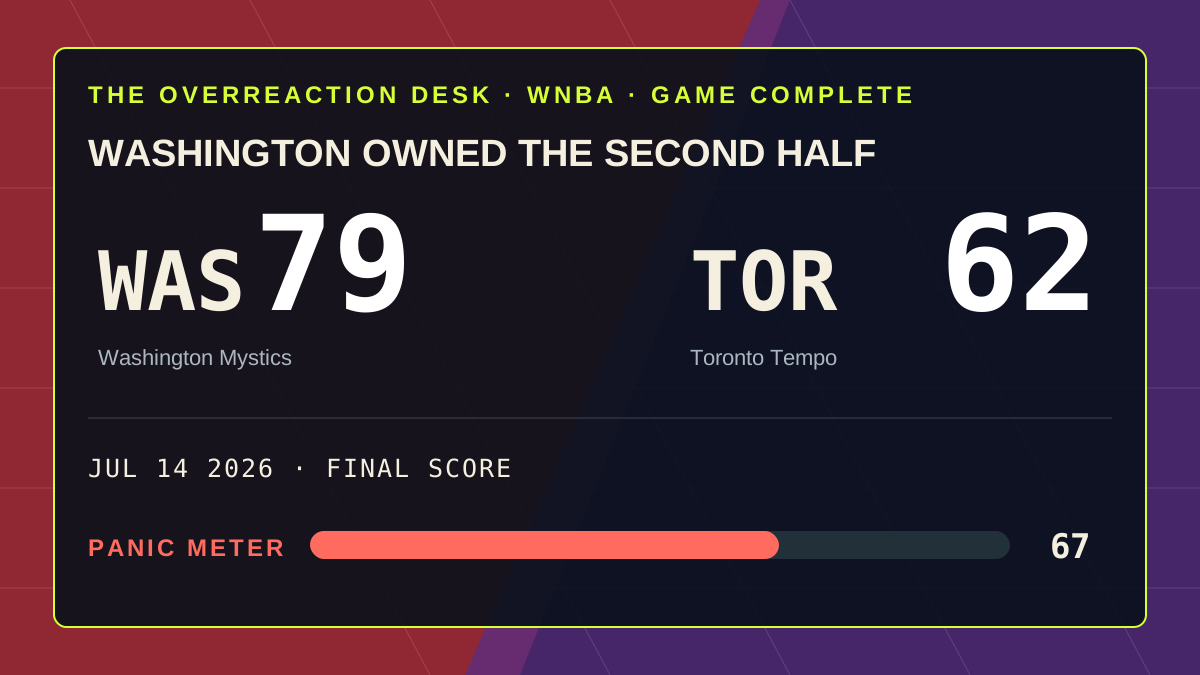
Washington beat Toronto 79-62 on Tuesday after spending the first half looking like the team that had missed the meeting invitation. The Mystics trailed 32-26 at halftime, then returned from the locker room with a different agenda and outscored the Tempo 53-30 the rest of the way.
The third quarter flipped the game. Washington won it 26-13, then removed any remaining ambiguity with a 27-17 fourth. Toronto’s lowest-scoring performance of its first season arrived at home, where an early lead slowly turned into a guided tour of everything the Mystics had corrected at halftime.
The Moment the Game Broke
Washington opened the second half with an 11-3 run. Kiki Iriafen’s layup 2:47 into the third gave the Mystics their first lead since the middle of the opening quarter. From there, the game stopped being a Toronto pace-setting exercise and became a Washington rebounding demonstration.
The Mystics won the battle on the glass 46-26 and scored 20 second-chance points to Toronto’s three. That is not a minor statistical preference. That is one team repeatedly receiving another attempt while the other starts composing a strongly worded memo to the rim.
Who Actually Showed Up
Iriafen was the central figure with 25 points and 14 rebounds, including 13 points after halftime. She punished Toronto inside, kept possessions alive, and made Washington’s second-half control look increasingly inevitable.
Shakira Austin added 17 points, 10 rebounds, and three blocks. The two Washington forwards supplied the double-doubles and the physical advantage that defined the night. For Toronto, Julie Allemand scored 15 points and Nyara Sabally had 13, but the Tempo never found enough offense to match Washington after the break.
Mute the Group Chat
Toronto’s rebounding gets the first available appointment. Losing the glass by 20 is how a six-point halftime lead becomes a 17-point final deficit without requiring a supernatural explanation. The Tempo could survive missed shots. It could not survive Washington collecting the follow-up opportunities like loyalty points.
The home offense joins the conversation. Toronto scored 30 points in the second half and 62 overall. An expansion team can reasonably ask for patience, but the scoreboard is famously bad at granting extensions.
What Happens to the Narrative Now
Washington improved to 12-10 and earned a second consecutive win. Toronto fell to 10-14. The Mystics also showed the practical value of a halftime adjustment: they changed the rebounding pressure, established Iriafen, and transformed a low-scoring deficit into a decisive road win.
Toronto remains a new team building its habits under real-time pressure. This game offered a clear item for the next film session. When the rhythm breaks, the response cannot be to let the opponent own the boards, the paint, and the second chance.
The Official Overreaction
The Tempo controlled the first half. The Mystics controlled everything that was submitted after intermission. Washington turned the second half into an official proceeding, entered 53 points into the record, and adjourned with the win.
Desk ruling: Toronto found the early rhythm, Washington changed the music, and the rebounding totals say the Mystics also took possession of the speakers.