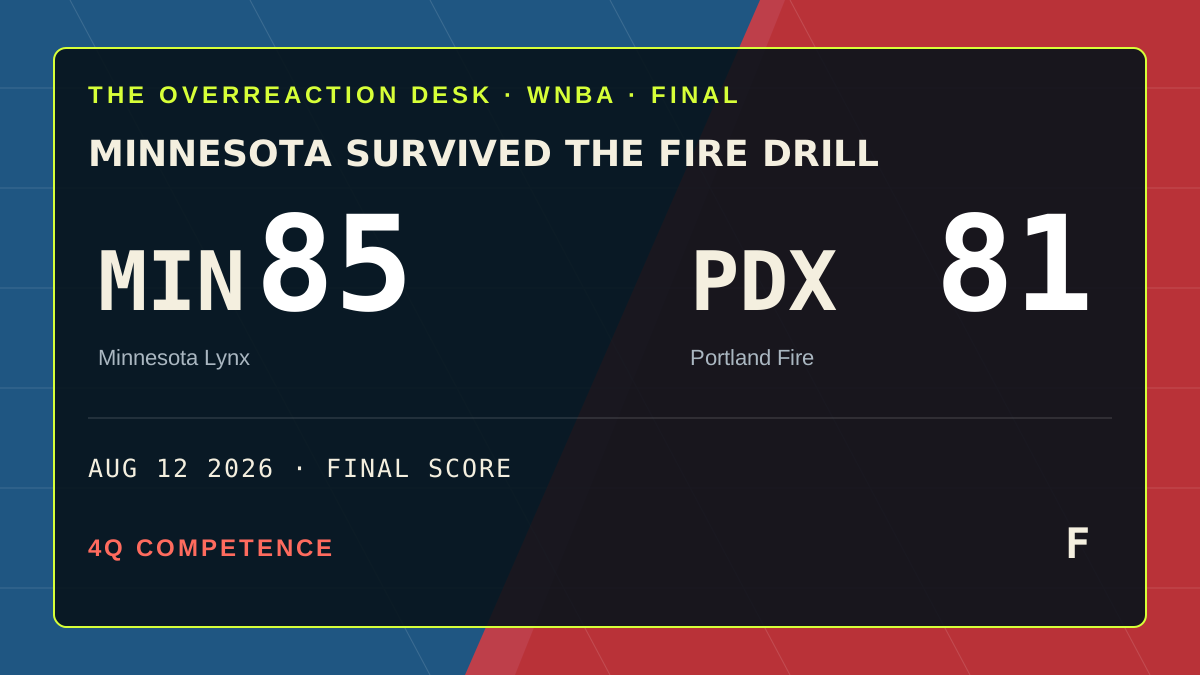
Minnesota Owned the Middle
The Lynx spent the first half turning the game into paperwork. Minnesota led 26-23 after one, then detonated a 31-10 second quarter that sent the Fire into halftime staring at a 24-point hole.
Napheesa Collier scored 20, Kayla McBride added 19, and Natasha Howard gave Minnesota 14 points and 12 rebounds. The Lynx had enough answers that the game looked less like a contest than a very long confirmation email.
Minnesota’s best basketball came from its depth and its spacing rather than one player trying to solve every possession. Collier controlled the interior, McBride supplied perimeter pressure, and Howard cleaned up the work that does not always appear in the loudest line of the box score. That combination produced the lead that ultimately saved the night, even after the game stopped cooperating.
Portland Refused the Script
The Fire made the third quarter competitive, then turned the fourth into a real problem. Portland scored 30 in the final period, cut a 29-point deficit down to four, and forced Minnesota to make its closing possessions matter instead of merely existing.
Bridget Carleton led Portland with 16, while Megan DiLeo added 12 and Teja Oblak contributed 11 points and nine assists. The comeback did not finish, but it changed the meaning of the final score. Minnesota won; Portland made sure the win had an asterisk shaped like a fire alarm.
The last four minutes were a useful stress test. Minnesota had to rebound through the noise, make its free throws, and trust the lead it had earned before Portland’s run. Those are not glamorous possessions, but contenders are often defined by how little glamour they require to finish.
The Desk Has Ruled
Minnesota’s second quarter was the difference, and that is not a small detail. A team does not accidentally build a 29-point lead against a professional opponent. But a contender also does not get to call an 85-81 finish routine after losing the final period by 13.
The Desk’s Fourth-Quarter Competence grade is an F, based on Minnesota’s minus-13 closing-period differential. The ruling is still a win, but the panic meter should stay calm only if the Lynx treat the fourth quarter as evidence instead of an annoying footnote.