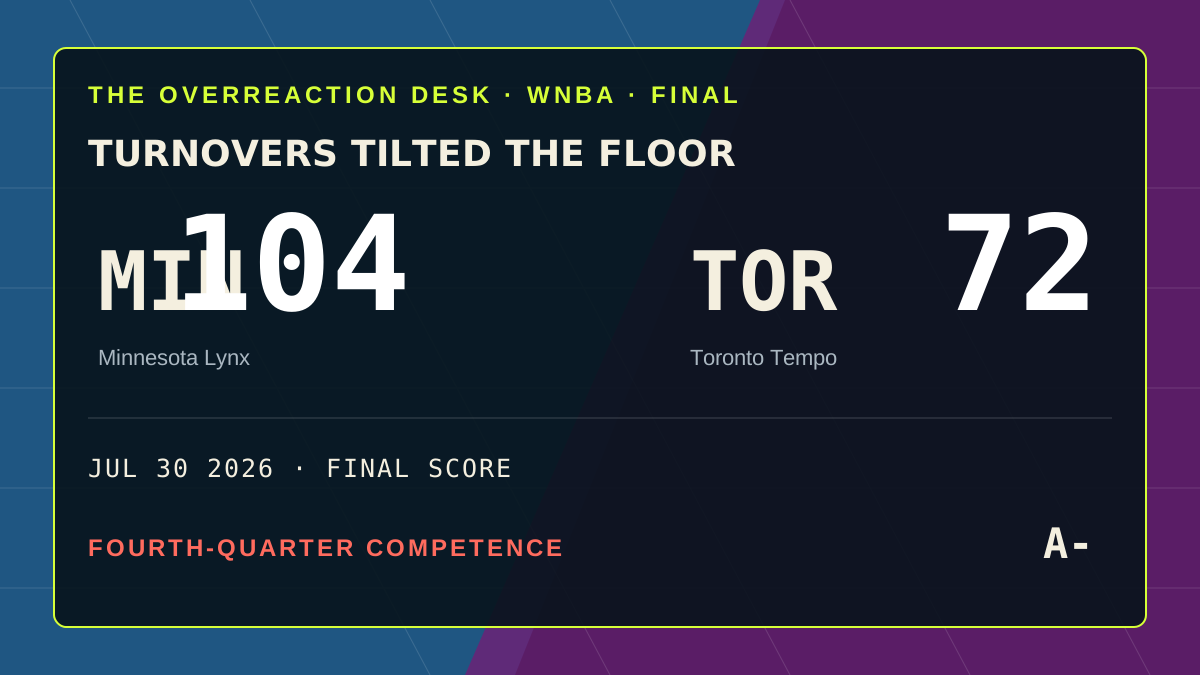
Toronto Had the First Word
Toronto won the opening quarter 19-18, which briefly made this look like the kind of expansion-season game that could become a proper test for Minnesota. The Tempo were moving the ball, Laura Juskaite was finding the rim, and the Lynx had not yet turned their depth into separation.
Then the possessions got expensive.
Minnesota scored 32 in the second quarter, 31 in the third, and 23 in the fourth. Toronto never found another period in which it could keep pace. A one-point game after ten minutes became a 50-41 Lynx lead at halftime, then an 81-55 argument by the end of the third.
The Turnover Tax Arrived Early
The Lynx shot 48.2 percent from the field and made 13 of 29 three-pointers. Those numbers explain the efficiency, but the real separation came from what Toronto gave back. The Tempo committed 22 turnovers to Minnesota’s 10, and the Lynx kept converting those extra chances into the next wave of pressure.
Toronto still shot 45.2 percent and made ten threes. This was not a night when the Tempo forgot how to score. It was a night when too many of their good possessions were followed by a bad one, and Minnesota treated every loose pass like an invitation to run.
Olivia Miles, Napheesa Collier, and Courtney Williams each scored 16 for Minnesota. That shared top line fit the game: the Lynx did not wait for one star to perform emergency heroics. They kept sending another useful answer onto the floor until Toronto’s defense had to solve a group project with no extra credit.
The Expansion Margin Needs a Receipt
Laura Juskaite led Toronto with 19 points, while Marina Mabrey added 16 and Nyara Sabally scored ten. The Tempo had enough individual production to make the first quarter competitive and enough shooting to suggest that the offense was not the central problem.
The problem was possession discipline against a team that already knows how to punish it. Minnesota recorded 14 steals, six more than Toronto, and turned the game into a series of short examinations. Toronto could make a shot, but it could not make the next decision cleanly enough.
The Lynx’s fourth-quarter competence grade was A-, based on a six-point advantage in the closing period. The grade is not pretending the fourth was the dramatic part of the night. It is the opposite: after Minnesota had done the hard work of creating a 26-point lead, it finished without allowing the game to become a bizarre footnote.
The Desk Has Ruled
Minnesota won because it made every possession carry a consequence. Toronto’s opening quarter proved it could stay with the Lynx; the next three proved that staying close is not the same as surviving Minnesota’s depth and pressure.
The Tempo will have better nights than this. They will also have to stop donating 22 possessions to teams that already have enough ways to hurt them. Minnesota did not need a single spectacular rescue. It simply kept collecting the loose change until the final margin became a full wallet.