Here’s What Just Happened
San Francisco spent two scoreless innings evaluating the premises, then used the next two to demolish them.
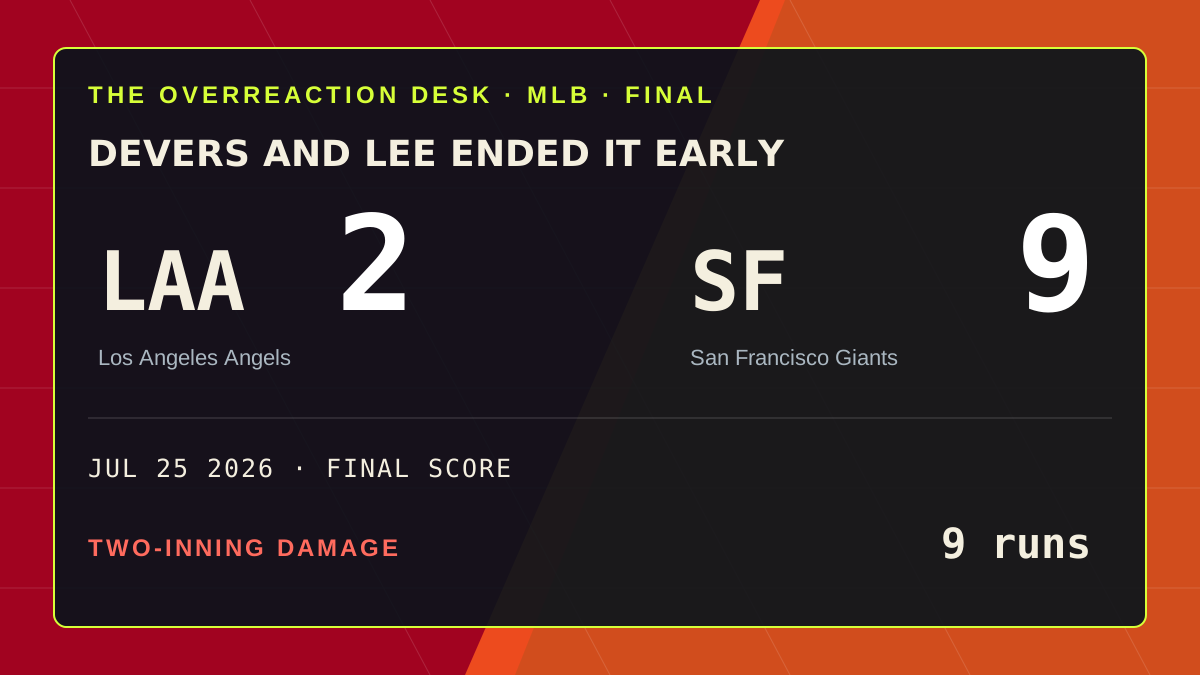
Rafael Devers opened the scoring with an RBI single in the third. Casey Schmitt followed with another run-scoring single, and Jung Hoo Lee turned the inning into a five-run problem with a three-run homer to right.
The fourth brought four more. Luis Arraez singled home Drew Gilbert, then Devers hit a three-run homer to left-center. The Giants had a 9-0 lead, and the remaining five innings became an extended discussion about whether the Angels could make the final score less severe.
When This Stopped Being Competitive
The verified Two-Inning Damage was nine runs. San Francisco collected all of its offense in the third and fourth, with Devers driving in four and Jung Hoo Lee driving in three.
Devers finished 3-for-4 with two runs. Lee had two hits, while Arraez added two hits and scored twice. The Giants produced 11 hits overall and turned the middle of the order into a checkout line nobody in Anaheim wanted to stand in.
Ryan Johnson allowed eight runs in 3 1/3 innings. By the time the Angels reached the bullpen, the competitive portion of the afternoon had already left the building.
Credit Where It’s Annoyingly Due
Robbie Ray made the early margin feel permanent. He allowed six hits and two walks over six scoreless innings and struck out five.
Los Angeles finished with nine hits but did not score until Jose Siri crossed on a seventh-inning double play. Siri scored again on a bases-loaded walk in the ninth. Those runs changed the typography, not the argument.
The Giants did not ask their bullpen to protect a delicate edge. They gave it seven runs of clearance, the baseball equivalent of reserving the entire lane.
The Angels left 19 runners on base despite their nine hits. That total makes the defeat more frustrating, not more competitive. Los Angeles reached often enough to imagine a better score and never produced the hit that could make San Francisco reconsider its posture. The Giants, meanwhile, turned 11 hits into nine runs by clustering the damage where it mattered. Traffic is useful. Timely traffic is how the game disappears before dinner. For San Francisco, the sequence also prevented Friday’s one-run drama from carrying into Saturday. The Giants replaced uncertainty with a lead large enough to survive any ordinary mistake.
The Official Overreaction
Desk ruling: San Francisco compressed a complete offensive win into two innings. Devers and Lee created the avalanche, Ray removed the comeback path and the Giants spent the rest of the afternoon protecting a result that had already become obvious. The Angels collected traffic; San Francisco collected the only sequence anyone will remember.