What Changed
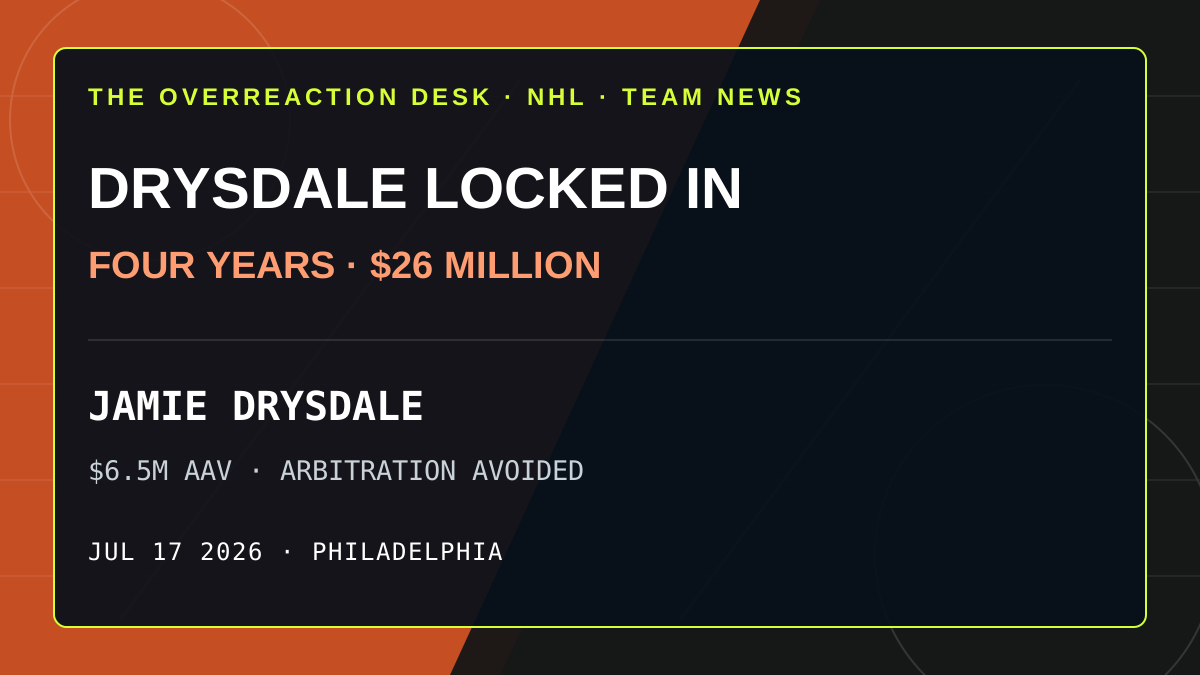
The Philadelphia Flyers signed Jamie Drysdale to a four-year, $26 million contract on Friday, keeping the 24-year-old defenseman at an average annual value of $6.5 million.
Drysdale had been a restricted free agent and had filed for salary arbitration. The agreement removed that hearing from the calendar three days before it was scheduled and kept Philadelphia from turning a promising season into a conference-room argument about comparables.
The contract is significant on its own. It becomes more revealing beside the four-year, $36.5 million deal Trevor Zegras signed this week. Philadelphia has now committed $62.5 million across eight player-seasons to two former top-10 picks who arrived from Anaheim with talent, questions, and plenty left to prove.
The Bet Is Development, Not Reputation
Drysdale produced eight goals and 24 assists for 32 points in 78 regular-season games last season. The point total tied his career high, while the goals established a new one. He added two goals and two assists in 10 playoff games as the Flyers reached the second round.
Those numbers do not turn him into a finished No. 1 defenseman. They do explain why Philadelphia chose a four-year commitment instead of another short bridge. Drysdale played more often, produced more reliably, and showed enough two-way progress for the Flyers to buy the next stage of his career before it became more expensive.
That is a sensible bet with a very Philadelphia condition attached: the improvement has to keep showing up. A city that can identify a soft defensive-zone exit from the upper deck is not issuing four years of applause in advance.
The Desk Metric: $62.5 Million
The Desk’s Two-Deal Commitment is $62.5 million, the combined value of Drysdale’s $26 million contract and Zegras’ $36.5 million agreement. Both deals run for four seasons, creating one shared competitive window for two players who were drafted sixth and ninth overall.
The number matters because it turns the Flyers’ young-core language into an actual bill. Zegras is being paid to make last season’s 67 points repeatable. Drysdale is being paid to make his growing defensive influence and 32-point production dependable. Together, their annual cap commitments total $15.625 million.
Philadelphia has spent years asking fans to admire the blueprint. These contracts pour enough concrete that everyone can finally judge the building.
What Drysdale Must Prove
Drysdale’s next task is not to justify the deal in one spectacular month. It is to become the defenseman the Flyers can trust across a full season: moving the puck under pressure, creating offense without giving it back, handling difficult matchups, and remaining available.
His career has already included enough interruptions to make durability part of the evaluation. Last season’s 78 games offered the strongest evidence yet that he can carry a regular workload. Four more playoff points suggested his game could survive when the ice became less generous.
The contract gives Drysdale security without removing the standard. At $6.5 million per season, potential is no longer the product. Reliable top-four impact is.
The Desk Has Ruled
Philadelphia did more than avoid arbitration. It placed Drysdale and Zegras inside the same four-year test and attached $62.5 million to the result.
Desk ruling: the Flyers have stopped asking for patience and started buying proof. Drysdale does not need to become a superstar for this contract to work, but he does need to make “promising” sound outdated by the time it ends.