What happened
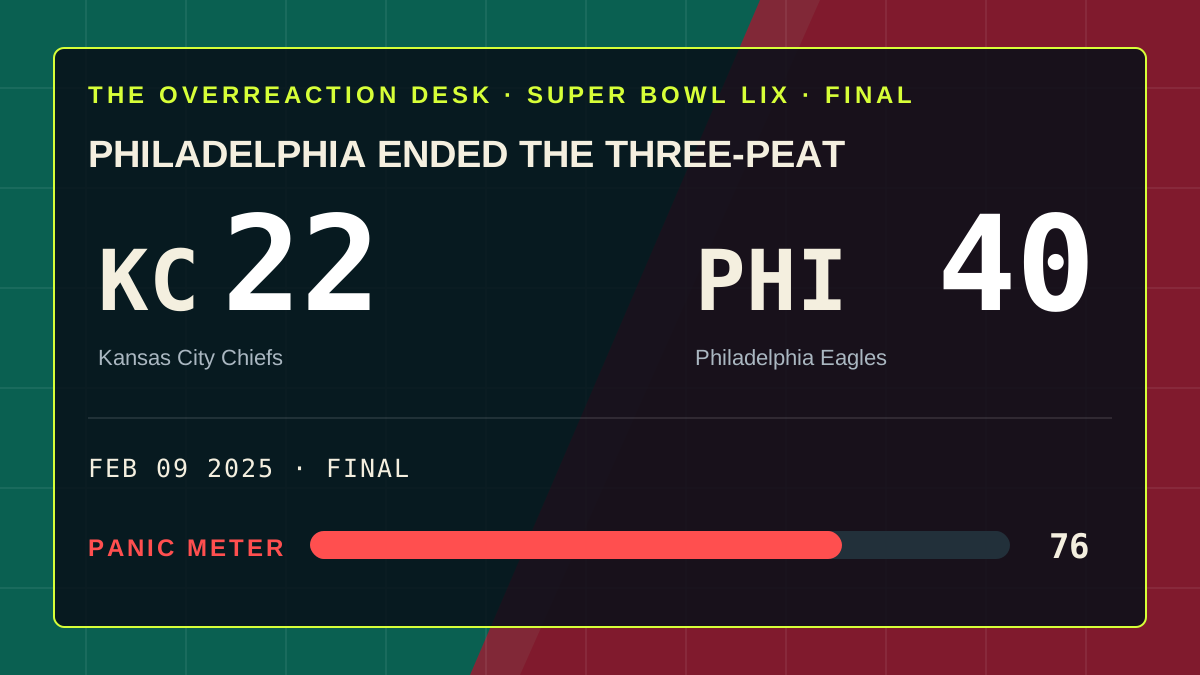
Philadelphia beat Kansas City 40-22 in Super Bowl LIX, and the final score was more diplomatic than the game. The Eagles led 24-0 at halftime, stretched the margin to 34-0, and spent most of the night treating a proposed Chiefs three-peat like paperwork that had been filed with the wrong department. Kansas City eventually scored 22 points, but only after Philadelphia had built a lead large enough to survive an entire fourth quarter of cosmetic repairs.
The Eagles won with control rather than suspense. Their defensive front reached Patrick Mahomes without relying on a constant stream of extra rushers, the coverage behind it squeezed the obvious answers, and the offense avoided giving Kansas City the short fields or sudden momentum that have powered so many previous comebacks. The Chiefs entered as the reigning champions. They left having discovered that even dynasties occasionally receive a meeting invitation titled “mandatory review.”
The turning point
Cooper DeJean supplied the image that defined the first half. With Philadelphia already ahead, the rookie cornerback intercepted Mahomes and returned the ball for a touchdown, pushing the Eagles’ advantage to 17-0. It was not the first sign that Kansas City was in trouble, but it was the moment trouble acquired its own lighting, soundtrack, and national television audience. A difficult start became a structural emergency before the Chiefs could establish any offensive rhythm.
Philadelphia then refused to offer the usual escape hatch. Jalen Hurts found A.J. Brown for a touchdown before halftime, and the Eagles entered the break ahead 24-0. Kansas City has built an era on making impossible deficits feel negotiable. This one arrived with Philadelphia’s pass rush, disciplined coverage, and absolutely no interest in reopening the terms.
Who deserves credit
Hurts earned the most valuable player award by completing 17 of 22 passes for 221 yards and two touchdowns, then adding 72 rushing yards and another score. Kansas City’s plan limited Saquon Barkley’s usual damage, so Philadelphia did not spend the night insisting on a solution that was not there. Hurts made efficient throws, protected the football, and punished the defense with his legs when the shape of the game demanded it.
The larger credit belongs to an Eagles defense that produced six sacks and three takeaways without turning the game into a reckless blitz contest. DeJean’s interception return delivered the loudest moment, but the repeated pressure made every Kansas City possession feel borrowed. Philadelphia’s line did not merely win individual snaps; it changed the amount of time the Chiefs were allowed to imagine that their normal offense still existed.
Who will be avoiding sports radio
Kansas City’s offensive line receives the longest walk past the microphones. Mahomes was pressured, hurried, and repeatedly forced to solve plays after their original design had expired. The quarterback also threw two interceptions, including the pick-six, and the Chiefs failed to score on their first nine possessions. This was not a single bad bounce dressed up as destiny. It was a full evening in which Philadelphia won the line of scrimmage and charged Kansas City for admission.
The three-peat conversation can join them. It had become so familiar that the possible achievement sometimes sounded less like history and more like an appointment. Philadelphia cancelled that appointment early, decisively, and with enough time remaining for everyone to reconsider the premise.
What the result means
The Eagles won the second Super Bowl championship in franchise history and answered the loss to Kansas City in Super Bowl LVII with an emphatic reversal. More importantly, they proved their path could survive when the expected star of the ground game was contained. The roster was deep enough, the quarterback was calm enough, and the defense was overwhelming enough to make Plan B look like a parade route.
Kansas City remained the defining team of its era, but the result placed a bright line under the difference between a durable dynasty and an automatic outcome. Championship reputation can create belief. It cannot block an edge rusher, rescue a collapsing pocket, or erase a 24-point halftime deficit.
Final banter verdict
Philadelphia spent two weeks hearing about Kansas City’s chance to become the first team to win three consecutive Super Bowls, then responded by making the Chiefs’ first nine possessions look like a software trial with every useful feature disabled. The Eagles did not steal history at the final whistle. They collected it in installments, starting with the pass rush and ending with green confetti.
Final ruling: the Chiefs’ dynasty is still real, the three-peat was not, and Philadelphia has documentary evidence. The city may now celebrate calmly, which in Philadelphia means with maximum volume, minimum sleep, and at least one argument about whether 18 points was a sufficiently disrespectful margin.