The Damage Report
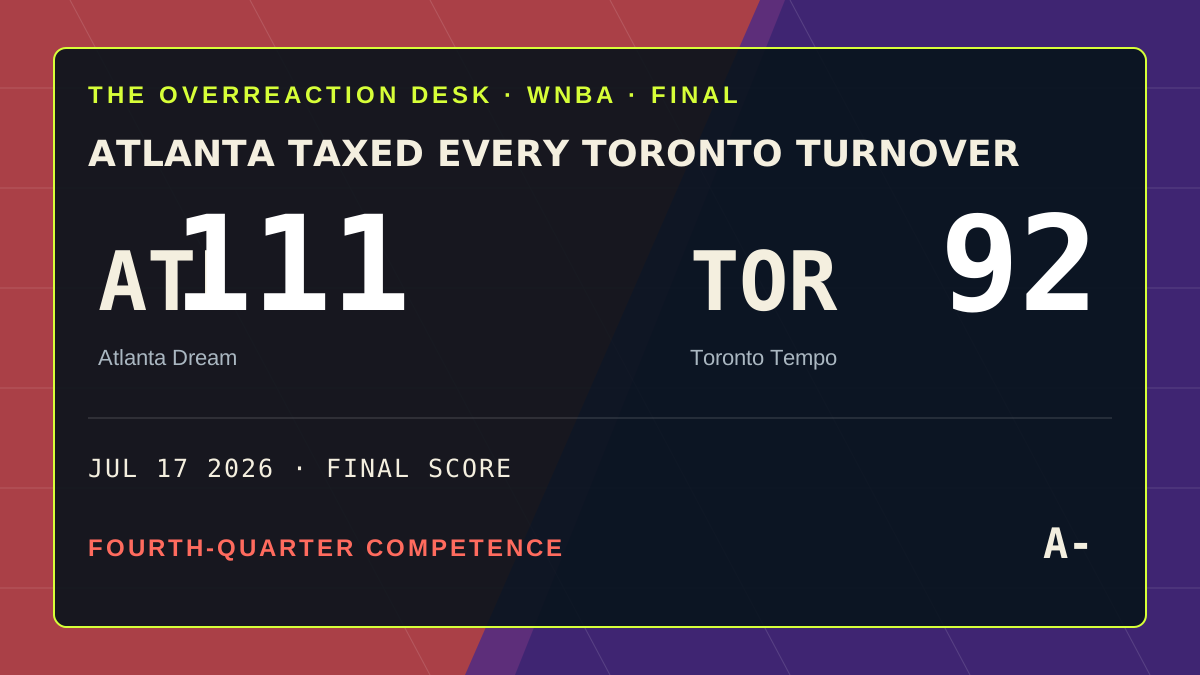
Atlanta beat Toronto 111-92 on Friday night by proving that efficient shooting cannot rescue an offense that keeps handing the ball to the other team.
The Tempo shot 54 percent from the field and 48 percent from 3-point range. Those are winning numbers in a normal box score. This was not a normal box score. Toronto committed 20 turnovers, twice Atlanta’s total, and surrendered 29 points off those mistakes.
Atlanta also held an 11-0 edge in fast-break points. Toronto found the rhythm, misplaced the basketball, and watched the Dream turn every loose possession into an express lane.
When This Stopped Being Competitive
Toronto stayed within one point at halftime and trailed 77-66 after three quarters. The game was still recoverable if the Tempo could protect the ball and make Atlanta execute against a set defense.
That correction never arrived. Atlanta scored 34 points in the fourth quarter. Naz Hillmon’s layup made it 93-82 with 5:09 left, Isobel Borlase followed with a 3, and the Dream spent the closing minutes stretching the margin rather than protecting it.
Atlanta’s final 19-point advantage matched its largest lead. No late wobble, no decorative suspense, no invitation for the home crowd to believe in a miracle.
People Who Understood the Assignment
Hillmon scored 24 points on perfect 8-for-8 shooting, including 4 for 4 from deep. Angel Reese supplied 23 points, 12 rebounds, and three steals. Jordin Canada added 18 points and 13 assists, giving Atlanta exactly the kind of control Toronto could not find.
Allisha Gray scored 18, and Borlase added 10. The Dream had enough answers that Rhyne Howard could shoot 4 of 13 and still finish plus-19.
Marina Mabrey led Toronto with 26 points. Nyara Sabally scored 16, Maria Conde had 13, and Julie Allemand contributed nine points and six assists. The Tempo generated useful offense when it completed the trip.
Who Needs to Explain Themselves
Toronto’s 20 turnovers require the first meeting. Mabrey had five, and the Tempo repeatedly allowed Atlanta’s pressure to turn possessions into open-floor chances.
The rebounding margin was only six. The shooting percentages favored neither team by enough to explain a 19-point loss. The game separated because Atlanta took care of the ball, forced mistakes, and converted them without ceremony.
An expansion team is allowed to have growing pains. It is not required to gift-wrap them 20 times in one night.
How Much Should We Overreact?
Atlanta’s offense looks dangerous when Canada organizes it and Hillmon punishes every opening. The Dream did not need a heroic fourth-quarter shot because their pressure kept manufacturing simpler chances.
Toronto should resist treating this as a shooting problem. The Tempo made shots. The urgent repair is possession security, because strong percentages are just expensive decoration when 20 trips end without an attempt.
The Official Overreaction
Desk ruling: Atlanta won the fourth quarter by eight and earned an A-minus for closing competence. Toronto found the beat, dropped the ball, and watched the Dream turn a one-point halftime game into a 19-point invoice.