Let’s Review the Evidence
The Dodgers did not wait for Seattle to make the game complicated. Mookie Betts doubled home two runs in the first inning, Dalton Rushing hit a three-run homer in the fourth, and Los Angeles built a 5-0 lead before the Mariners had a useful answer.
Seattle finally found one in the sixth. Randy Arozarena doubled home Cole Young, then scored when Cal Raleigh walked with the bases crowded. The Mariners cut the game to 5-2 and briefly made the Dodgers perform the part of the evening that comes with championship-level expectations: protect a lead after the other side has made noise.
Teoscar Hernández answered with a solo homer in the bottom half. The runway reopened immediately.
Where the Wheels Came Off
The fourth inning was the structural break. Rushing’s three-run homer gave Los Angeles a five-run cushion, and it turned Seattle’s early deficit into a much larger question about how many clean innings the Mariners could string together.
The Dodgers did not need a second huge inning. Their first-inning double had already made the Mariners chase. Rushing’s homer simply charged admission for the rest of the night.
The Competent Parties
Roki Sasaki allowed two runs over 5 1/3 innings and struck out seven. He did not deliver a spotless line, but he kept Seattle from turning its contact into a sustained inning. The Dodgers’ bullpen finished the remaining 3 2/3 innings without allowing another run.
Betts had two hits and drove in two. Teoscar Hernández had two hits and a homer, and Rushing supplied the single swing that created the game’s largest margin. Los Angeles finished with eight hits, the same total as Seattle, but the Dodgers had two home runs and the Mariners had none.
Mute the Group Chat
Seattle did get three hits from Arozarena, and Cole Young added two. That is enough contact to make a close game feel possible. It is not enough when the opponent has already built a five-run answer and keeps the late innings quiet.
The Mariners’ pitching problem was not one disastrous inning alone. It was the timing of the damage. The Dodgers turned two early runs into a cushion, then converted the next mistake into a three-run homer before Seattle could make the game about pressure.
What Happens to the Narrative Now
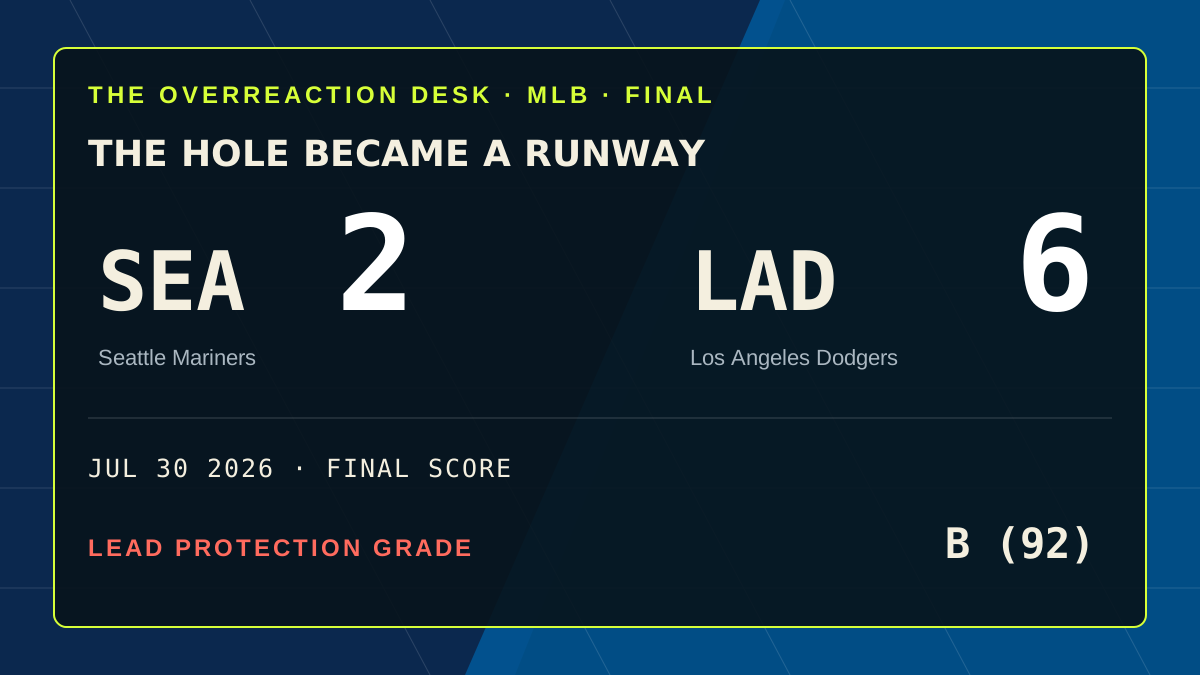
The Desk’s Lead Protection Grade was B (92), calculated from Los Angeles’ six-run largest lead, four-run final margin, and a scoreless ninth-inning differential. A B is not an indictment. It is the grade for a team that gave back two runs in the sixth and then restored the distance before the inning could become a referendum.
That distinction matters for Los Angeles. The Dodgers did not hold Seattle at arm’s length every minute. They let the Mariners touch the edge of the game and then moved the edge back. That is what depth looks like when it is working instead of merely appearing on a roster graphic.
The Official Overreaction
Desk ruling: Seattle had the early problem, found a late pulse, and still never got the tying run into the conversation. Los Angeles supplied the first punch, the biggest swing, and the immediate response when the Mariners tried to make the night interesting.
The Dodgers did not erase the hole because it was never really theirs. They turned it into a runway and used it to land a win that looked more comfortable than the box score’s identical hit totals suggested.