For Anyone Who Looked Away
Philadelphia took a 1-0 lead in the first when Alec Bohm singled home Bryce Harper. The Phillies kept collecting enough baserunners to make the advantage feel expandable, but Justin Wrobleski refused to let the second run arrive.
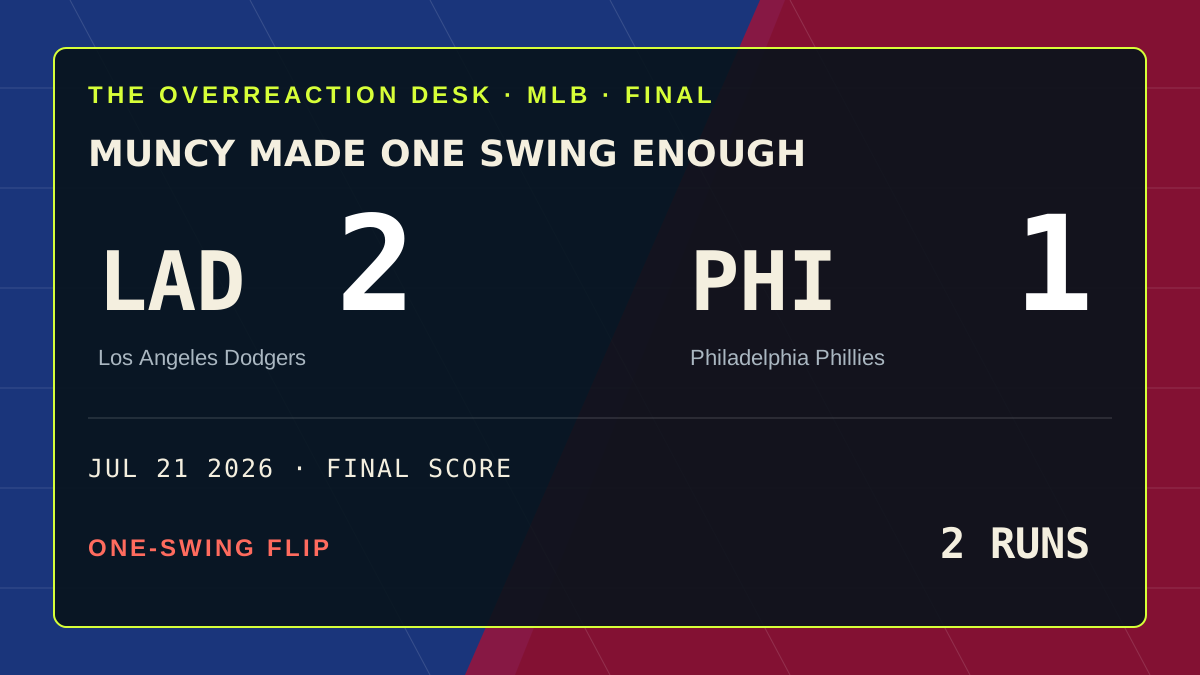
Los Angeles needed only one opening. Andy Pages singled in the fourth, and Max Muncy followed with his 19th homer, a two-run shot to center that turned a 1-0 deficit into a 2-1 lead.
That was the entire scoring summary. The Dodgers had five hits, two fewer than Philadelphia, but attached both of their runs to the same swing.
The Moment the Game Broke
Zack Wheeler was otherwise excellent. He struck out nine, walked nobody and allowed five hits across seven innings. On a night that sharp, the Phillies could reasonably expect one early run to remain useful.
Muncy made the margin for error disappear. Pages reached, Wheeler left one pitch hittable, and the Dodgers converted their only multi-run moment of the night.
This was not a lineup-wide avalanche. It was championship-contender efficiency in miniature: create one runner, find one power swing, then hand the rest of the assignment to the pitching staff.
Who Actually Showed Up
Wrobleski allowed one run on five hits in 6 1/3 innings. He walked one and struck out seven, keeping Philadelphia from converting seven total hits into anything beyond Bohm’s first-inning RBI.
Evan Phillips retired all three batters he faced and struck out two. Tanner Scott covered the final five outs, allowing two hits but no runs while striking out two.
Bohm went 3-for-4 for Philadelphia. Wheeler delivered the kind of start that wins most nights. The Phillies did plenty correctly; they just kept arriving at the last required hit without actually getting it.
Do Not Open Social Media
Philadelphia’s offense produced traffic without a second scoring inning. That is the maddening version of a one-run loss: no collapse, no circus, just repeated evidence that one more timely swing was available somewhere and never appeared.
The Dodgers are measured against October, so a 2-1 win will not inspire a parade down Sunset Boulevard. It does show why their margin for error can look larger than the scoreboard suggests. One mistake by Wheeler became two runs. Several Los Angeles pitching mistakes became stranded runners.
Philadelphia put at least one runner aboard in five different innings after the first and still never scored again. That is less a lack of opportunity than a failure to finish the sequence. Los Angeles kept forcing the Phillies to start the decisive at-bat from zero, and every threat eventually expired.
The Desk Has Ruled
The verified One-Swing Flip was two runs.
Desk ruling: Muncy supplied the only swing that changed the winner, and Los Angeles’ pitching made it permanent. Philadelphia had more hits, Wheeler had more strikeouts, and the Dodgers still left with the only number that matters.