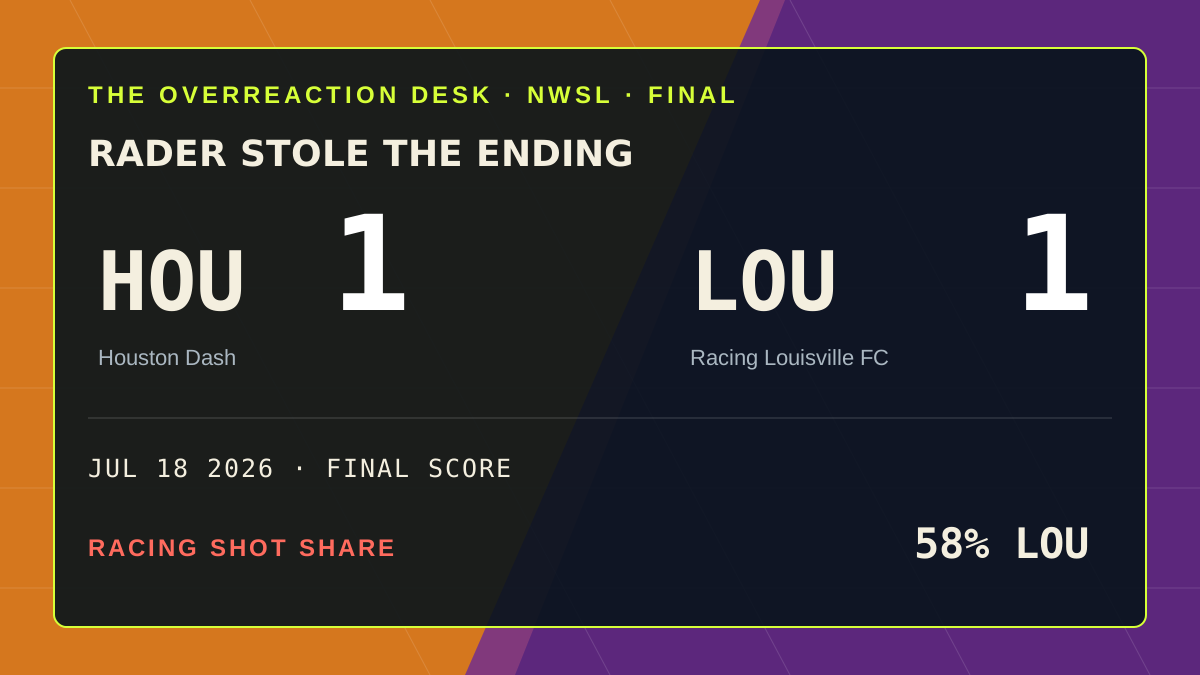
Racing’s Plan Worked Until It Didn’t
Racing Louisville FC did not need most of the ball to create the better attacking volume against the Houston Dash. Racing held 42.4% of possession but led 14-10 in shots, 6-5 in shots on target and 8-1 in corners.
That is a coherent way to win a soccer game. Win the useful spaces, turn transitions into attempts and make possession count less than pressure. For 94 minutes, Racing had the score to validate it.
The 95th minute changed the verdict. Kat Rader’s late equalizer turned a well-managed 1-0 lead into a 1-1 draw and left Louisville holding the least satisfying proof imaginable: the plan worked, right up to the moment the result disappeared.
Fischer Rewarded the Early Pressure
Kayla Fischer scored in the 19th minute, finishing from very close range after Racing forced another dangerous sequence near the Houston goal. The goal gave Louisville something its low-possession approach needed: a lead it could defend without abandoning the match’s shape.
Houston had more of the ball and completed 313 of 405 passes. Racing completed 198 of 284. Yet the home side kept finding more shots and dramatically more corners, evidence that Houston’s territorial control was not consistently becoming penalty-area control.
Jane Campbell made four saves for the Dash. Jordyn Bloomer made four for Racing. The goalkeeper workload was close, but Louisville produced the larger total volume and spent most of the night protecting the only goal.
Rader Refused the Clean Ending
Houston’s persistence finally landed five minutes into second-half stoppage time. Sophie Schmidt redirected the ball with a headed pass, and Rader hit a left-footed volley from the center of the box into the bottom-right corner.
It was Rader’s sixth goal of the season and the kind of finish that reorganizes the emotional meaning of an entire match. Houston went from another road loss to a point. Racing went from ending a losing run to explaining how 76 minutes with the lead produced no win.
Louisville had been direct, active and difficult to play through. One late sequence made all of that feel like evidence in a case the jury had already dismissed.
The Desk Metric: 58% of the Shots on 42.4% Possession
Racing took 14 of the match’s 24 shots, a 58% share, despite holding only 42.4% of possession. The home side also led 8-1 in corners.
That comparison shows why the result will sting. Louisville did not stumble into a lead and spend the night hiding. It produced the more dangerous volume with less of the ball. Houston’s equalizer was a reward for staying alive, not proof that the Dash had controlled every meaningful part of the match.
The final lesson is harsher: a good plan still has to survive stoppage time.
The Desk Has Ruled
Desk ruling: Racing Louisville won the shot count, the corner count and nearly the whole evening. Kat Rader won the last dangerous moment, and that was enough to turn Louisville’s clean tactical story into one very untidy point.