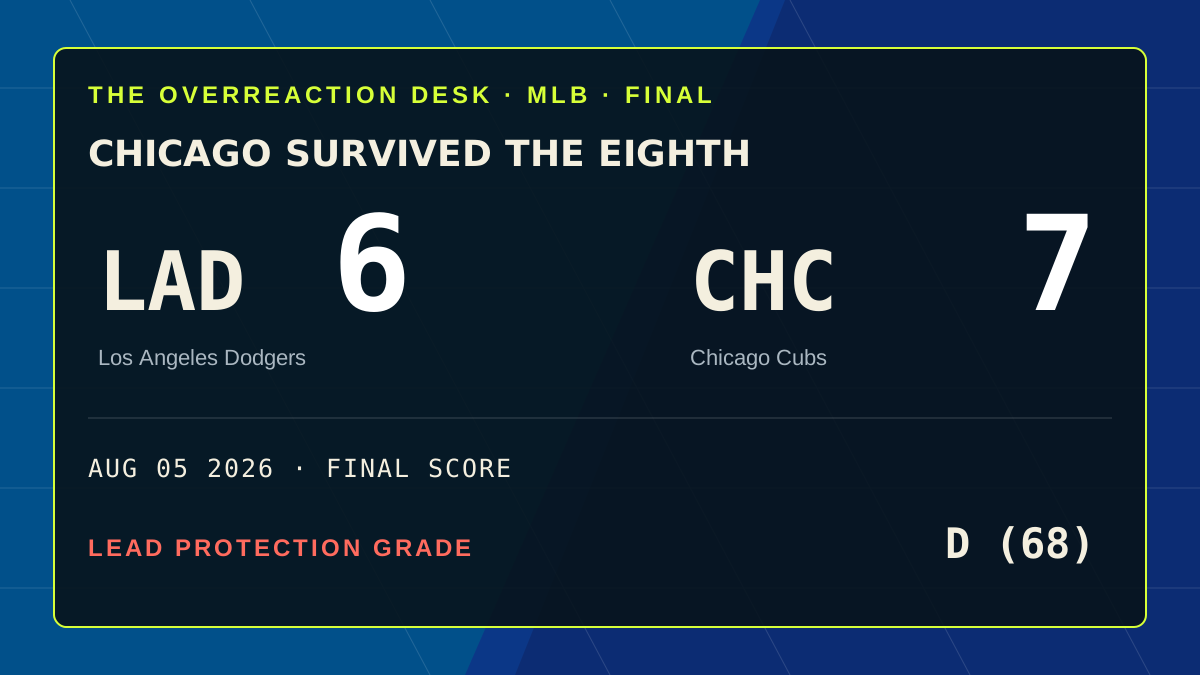
Chicago Built the Cushion Before It Needed It
The Cubs scored in each of the first two innings, added three in the fourth, and carried a 6-1 lead into the eighth. The game looked less like a classic than a Chicago proof of concept: enough contact, enough traffic, and enough early separation to keep Los Angeles from turning every at-bat into a referendum.
Pete Crow-Armstrong supplied the loudest evidence, hitting two home runs and driving in four. Chicago finished with 15 hits, and the early work gave the Cubs something many teams do not have when the Dodgers start stacking dangerous swings: permission to be imperfect for one inning.
Then the Eighth Became Its Own Game
Los Angeles scored five times in the eighth. Shohei Ohtani hit two home runs and drove in three, while Max Muncy added a three-run homer to a rally that had no business looking possible when the inning began.
That comeback was not cosmetic. It erased nearly the entire Chicago plan. The Cubs’ six-run lead was suddenly one, and the final three innings gave the Dodgers the better emotional posture even though Chicago still held the actual lead.
Chicago needed one more run than the Dodgers could answer. It got it in the seventh, then watched the eighth try to charge interest on the debt. The Cubs did not restore control. They preserved enough uncertainty in their favor.
Imanaga Kept the First Version of the Game Alive
Shota Imanaga earned the win with five innings, one earned run, and six strikeouts. Eric Lauer took the loss after allowing six runs in four innings. Those lines explain why the game had two separate endings: Chicago’s starter handed over a real advantage, then the bullpen had to live with the fact that Los Angeles was going to get another look.
The Cubs made 15 hits count early. The Dodgers made 14 hits count late. Chicago won because the calendar stopped at nine innings before the comeback could become a takeover.
The Lead Was Useful, Not Safe
The Desk’s Lead Protection Grade was D (68), calculated from Chicago’s six-run largest lead, one-run final margin, and four-run closing-period deficit. The D is the whole warning label: the Cubs created a winning shape, then spent most of it in one inning.
Still, the lead had value. Chicago’s early work did not look pretty after the eighth, but it kept the Dodgers one swing short of changing the result.
The Desk Has Ruled
The Dodgers won the eighth inning so decisively that it nearly became the game. The Cubs won the seven innings around it just enough to keep that from happening.
Chicago did not control the finish. It controlled the margin before the finish, and tonight that was the difference between a scare and a loss.