The Headline Matchup Was a Decoy
The pitching matchup invited everyone to stare at the names. Chicago had Javier Assad. Los Angeles had Tarik Skubal. The game itself kept asking a simpler question: which lineup could turn a few good swings into a second wave?
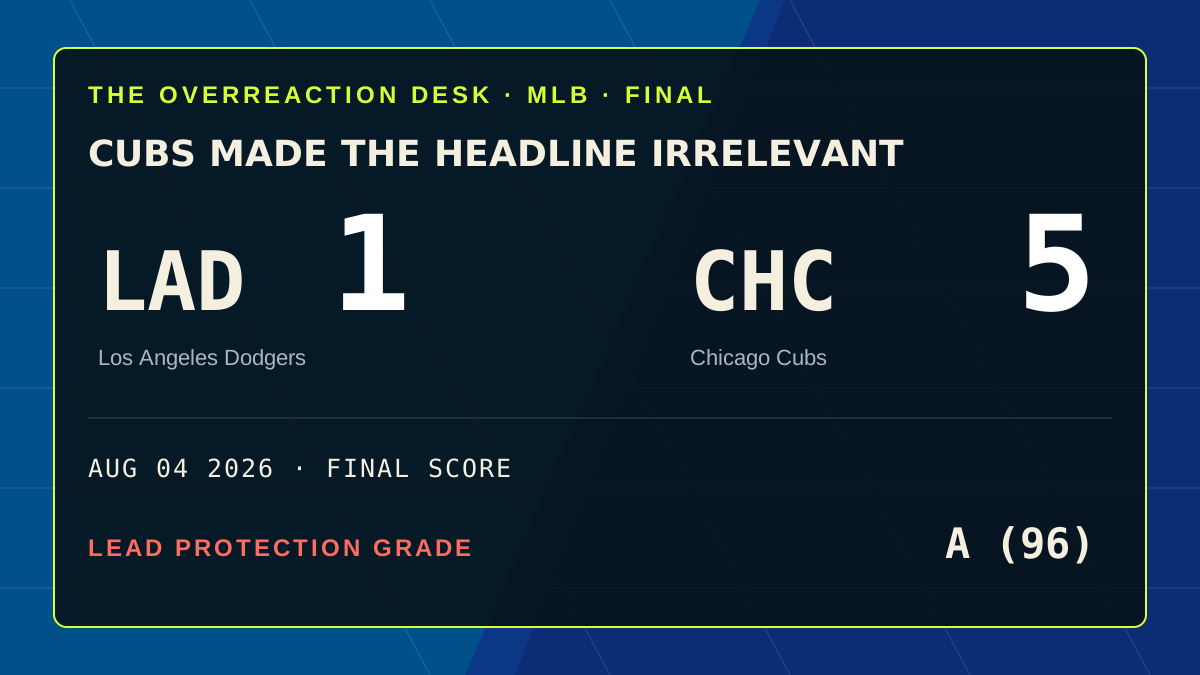
The Cubs answered it. They beat the Dodgers 5-1, finishing with nine hits to Los Angeles’ four. Skubal struck out six across six innings, but Chicago kept finding the next lever. The result was not a single avalanche. It was a series of small doors opening at exactly the wrong time for the Dodgers.
Chicago Kept the Pressure Moving
The Dodgers scored once in the second inning, but that lead lasted only until the bottom of the third. Chicago tied the game there, moved in front in the sixth, added two in the seventh, and finished the eighth with another run.
That sequence matters more than the final margin. Los Angeles never faced one dramatic collapse to explain. The Dodgers faced one run, then another, then two more. Chicago kept making the game restart from a slightly worse place.
Kyle Tucker, Dansby Swanson, and Nico Hoerner each homered. The Cubs did not need a parade of extra-base hits; they needed enough isolated damage to make every clean inning feel temporary.
Assad Made the Lead Portable
Assad allowed one run over 5 2/3 innings and struck out three. He gave Chicago the part of a start that travels: enough length to protect the bullpen, enough control to keep the Dodgers from turning every baserunner into a crisis, and enough margin for the lineup to work in layers.
Skubal’s six innings and six strikeouts were not a bad night. They simply came with Chicago’s offense refusing to let a one-run game remain one-run for long. The Cubs’ nine hits and two-run seventh made the difference between a duel and a verdict.
The Lead Was Never Really Borrowed
The Desk’s Lead Protection Grade was A (96), calculated from Chicago’s five-run largest lead, four-run final margin, and a one-run closing-inning edge. That is the profile of a team that gave up one answer and then kept the other side from getting a second question.
The Cubs did not win because the Dodgers imploded. They won because Chicago kept treating each new inning as another chance to create separation. The Dodgers got the famous arm. The Cubs got the game.
The Desk Has Ruled
Los Angeles arrived with the louder pitching headline, but Chicago made the matchup about repeatable offense. Assad gave the Cubs length, the defense got through the quiet innings, and three home runs ensured the Dodgers could not turn one early run into control.
The overreaction is simple: the Cubs did not steal a marquee game. They made the marquee irrelevant.