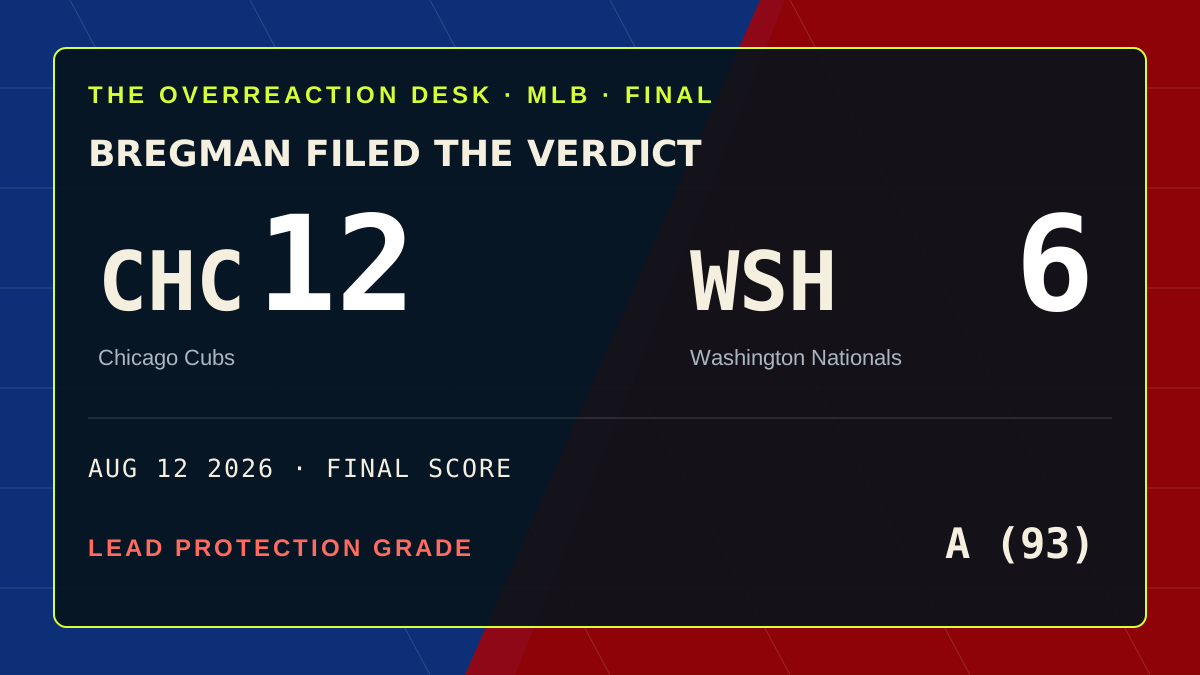
Washington Had the First Tiny Lead
The Nationals scored once in the second, and for four innings that single run was the entire shape of the game. Chicago did not rush the response. The Cubs waited until the fifth, then scored four times and made the first lead feel like a historical footnote.
The sixth turned the footnote into a verdict. Chicago scored five more runs, moving from a 4-4 tie after Washington answered in the bottom of the fifth to a 9-4 lead. The Cubs did not win one big inning. They built a sequence that kept asking Washington to start over.
Bregman Brought the Whole Filing Cabinet
Alex Bregman went 3-for-3 with three home runs, seven RBI, three runs and two walks. That is a line so large it stops being a hot streak and starts looking like a hostile takeover of the box score.
Dansby Swanson added a home run and two RBI, while Seiya Suzuki drove in two more. Chicago finished with 13 hits, and the lineup kept its pressure organized: four runs in the fifth, five in the sixth and three in the eighth. Washington got six runs, but they arrived as answers to damage already delivered.
The Desk Has Ruled
David Peterson allowed three earned runs across five innings and struck out six, giving Chicago enough length to let the offense keep pressing. The Nationals added a run in the ninth, but it did not reopen the game. By then, Bregman had already filed the ruling in triplicate.
Washington did have six runs and 11 hits, so this was not a night without resistance. The difference was timing. Chicago answered each useful Nationals moment with a larger inning of its own, and that is how a close early game becomes a score that looks like it was never close.
The Desk’s Lead Protection Grade is an A (93). Chicago’s largest lead was seven, the final margin was six, and Washington won the closing inning by one. That is the small deduction for letting the last frame make noise. The larger truth is that the Cubs turned the middle innings into a verdict long before the ninth got a vote.