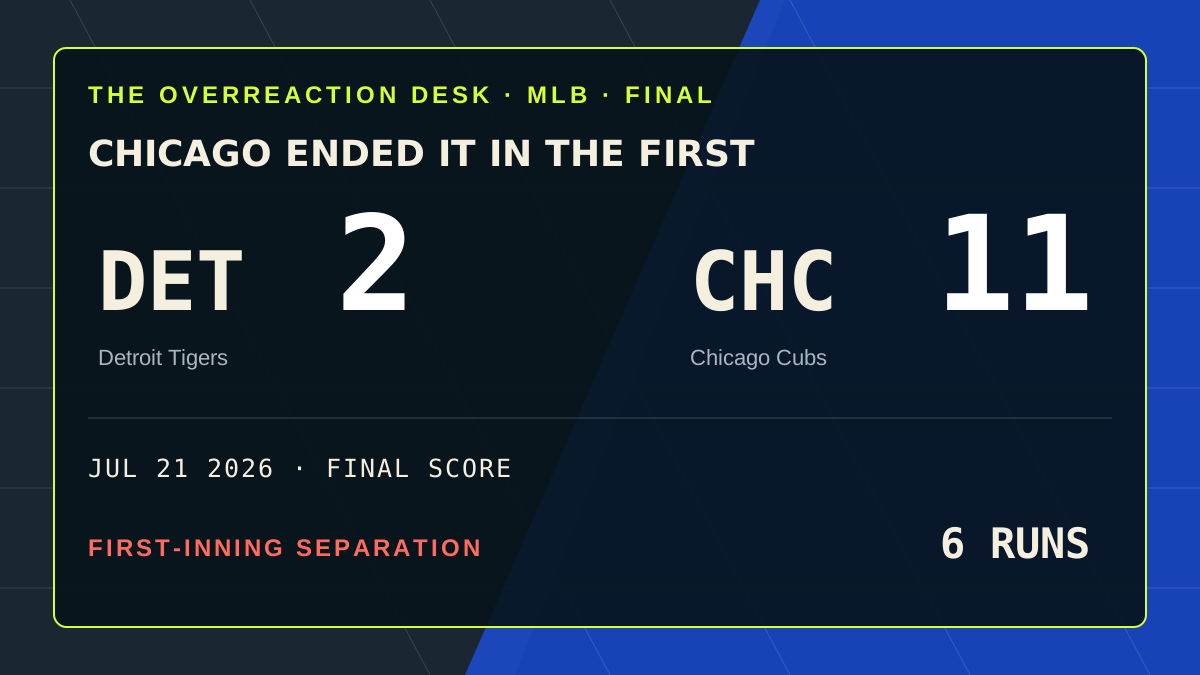
The Short, Painful Version
The Cubs scored six runs before Detroit escaped the first inning. Carson Kelly drove in two, Michael Busch and Ian Happ added RBI singles, and consecutive bases-loaded walks forced home two more.
Framber Valdez recorded two outs. He allowed five hits, two walks and six earned runs. Chicago sent 11 batters to the plate and converted the game from a contest into a long-form explanation.
The Cubs eventually won 11-2. Detroit’s only runs came on Dillon Dingler’s ninth-inning homer, long after the Wrigley crowd had been permitted to enjoy a calm evening.
When This Stopped Being Competitive
There was no single dramatic blow in the first. That was the problem for Detroit. The Cubs stacked singles, walks and patient at-bats until every route out of the inning had been blocked.
Pete Crow-Armstrong walked with the bases loaded for the fifth run, and Seiya Suzuki followed with another run-scoring walk. Chicago did not chase the knockout pitch. It made Valdez prove he could find the zone, and he could not do it in time.
The Cubs added a run in the third, two on Michael Conforto’s fifth-inning homer and two more in the seventh.
Who Actually Showed Up
Crow-Armstrong went 2-for-2 with a triple, three walks and two RBIs. Kelly reached three times and drove in two. Conforto’s homer supplied another two runs.
David Peterson gave Chicago 6 2/3 scoreless innings, allowing three hits and one walk. That long relief performance mattered because it kept a chaotic first inning from producing any later pitching strain.
The Cubs finished with 11 hits and drew enough walks to turn Detroit’s pitching staff into a neighborhood walking tour.
People Having a Difficult Morning
Detroit fell behind 6-0 before its lineup had a second plate appearance. No offense should be expected to treat that like a normal Tuesday assignment.
The Tigers managed seven hits but did not score until the ninth. Valdez’s short start forced the bullpen to absorb the rest, and Chicago kept adding runs against Ty Madden, Brenan Hanifee and position-player innings.
Motor City patience is admirable. Asking it to survive a six-run first and an 11-run night is less patience than hostage negotiation.
Chicago moved to 57-44 while Detroit fell to 47-54. The records did not decide the game, but the first inning exposed the current distance: the Cubs punished every free pass and hittable pitch, while the Tigers spent the rest of the night trying to make the score look less permanent.
The Official Overreaction
The verified First-Inning Separation was six runs.
Desk ruling: Chicago won the game before the evening had time to develop a personality. The Cubs combined patience, contact and 6 2/3 scoreless relief innings into the rare Wrigley night where nobody needed to study the wind for alternate endings.