Ninety Minutes, No Finish
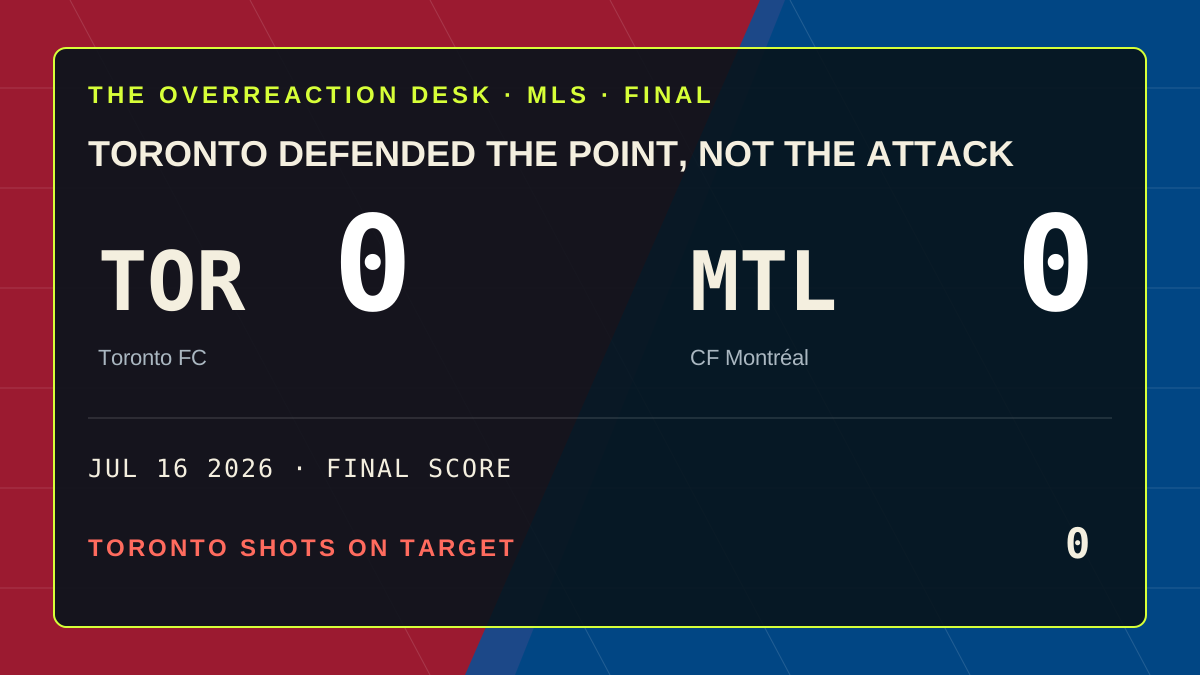
CF Montréal and Toronto FC returned from the World Cup pause with a 0-0 draw on Thursday night at Stade Saputo. The possession split was almost exact, but the danger was not: Montréal took 14 shots and put three on target, while Toronto finished with eight attempts and zero on target.
That is one way to secure a road point. It is also one way to make the goalkeeper wonder whether the attacking plan was left at customs.
The rivalry supplied the tension, but not the finish. Toronto kept the score level without ever creating a moment that forced Montréal to scramble, while the home side kept arriving near the answer without producing it.
Montréal Owned the Shot Map
Montréal created the larger volume and forced the actual saves. The home side held 50.1 percent of possession, took six more shots, and kept Toronto from testing the goal once.
Montréal still could not turn territorial control into the one touch that mattered. Three shots on target from 14 attempts gave the home side the better claim to the evening, but not the goal needed to collect all three points.
Toronto’s Defense Did Its Job
Toronto’s back line kept the match level through the final whistle at 90-plus-five minutes. A rivalry road game after a long pause can become disorganized quickly; Toronto stayed compact enough to prevent Montréal’s pressure from becoming a scoreboard event.
That matters. So does the fact that the defensive work had no attacking partner. Toronto’s five-defender shape protected the point, but the transition game never produced a shot that required a save.
The Desk Metric: Zero on Target
Toronto’s Desk number is not dressed up because it does not need help: zero shots on target from eight attempts. A team can accept that in an isolated road draw. It cannot market it as evidence that the attack is ready for the second half of the season.
Montréal’s three shots on target were hardly an avalanche, but they were enough to establish which team made the opposing goalkeeper participate.
What the Draw Changes
Toronto moved to 3-5-6. The point is useful, particularly on rivalry ground, yet the performance leaves the same basic question waiting: can Toronto turn a stable defensive base into enough repeatable threat to climb?
Montréal earned another clean sheet but missed the chance to turn home control into a win. The finishing problem is less dramatic than Toronto’s target-free night, but it is still why the better shot profile produced only one point.
The Official Overreaction
Desk ruling: Toronto defended with enough discipline to survive the Canadian rivalry and attacked with enough menace to trouble absolutely no one holding goalkeeper gloves. The point counts. The zero shots on target should count louder.