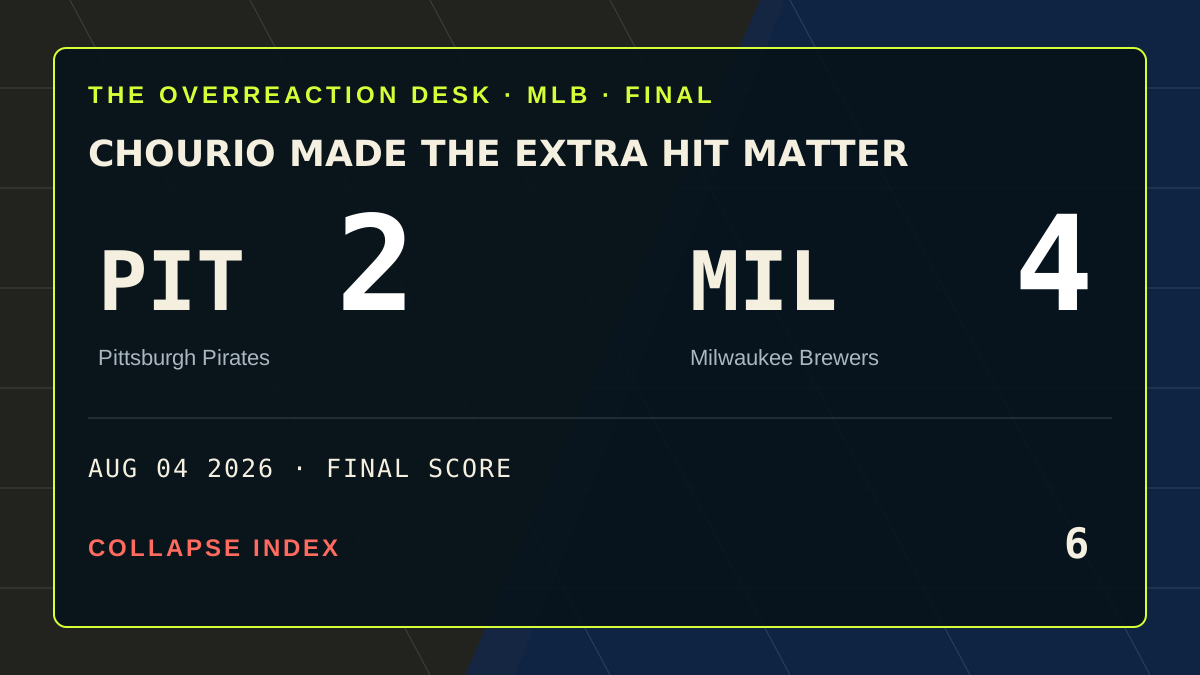
Milwaukee Won the Small-Margin Version
The Brewers did not need a parade of runs. They needed the game to keep making sense after Pittsburgh had put runners on base.
Milwaukee scored once in the third, twice in the fourth, and once in the fifth. The lead never became enormous, but it became repeatable. That is the Brewers’ preferred form of inconvenience: another inning, another useful hit, another reason the opponent cannot call the deficit accidental.
Chourio Was the Extra-Base Argument
Jackson Chourio went 3-for-4 with a home run and two RBI. Andrew Vaughn added another home run, giving Milwaukee two clean bursts of power inside an 11-hit night.
Pittsburgh also finished with 11 hits, which makes the result less about volume than about what the hits were allowed to become. The Brewers turned their best contact into four runs. The Pirates turned theirs into two.
Henderson Kept Pittsburgh From Rewriting the Shape
Logan Henderson allowed two runs over six innings and struck out eight. He did not need to produce a shutout to keep the Brewers in control. He needed to stop the Pirates from stacking their contact into one inning that could change the game.
Trevor Megill finished the ninth without allowing a run. Milwaukee handed the bullpen a two-run lead and got the exact amount of protection the night required.
The Lead Never Became a Negotiation
The Desk’s Collapse Index was 6, calculated from Milwaukee’s two-run largest lead, two-run final margin, and zero-run closing-period differential. The index is low because the Brewers never had to recover the lead; they simply kept extending its useful life.
Chourio made the extra hit matter. Henderson made sure it stayed enough.
Milwaukee Won the Middle Innings
The Brewers scored in three different innings, which kept Pittsburgh from treating any single inning as the reason the game got away. Henderson’s six innings gave those small bursts somewhere to live, and the late relievers did not ask the offense to manufacture a second four-run night.
The Desk Has Ruled
Pittsburgh collected the same number of hits and still spent the night chasing Milwaukee’s timing.
The Brewers did not win by having more baseball. They won by making their baseball count sooner.