The Short, Painful Version
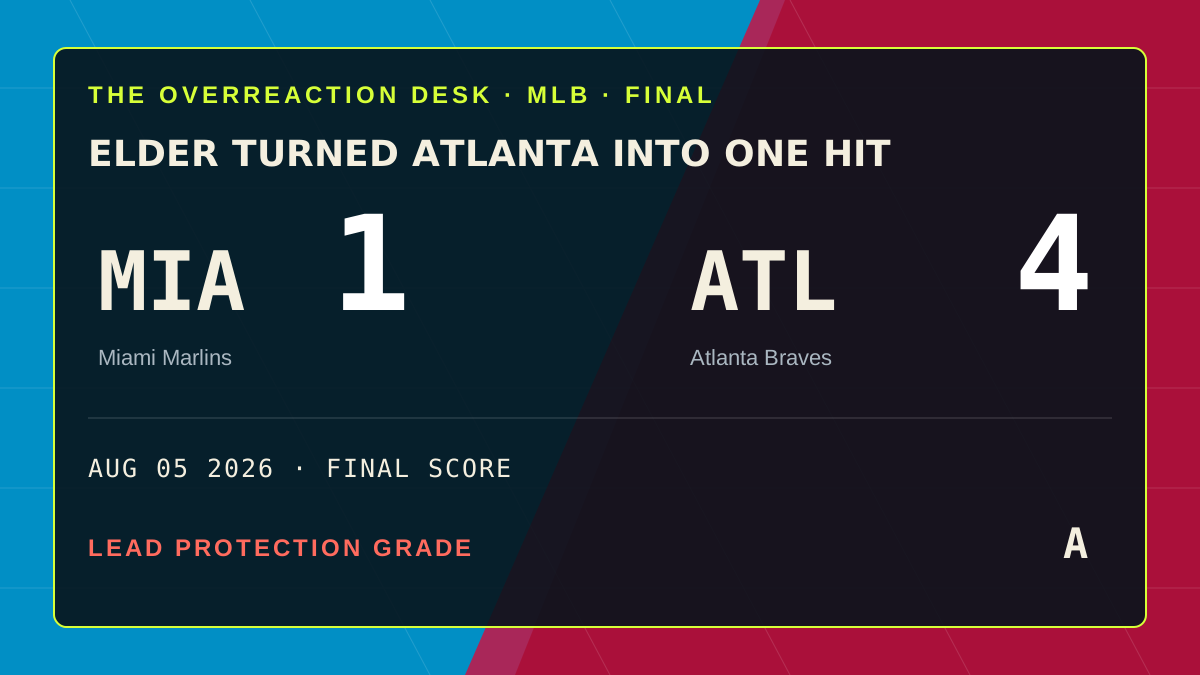
Atlanta beat Miami 4-1 by turning the Marlins’ offense into a one-hit traffic jam. The Braves scored three runs in the second and one in the third, then Bryce Elder made the lead feel less like a cushion than a narrow hallway.
Elder threw seven innings, allowed one hit and one run, and struck out three. Drake Baldwin drove in two runs, while Austin Riley and Mauricio Dubon each had two hits and an RBI. Atlanta did not need to keep scoring because Miami could not create a second lane.
The Second Inning Did The Heavy Lifting
The Braves scored three in the second inning, then added one in the third. That was enough offense to turn every Miami baserunner into a potential crisis rather than a likely comeback.
Baldwin’s two RBI gave Atlanta the most useful kind of early support: enough to matter, not so much that the pitching staff could relax. Riley and Dubon added the connective tissue, and Michael Harris II collected two hits as the Braves kept the lineup from becoming a one-player story.
Elder Kept The Door Narrow
Elder allowed only one Miami hit over seven innings. He did give up a run and walked two, so this was not a perfect-game fantasy. It was better for Atlanta’s actual needs: a starter who kept the Marlins from building a multi-batter inning.
Miami finished with three hits total. Xavier Edwards, Javier Sanoja, and Jakob Marsee found their way on, but the Marlins never put enough traffic together to make Atlanta defend the whole park.
The Braves Didn’t Volunteer A Sequel
Atlanta’s bullpen closed the final two innings without allowing a run. That matters because a 4-1 game still leaves room for one bad inning to turn into a dramatic inconvenience. The Braves declined the invitation.
The Marlins had chances to make the game louder. Instead, the Braves kept the volume at the level of a distant argument. That is how a team wins a close score without ever making the final three outs feel like a coin flip.
The Desk’s Accounting Department
The Desk’s Lead Protection Grade is A. Atlanta’s largest lead was four, the final margin was three, and Miami was scoreless in the ninth. Elder did not just protect the lead; he reduced the number of ways the Marlins could threaten it.
The overreaction is appropriately positive. Atlanta did not need a slugfest, a miracle, or a ninth-inning rescue. It needed one sharp early push and a starter willing to make the rest of the game small.
The Desk Has Ruled
The Braves won the game in the second, but Elder won the argument afterward: Miami was allowed one hit and no second chance.