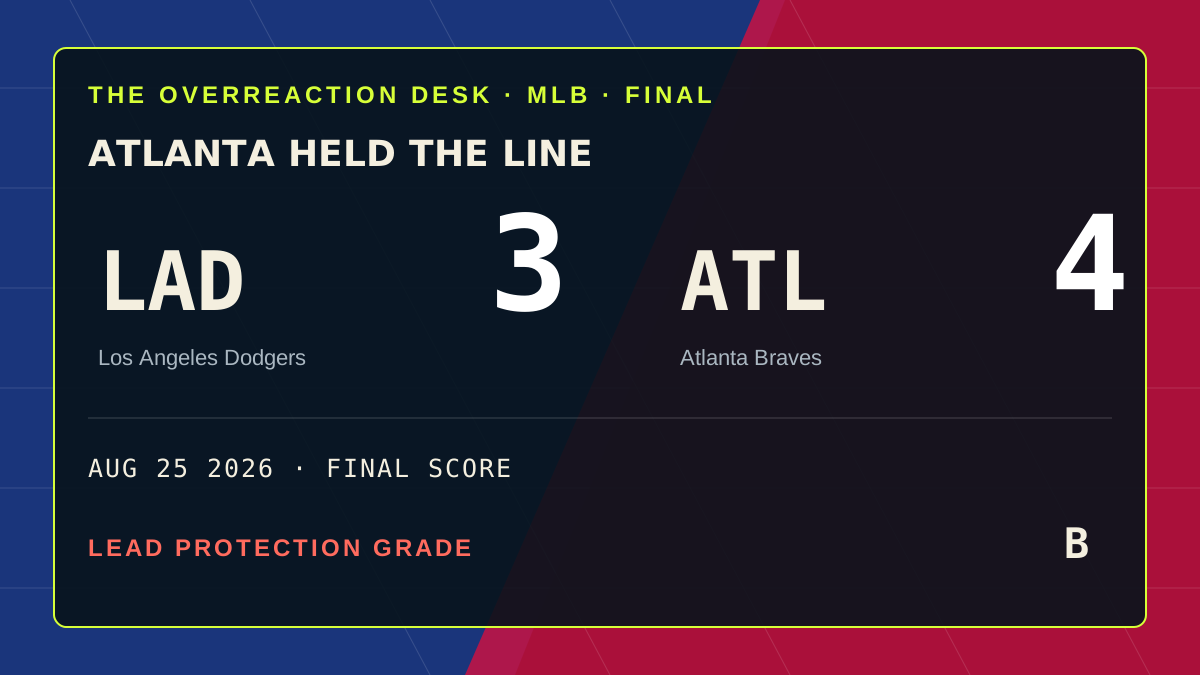
Atlanta Used the First Inning Wisely
The Braves scored three times in the first inning. The Dodgers answered with two in the second and one in the fourth, which erased Atlanta’s early advantage and turned the game into the kind of close contest that makes every routine ground ball look like a policy decision.
Atlanta did not win by piling on. It won by making the early burst matter after Los Angeles had done enough to erase it.
The shape of the scoring tells the story. Atlanta’s first-inning burst created breathing room, but the Dodgers’ two-run second and one-run fourth removed it before the middle innings could become comfortable. The Braves had to win the small moments after the loudest one had already been answered.
The Dodgers Had the Hits, Not the Margin
Los Angeles finished with 10 hits to Atlanta’s nine, and neither team committed an error. The Dodgers had more traffic, but the Braves kept that traffic from becoming a second wave of runs.
Ozzie Albies had two hits and two RBI. Hunter Feduccia and Alex Call also collected two hits apiece. That balanced work mattered because Atlanta never got another three-run inning; it had to build the final lead with one run in the eighth.
One Run in the Eighth Did the Heavy Lifting
Atlanta’s eighth-inning run supplied the difference. Dylan Dodd earned the win, and Raisel Iglesias recorded the save. The Braves did not ask the ninth inning to repair a larger mistake. They handed it a one-run lead and asked the closer to keep Los Angeles from turning its hit advantage into a walk-off story.
That handoff mattered because the Dodgers had already shown they could manufacture pressure without an error. Atlanta’s defense stayed clean, and its pitching made the final three outs a finish rather than a referendum.
The Lead Protection Grade is B. Atlanta’s largest lead was three, but the final margin was one. That is a passing grade with visible paperwork: the Braves held the line, but only after the Dodgers made the original lead disappear.
The Desk Has Ruled
Desk ruling: Atlanta’s lineup did not need to overpower Los Angeles. It needed to keep the Dodgers’ extra hits from becoming extra damage, then find one more run before the final three outs.
That is October-style baseball in miniature: loud opening statement, uncomfortable middle, and a closer arriving before the opposing lineup can write its own ending.