For Anyone Who Looked Away
San Diego produced the first run when Manny Machado homered in the fourth inning. Atlanta answered in the fifth with a Michael Harris II solo homer and a Joey Bart double that scored Mauricio Dubón.
Ozzie Albies added a solo homer in the sixth, giving the Braves a 3-1 lead. Ty France answered with a homer in the seventh, but that completed the scoring.
Four of the game’s five runs came on home runs. Atlanta won the small remaining margin by placing one extra runner in position for Bart’s double.
The Exact Point of No Return
The decisive moment was Atlanta getting two runs in the fifth instead of one.
Harris tied the game with his homer. Dubón then reached on an error, and Bart drove him home. The sequence gave the Braves a lead without requiring the lineup to produce sustained traffic.
That mattered because Atlanta finished with four hits. It did not create many opportunities. It extracted a run from nearly every useful one.
Credit Where It’s Annoyingly Due
Bryce Elder allowed two runs over six innings. Both came on solo homers, and he permitted five hits while walking one.
Victor Mederos handled the final seven outs. He allowed one hit and one walk and kept San Diego scoreless after France’s seventh-inning homer.
The assignment grew larger than a standard save, and Mederos treated it as a clean continuation rather than a late emergency. Atlanta’s offense had created no room for bullpen theater.
San Diego put only two runners on against Mederos, one by hit and one by walk. Neither scored. That restraint was the difference between Atlanta’s efficient offense becoming a winning formula and becoming a neat box-score footnote attached to another one-run loss.
People Having a Difficult Morning
San Diego collected seven hits, three more than Atlanta, and received homers from Machado and France. The Padres still scored only twice because the five non-homer hits never assembled into another run.
JP Sears allowed two runs, one earned, over five innings. He pitched well enough to keep the game close, but close can become a particularly irritating form of insufficient when the opponent scores three runs on four hits.
The Padres’ star-powered ambition did not fail with a dramatic collapse. It lost a counting exercise it appeared to be winning.
The Desk Has Ruled
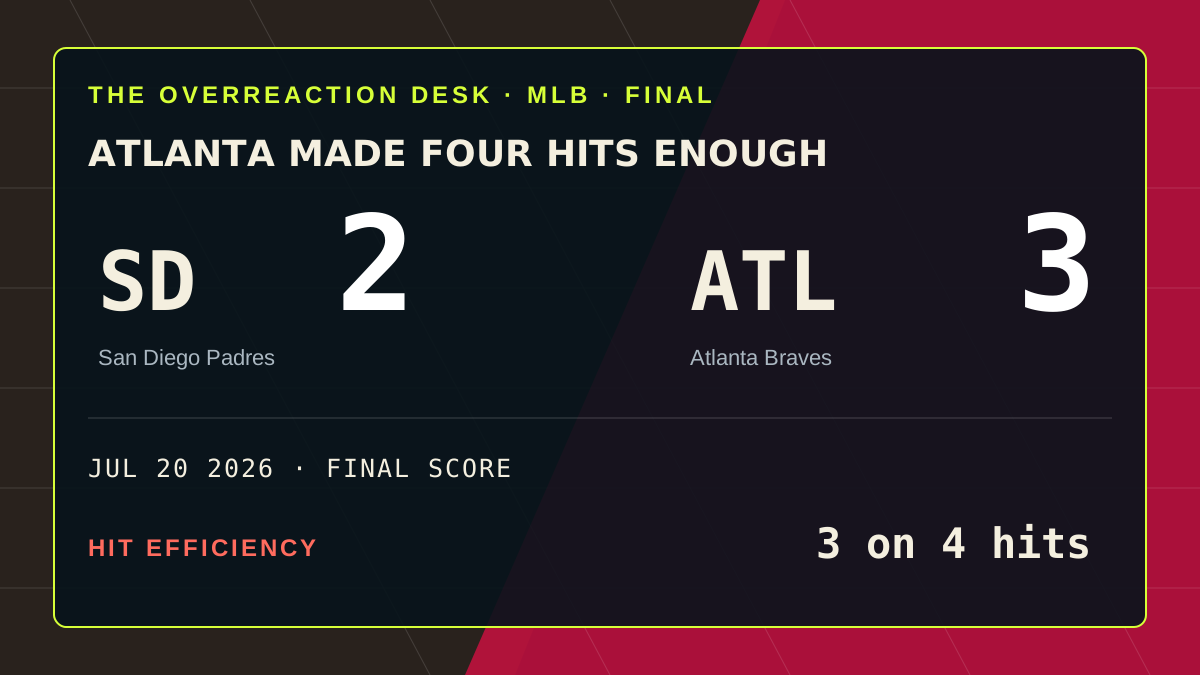
The verified Hit Efficiency was three Atlanta runs on four hits. San Diego scored two runs on seven hits. That was enough because the bullpen treated every remaining baserunner as a limit, not an invitation.
Desk ruling: the Braves did not overwhelm the Padres. They used two solo homers, one timely double and seven outs from Mederos to make scarcity look organized.