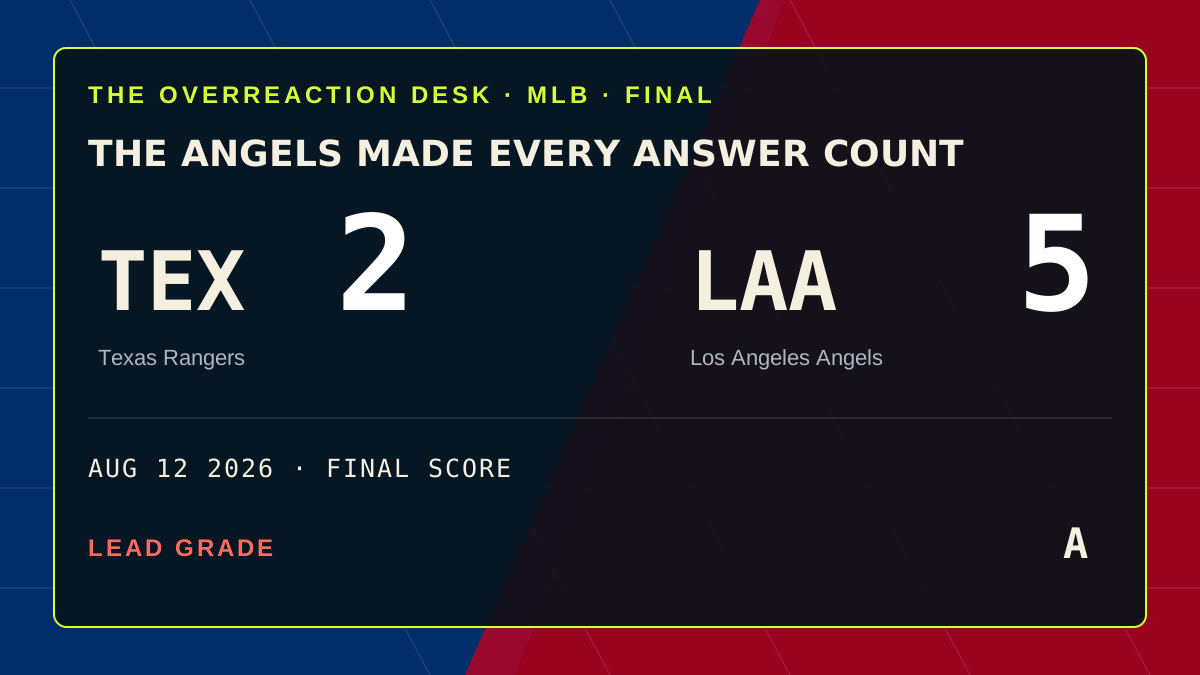
Texas Got the First Shape
The Rangers did not lose this game because they were absent. They scored in the second and third innings, and Corey Seager supplied the kind of three-hit night that usually gives a lineup permission to be annoying. Texas finished with seven hits, enough to keep the Angels from treating the game like a quiet walk through the neighborhood.
But the early runs did not become control. Los Angeles answered in the third, then waited for the middle innings to make the game larger without making it messy. The Angels’ five runs arrived in three scoring innings, and each one came after Texas had already shown the outline of a possible answer.
Trout Kept the Pressure Useful
Mike Trout went 3-for-5 with two RBI, which is the baseball version of refusing to let a rally become a group text with no reply. He did not need one giant swing. His contact kept the Angels’ innings moving, and the lineup used the openings around him instead of demanding that he do everything alone.
The largest burst came in the sixth, when Los Angeles scored three times and moved from a narrow game to a 4-2 lead. Adam Frazier and Jose Siri added RBI work, and Denzer Guzman scored one of the Angels’ runs. The seventh added another cushion, which turned the ninth inning into a formality rather than a referendum.
The Desk Has Ruled
George Klassen made the offense’s patience count. He allowed two earned runs in six innings and struck out five, then the Angels’ relief corps limited Texas to one hit over the final three innings. That is how a team turns a good night from Trout into a complete result instead of another highlight stranded on the wrong side of the standings.
The Desk’s Lead Protection Grade is an A (100). Los Angeles’ largest lead was three, the final margin was three, and Texas did not win a closing inning. The Angels did not bludgeon the Rangers. They made the Rangers answer three different kinds of pressure, and Texas eventually ran out of replies.